From Greenland to Ukraine to Venezuela, President Donald Trump has relied on a dizzying diversity of definitions for peace over the past year. They range from “peace through strength” – using tariffs or troops – to temporary and shaky ceasefires. He has brokered deals that offer security if the United States gains natural resources or that assume economic integration between rivals can alone ensure tranquility.
He overarchingly sees his role as a “president of peace” (an allusion to “prince of peace”) and as deserving of winning a Nobel Peace Prize or, at least, an actual winner’s gold medal given to him this month as a gift of gratitude. Lately, however, he’s warned that he does not feel “obliged to think purely of Peace.”
One of his definitions relies on capital investment. His new Board of Peace, set up at first to stabilize the Gaza Strip and fulfill his vision of turning the Palestinian enclave into “the Riviera of the Middle East,” invites nations to contribute $1 billion each to gain a permanent seat on the board. The writ of this body may now extend to all global conflicts, with what critics say is a design to replace the United Nations.
Many countries have either pushed back against Mr. Trump, agreed with him, or capitulated on his disparate prescriptions for peace. Some decry a loss of “norms” or an erosion of a “rules-based world order.”
A few leaders, however, have reflected anew on the kind of peace that is not merely an absence of violence or something transactional in nature but rests on what Maryam Bukar Hassan, a Nigerian poet and current U.N. global advocate for peace, calls “the presence of understanding.”
In Ukraine, for example, the people have shored up their defenses by improving integrity in government, encouraging creativity for engineers to design innovative weapons, and amping up truth-telling against Russian misinformation.
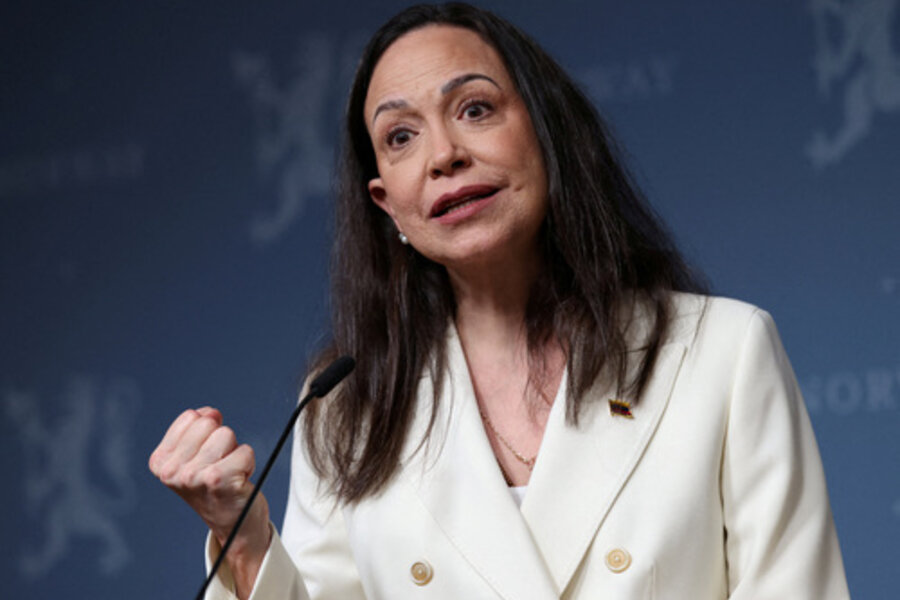
In Venezuela, the pro-democracy opposition leader, María Corina Machado, says the freedom that ensures peace requires “moral, spiritual, and physical strength.” In a manifesto last year, she stated, “No regime, political system, or tyranny has the power to rob us of what is divinely ours: the right to live with dignity, speak freely, create, dream, and prosper as individuals.”
In Europe’s struggles with Mr. Trump over control of Denmark’s territory of Greenland, European Commission President Ursula von der Leyen told Politico:
“Of course, our relationship to the United States has changed. Why? Because we are changing,” she said.
“And this is so important that we keep in mind: What is our position? What is our strength? Let’s work on these. Let’s take pride in that. Let’s stand up for a unified Europe.”
Paths to peace vary, and Mr. Trump may succeed in many of his. Yet the type of peace that is inherent within individuals may be the most enduring. Or as a 1986 U.N. statement declared, “War is not in our genes, and we need not accept human aggression as a fate.”