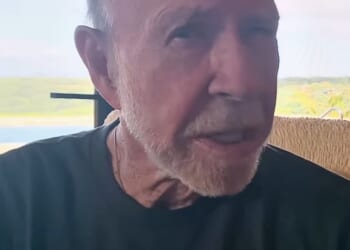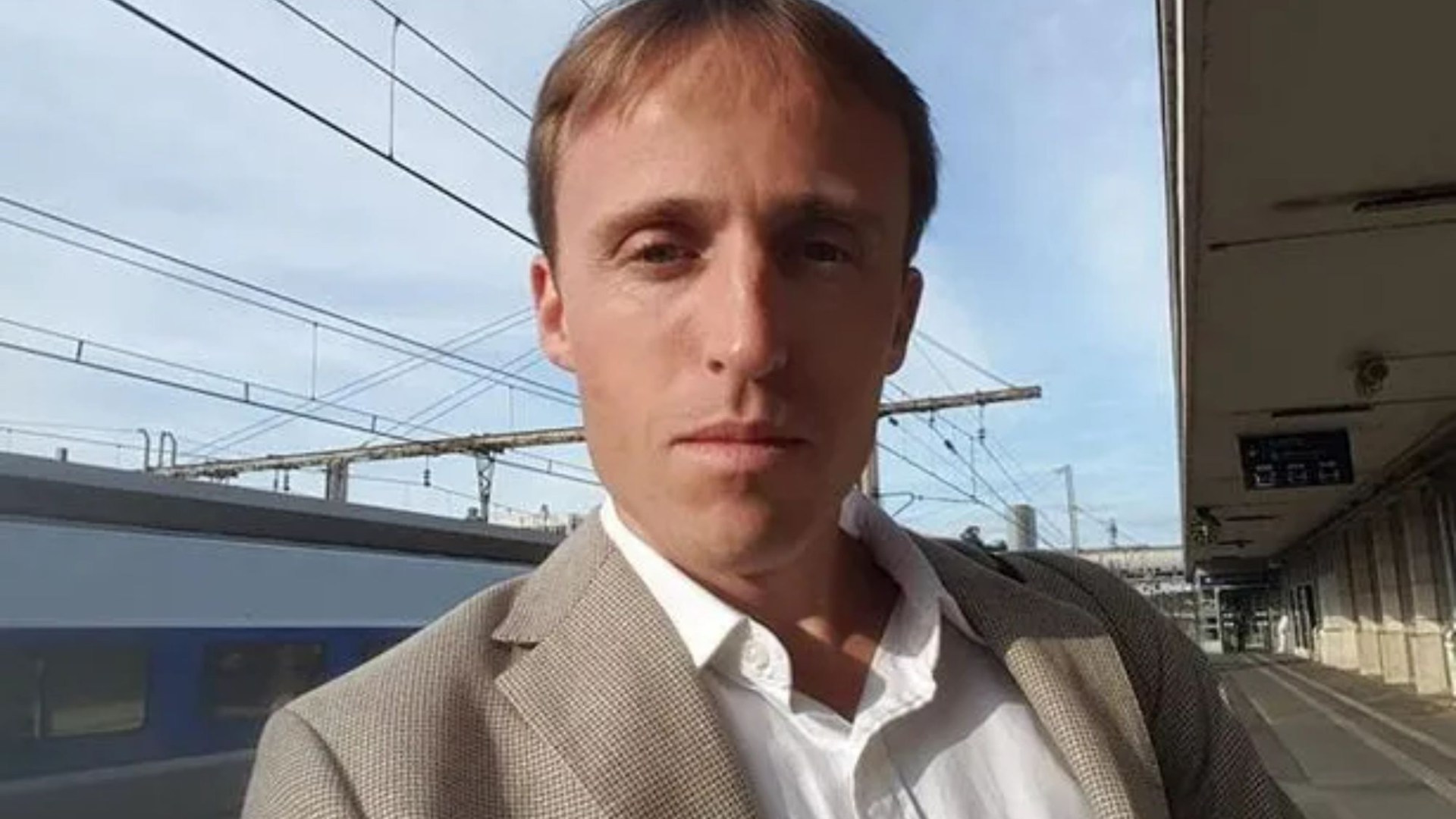
“ELECTROCUTED, hacked to death, blown up, shot in the face, decapitated…” says Pieter Tritton, as he calmly reels off all the ways he’s seen a person die.
The violent deaths are just some of the horrors he recalls from his years spent incarcerated in some of the world’s deadliest prisons – after raking in nearly £1million a year as one of Britain’s most prolific cocaine smuggling kingpins.
Known as “Posh Pete”, he started selling ecstasy at 14 before working his way up to sending drug mules, posing as backpackers, with up to 5kg of the white stuff per trip.
The Stroud-born crook’s ruse went undetected due to the drugs being hidden in the rubber ground sheets of tents, which didn’t show up on any airport security scanners.
His team brought in £300,000-worth of cocaine a month before he was busted in Ecuador by armed police after a criminal colleague ratted him out, back in 2005.
Pieter suspected the game was up when he spotted an undercover cop reading a wine menu upside down while dining in a hotel restaurant with his girlfriend.
“Soon after all hell broke loose,” he says. “We were walking back to the room when I heard all of this screaming, ‘Hands up, don’t move or we’re gonna kill you’.
“I spotted people wearing balaclavas with machine guns and handguns, I thought it was either police or I was being robbed. I soon found out.
“In the room, they immediately went to the closet where the tent was hidden. I tried to bribe them and I think it would have worked if British police weren’t involved.
“I said, ‘Look, I’ve got €25,000 cash in my pocket, give me a phone and I’ll get you another €100,000 in an hour. Keep the tent and we’ll forget this ever happened.”
Sentenced to 12 years imprisonment, his time was split between Garcia Moreno and Guayaquil prisons.
The latter, he says, was “worse than hell” and is “now the most dangerous prison on the continent”.
Pieter says: “I never knew if I’d still be alive by the end of each day. It was extremely corrupt and I saw people killed in every way you can imagine.
“I lost count of the amount of people I saw die.
“People were drinking, doing coke and had guns and machetes, so you can imagine how that could blow up quickly. It was like living in a warzone.”
Pieter claims prisoners could “get a hold of anything they wanted” including visits from sex workers, brought to individual cells for £1,500 a pop by gangs, with guards highly susceptible to bribes.
“Foreign prisoners were seen as ‘cash cows’ and they were ‘sold’ to the gangs at a meat-market style auction,” he says. “It was a bidding war to earn the right to extort their families for money.
“They would bleed you and your family dry for as much as they can. Take someone connected to the Russian Mafia, they knew they could be extorted for around £45,000.
“They would chop off a finger or bits of flesh without hesitation to get their families to pay up. It wasn’t unusual to see body parts spread across different bins.”
Someone discharged an Uzi on the wing, hand grenades were detonated. It was horrific, there was blood everywhere
Pieter still remembers the haunting screams of those being tortured by the gangs day and night for weeks at a time. Others were subjected to mock executions and nearly drowned.
The ever-escalating violence would eventually lead to British prisoners being extradited to the UK to serve the rest of their sentences on home soil for a fee.
Those dangerous moments included a two-and-a-half-hour gun fight between gangs. The Cubanos hired an assassin group – known as Comer Muertos, meaning “eat the dead” – to take out their rivals, the Choneros.
During that deadly clash, Pieter recalls a bullet narrowly missing him, flying past his head, and into the face of his pal, one of the Choneros’ head honchos, which “blew his brains out the back of his head”.
“Someone discharged an Uzi on the wing, hand grenades were detonated, it was horrific,” Pieter says. “There was blood everywhere.”
Making of a drugs kingpin
So how had Pieter ended up in this situation? Drugs were a part of his life from a young age – his parents took them and at just four years old he unknowingly ate part of a cannabis-infused cake left around at a family party.
Locally they were known as “the hippy family” due to his dad’s love of joints and by his early teens, he was dabbling with and dealing ecstasy pills.
Pieter, who grew up on the edge of a council estate in Stroud, Gloucestershire, had criminal connections through his DJ stepbrothers and started selling drugs to “cover the cost of partying”.
He took a brief break and enrolled at Cardiff University to study archaeology, however, when none of the students knew where to get drugs he made a few calls.
Soon Pieter was sucked back in. He was dealing a kilo of coke a week, among other drugs, and eventually quit the course.
He was earning around £30,000 a month and used to rent the wing of a manor house and drove a Mercedes, Saab and a Volvo.
Pieter’s cover story was that he was an antiques dealer. In actuality, he was supplying drugs to Cardiff, Gloucestershire, the Welsh Valleys, Bristol and parts of Scotland – and his contacts were connected with Colombian cartels.
At one point, he was shifting up to 1,000 kilos of hash, 30,000 ecstasy pills and five kilos of coke a month and driving to London up to three times a week to source the drugs .
It was on one of these trips that flagged him to authorities and left him under “heavy surveillance”, alongside others, through Operation Dreadnought.
Cops were monitoring Kevin Hanley, who was later described as the “top, top man” in the drugs underworld after being jailed for smuggling £5million of cocaine inside watermelon and pomegranate shipments.
They also had their sights on Brian Brendan Wright, also later imprisoned, who amassed a £600million fortune from the trade, where he was known as ‘The Milkman’ because he “dealt in the white stuff and always delivered”.
People were drinking, doing coke and had guns and machetes, so you can imagine how that could blow up quickly. It was like living in a warzone
Pieter
In 2000, Pieter was pulled over with a doctor’s briefcase containing a thousand pills, cocaine, and hash. Despite thinking he could “bulls***” his way out of it, he was sentenced to five years.
He was released after half of his sentence and settled into a low-paying 9-5 painter-decorator job, ignoring tempting calls from crook pals offering illegal work daily.
“Then a client was late to pay me and I thought, ‘F*** this, this isn’t going anywhere and now people aren’t paying me’,” he recalls. “It was the straw that broke the camel’s back, my f*** it day.”
In the back of his mind was an article he had read in prison about a £25million cocaine shipment that had been impregnated into plastic garden patio furniture. He thought it could be the future of drug smuggling.
“It was a eureka moment,” he says. “It was pretty damn cool and ingenious, and despite the shipping container being seized no one was arrested in the UK or at the point of origin.”
Pieter was put in touch with a Colombian affiliated with the Cali Cartel and a Chilean, who had successfully impregnated cocaine into tents.
He joined the operation – offering to upscale it with a £28,000 investment.
100kg shipments
Pieter smuggled the first tent himself, travelling from Colombia to Ecuador, where he would catch a flight due to it then being “more of a holiday destination” and thus arousing less suspicion.
The trio made £80,000 each from that run alone and started sending drug mules. They made a fortune from the drug runs, while eying up their next venture.
They planned to send 100kg of cocaine, impregnated in camping equipment, inside a shipping container, which would have raked in £6million, but it all went wrong.
“The Colombian broke the sacrosanct rule – ‘Don’t have your friends in the f***ing lab,’” Pieter says. “They were partying, doing coke, drinking and dancing to salsa music when police arrested them.
“He was convinced to become a police informant and set about trying to take us all down. When I returned to the UK I knew I was under surveillance and had to be smuggled out.
“Contacts in the Turkish Mafia helped get me out to France, where I could then escape to South America. In the end, being arrogant and over-confident led to my downfall.”
In 2005, armed police busted Pieter in an Ecuadorian hotel and he was sentenced to 12 years behind bars.
His time in Ecuador’s most dangerous prisons, where he felt he had a “90 per cent chance of dying every day”, made his final 10 month stint in HMP Wandsworth feel “like a holiday camp”.
Since his 2016 release, Pieter has finally left the drugs trade for good and says he now realises “it’s not worth it”.
He says: “I’ve seen the harm I’ve caused to my family and friends and a lot of friends were killed around me. It’s just not worth it at the end of the day.”
Pieter Tritton’s book El Infierno: Drugs, Gangs, Riots and Murder: My Time Inside Ecuador’s Toughest Prisons is available to buy online.