This article is taken from the December-January 2026 issue of The Critic. To get the full magazine why not subscribe? Get five issues for just £25.
It’s that time when we round up the best fiction of the year that wasn’t covered in this column. And there will be no repeats of the best books we did cover: that would include a trio of excellent works on aspects of modern masculinity: Cynan Jones’ Pulse, Benjamin Markovits’ The Rest of Our Lives, and David Szalay’s Flesh — the last justifiably won this year’s Booker Prize for fiction. Here are the ones that almost got away.
Debut of the year
If the best time to publish a debut novel is “not yet”, then this book is proof of the benefits of taking your time: the author is in his forties and escapes the risk of growing up in public. Michael Amherst’s The Boyhood of Cain wears its influences clearly: the title echoes two novels by Nobel winner J.M. Coetzee: Boyhood and The Childhood of Jesus. And Amherst lives up to the comparison.
The narrator, Daniel, is a boy at a school near Cheltenham, where his father is the headmaster. Daniel is an overthinker, fretting about everything from his status in school to his family’s social standing. There’s a sweet comedy to his worries: when he tells his teacher that his mother cries a lot, and the teacher says not to be concerned as she cries, too, “this does not comfort him. Now, not only does he have his mother’s tears to worry about but his teacher’s, too.”
The plot proceeds by the movement of Daniel’s observations: small and restrained steps. He falls foul of a teacher; he develops feelings for another boy. All this is not strange news, but it is possible for the contained world of Daniel’s narrative to move us greatly because of the precision of Amherst’s writing. The simplicity of his language leaves room for the reader. The Boyhood of Cain is a stellar achievement.
Late discovery of the year
The late discovery is mine, as my fellow Northern Irishman Eoin McNamee has been acclaimed since he started out 35 years ago. Still, when I read his new novel The Bureau, I was sufficiently bowled over to go back and read his earlier books. Who could resist a writer who, in his debut, had a character describe how “his father came home from the pub every night using both sides of the road”?
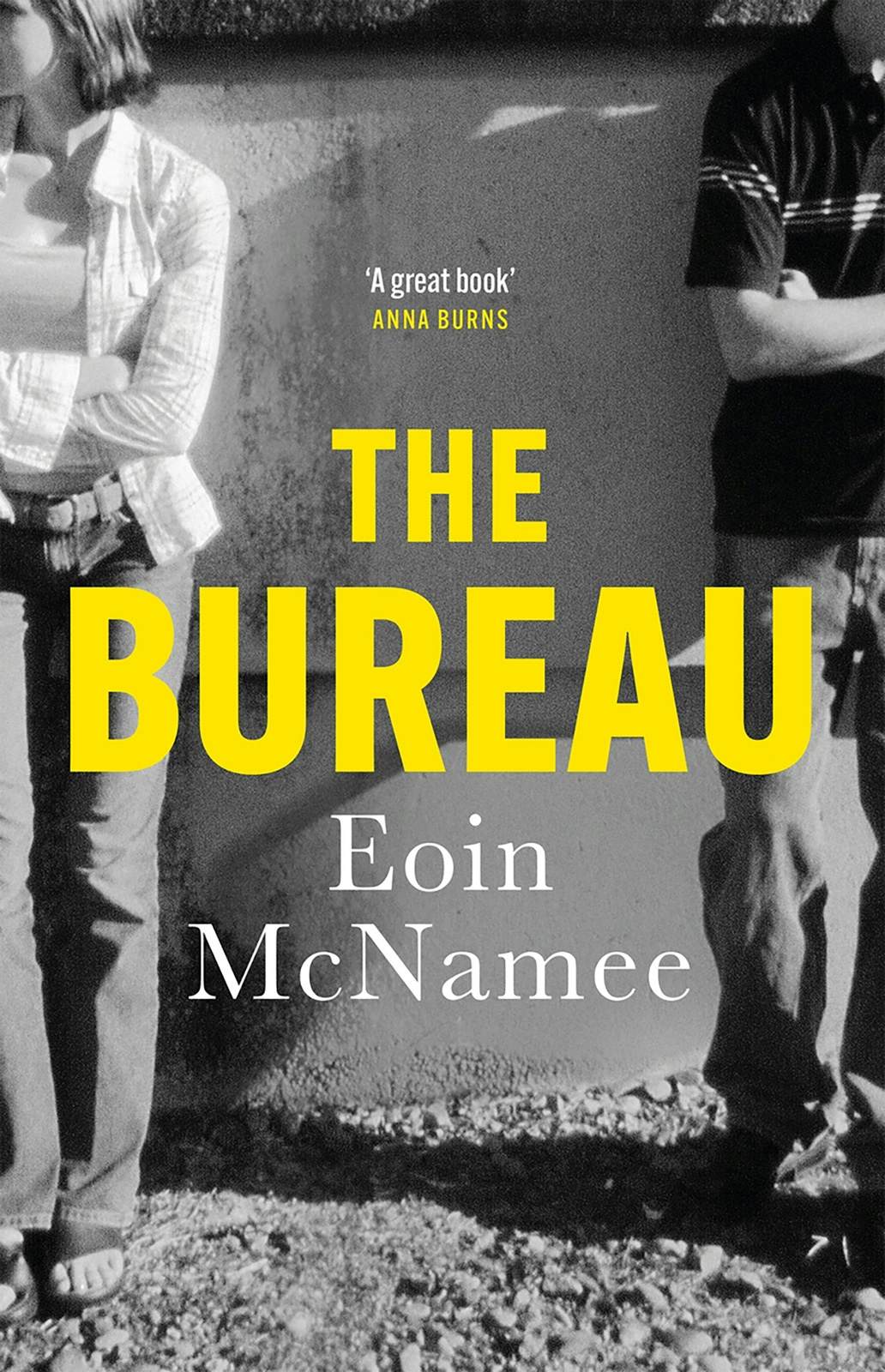
The Bureau, like all McNamee’s novels, is inspired by real events. This time it’s a murder-suicide on the Irish border in the 1990s, when lovers Paddy and Lorraine died by gunshot wounds. “Blood spatter. Spread pattern.” The “comp” here — as publishers say in a world where every new book must be likened to an already successful one — is David Peace or James Ellroy, both for the factual basis and for the highly charged style, a sort of brutalist poetry. It’s a world of “itinerant evangelicals”, “alcoholic judges and nerve-shot policemen”, where a passport photo is “caught in some kind of corpse light”.
It’s a world of moral squalor but biblical rhetoric, the depths and heights each enhanced by proximity to the other. Central to the plot is the money-changing bureau of the title near the border, which operates, like the people, in a grey area. It’s a tale of lawlessness, of fronting up and not backing down and where that leads. It’s a stunning performance — and it does feel like a performance, a book you gape at as much as read. There are plenty of dead bodies here, but no dead air.
Translation of the year
Hassan Blasim is an Iraqi writer, now living in Finland. His new book Sololand, translated by Jonathan Wright, consists of three novellas, each addressing different ways this “country that makes no sense” has developed after the wars of the last 35 years.
There is plenty of dark material to work with and a good deal of consequential horror — in one story, library books start dripping blood from the ISIS execution chamber on the floor above — but the miracle of Sololand is that it addresses these issues with the best possible response: ridicule and cynicism. In the same story, a pharmacist closes up shop because she is tired of ISIS members coming in to ask for Viagra.
Another of the stories is a perfect pitch of light and dark. When Iraqis flee the ISIS regime to northern Europe (anonymised as “Sololand”), two refugees rape a girl, but even this blackest development is met with a caustically comic response. “I found a Facebook page called ‘Refugees welcome in Sololand’,” our man tells us, “with just 34 followers.” Blasim is a risky writer perfectly fitted to our febrile times.
Comebacks of the year
Two second novels this year took a long time to arrive but justified their gestation period. Claire Adam’s Love Forms is a consciously restrained story about Dawn, a middle-aged woman living in London, who is occupied with finding the daughter she was forced to give up for adoption when she became pregnant as a teenager in her homeland of Trinidad.
Love Forms, which was longlisted for the Booker Prize and should have been shortlisted, tells Dawn’s story with a slow burn of daily life — work, kids, divorce — building in emotional impact as she gets further into her search and further into her past. Her reduced circumstances — downsized, post-divorce, from Wandsworth to Brockley — are balanced by the swelling of her inner story. The quietness of her voice makes us listen to it all the harder. And all the domestic stuff is not filler: it rounds out Dawn’s character and attaches us to her emotionally. The cumulative impact by the end of the book is tremendous.
The other latecomer is busier on the surface than Love Forms. Toby Vieira’s The Undrowned also comes nine years after his debut and exhibits a related interest in the strangeness of other places. Our narrator, Sebastian, is a journalist returning from an African country referred to only as The Land Of and is a rare survivor of a mysterious new virus.
Sebastian wants to find colleagues who went missing on his trip, but he keeps getting sidetracked: by an obstructive boss, by an attractive ex, by insistent healthcare staff who want to take his blood. There’s a sort of nightmarish quality to his experience, where he becomes more and more alone. Even his dog and his mother (who lives in a remote cottage called Palaver’s End) seem unable to assuage his thirst for answers. The Undrowned is a splendid blend of action and reflection, part Greene, part Kafka, all Vieira.
Reissue of the year
“Old book, meet new readers” is such a regular proposition these days that we need to filter carefully to ensure we’re not just finding reheated dregs. This year, Penguin proved that there’s life in the old bird by resurrecting its Penguin European Writers series with a new edition of Brian Friel’s Stories of Ireland.
Irishman Friel was best known for his plays, but started off in short fiction. Here we get the best of his two collections, and they are funny and lively, with the sort of focus on efficient characterisation and dialogue that we would expect from one of the best playwrights of his generation. There’s a spirit of Frank O’Connor here (“I had five maiden aunts, and they doted on me”): people both typical and eccentric making their mark on their small patch of the world.
The stories speak of their age — cockfighting, travelling magicians — but their warmth and brilliance are timeless. There are elderly women in their “impossible dotage”, locals surprised when a dark-skinned salesman calls and men filled with unwise hope: “With the old woman out of the road and the place to myself there’s nothing to stop me now!” Stories of Ireland is a treat, start to finish.
Surprise of the year
The best sort of new book is one that comes without expectations. English writer C.D. Rose has a solid backlist, but he was new to me. His novel We Live Here Now last month won the Goldsmiths Prize for fiction that breaks the mould, which might give an impression that the book is trickier than it is. It whisks us through more than a dozen stories of people and places connected to the fictional artist Sigi Conrad, who has gone missing, along with some of her work.
This structure is really a springboard from which Rose can jump into entertaining and provocative scenes of musicians, ship’s captains, artists and subjects. A “string billionaire” rubs shoulders with a man who has his identity repeatedly stolen; shell companies fill buildings made of smoked glass and mirrors; comedy runs the gamut from cynicism (“AI would soon do for most of them, thank God,” one character says of contemporary artists) to silly: vehicles have larky names like the Lada Brutal or the BMW Intimidator.
We Live Here Now is a book of wide variety, focused on the inherent ridiculousness not only of modern art but of modern life. There are threatening baddies and ineffectual magnates, twists and turns, corporate hokum and artsy bullshit. Through chases and stasis the story meanders to … where exactly? It hardly matters: this is a book, after all, about unknowability, obscurity and absence. The joy is in the journey — and what a joy it is.