The ‘armada’ sent by Donald Trump to the Middle East, led by the aircraft carrier USS Abraham Lincoln, is long overdue.
For weeks I have been speaking to people inside Iran – men and women still living under the boot of the Islamic Republic – and alongside the pain of what they have gone through is another emotion that I’m encountering over and over: rage.
They are furious with a regime that has oppressed, tortured and killed them for decades. And, increasingly, they are furious with the West.
When Crown Prince Reza Pahlavi, the son of the late Shah who is safe in Washington DC, urged Iranians to rise up against their theocratic jailers, many did. When Donald Trump posted on his Truth Social platform that ‘help is on its way’, many believed him.
The help never came.
Rumours are that Trump was talked back from a strike at the last minute. Maybe. We’ll probably never know the truth. What we do know is that the regime then felt free to shut down communications, flood the streets with yet more Basij and Revolutionary Guards and really get to work.
It hunted down and killed anyone it even suspected of dissent. Its storm troopers raided homes and murdered people in the street. It dragged the wounded from their hospital beds and murdered them, too.
Official figures claim about 6,000 dead. But doctors and witnesses inside Iran speak of a campaign of close-range killing – with stab and bullet wounds on the eyes, chest and genitals – and mass executions that could have claimed tens of thousands of lives, with some estimates putting the toll above 30,000. Others say higher still.
The precise number is almost beside the point now: this is mass violence of a state against its own people, on a scale not seen since the bloodiest days of the Islamic Republic’s early years.
We must be clear-eyed. Sympathy is not a strategy and anger is not a policy. Striking the Mullahs does not automatically mean regime change; and regime change does not automatically mean freedom or even stability. Iraq should have cured us of that illusion.
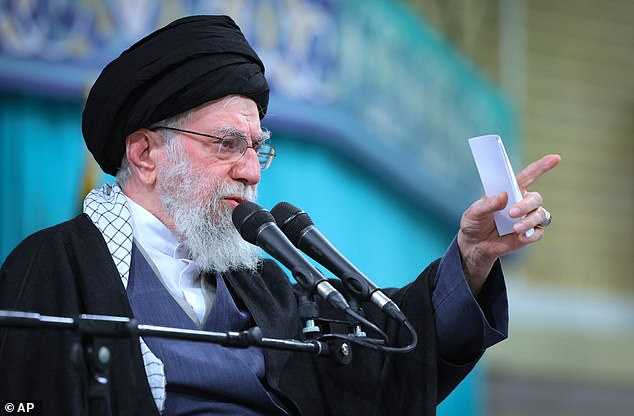
The supreme leader of Iran, Ayatollah Ali Khamenei, in Tehran
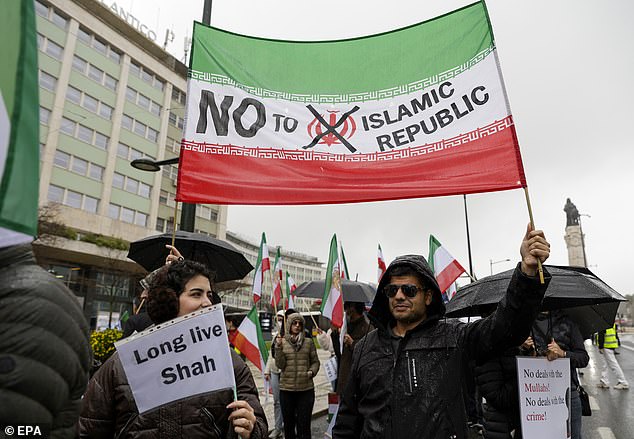
A protest against the Iranian regime in the streets of Lisbon, Portugal
Iran is a huge, ancient and complex country with deep social and ethnic divisions. The fall of the Mullahs could yet open the door to something worse.
But another truth is just as stark. The regime has ignored every appeal for restraint and instead chosen the language it understands best: force.
And this is where credibility matters. American credibility. The West’s credibility. The credibility of every leader who has repeatedly warned Tehran that its repression will carry a price.
Trump doesn’t want to be stuck in yet another endless Middle East bog, and I don’t blame him. But between doing nothing and launching a crusade, there is a lot of space to act. American power can be used surgically and with clear purpose.
The Islamic Republic’s strength rests on three pillars: its internal security machine; its regional militias; and its ability to threaten far beyond its borders.
The last of these – its missile forces, special operations teams and naval assets – is what gives Tehran the confidence to slaughter at home, believing the world will remain too timorous to act.
The United States and its allies know where the regime’s military nerve centres are. The Israelis have spent decades mapping the architecture of the Revolutionary Guards corps.
Iran’s navy continues to be the sword by which the regime menaces the arteries of global trade – and a shield behind which the leadership believes it can act with impunity where its people are concerned. All this must be hit.
An exchange of blows with Israel in June, which became known as the 12-day War, changed nothing fundamental for the beleaguered Iranian people.
It was brief, brutal and involved Israel bombing military and nuclear facilities, assassinating military chiefs and nuclear scientists, followed by Iran’s retaliation with hundreds of ballistic missile strikes.
Join the debate
Do YOU think the US has a moral duty to act now?
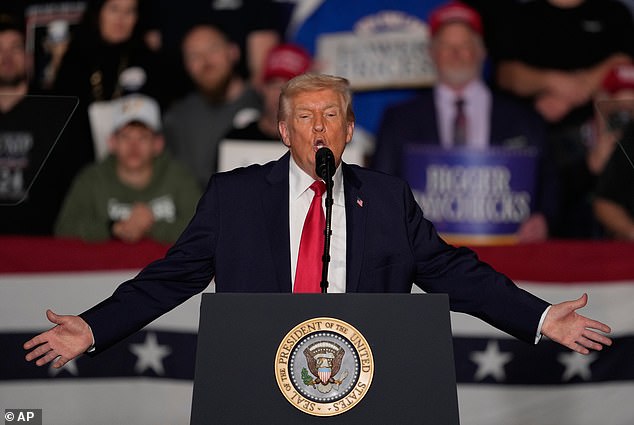
The armada must provide the people of Iran with the tools to finish the job, our writer argues
Next came the US operation Midnight Hammer involving 125 US military aircraft, which successfully targeted three nuclear facilities: Fordo, Natanz and Isfahan.
The Mullahs were shaken, the military hardware severely degraded, but they didn’t surrender and they set about rebuilding their missile stocks. Their machinery of terror was put back together and then deployed against their citizens six months later.
To strike at this machinery does not require carpet bombing of cities or occupation of territory – merely resolve, clarity and the willingness to use force intelligently and in combination.
To do it most effectively, Washington should come with the surgical, far-off violence of modern air-sea power. B-2 Spirit stealth bombers would slide in from the dark, invisible to radar, carrying bunker-busters for the regime’s buried control-centres.
F-35 Lightning II and F/A-18 Super Hornet jets would roar off from USS Abraham Lincoln to provide air dominance, striking missile sites, command nodes and what’s left of Iran’s air defences.
Destroyers and submarines would let loose Tomahawk cruise missiles from hundreds of miles away, their warheads screaming in low and fast toward launchers, radars and naval bases.
And in the background, cyber attacks would scramble the Islamic Republic’s military infrastructure, allowing it to be smashed by American power.
There would be strikes on energy infrastructure, too – on oil terminals at Kharg Island and Bandar Abbas, and refineries in Abadan – to create economic pressures.
But the ultimate aim must surely be to give the people the confidence to go back on to the streets in Iran without fear of slaughter.
So the armada’s response has to be finely judged, despite the massive firepower.
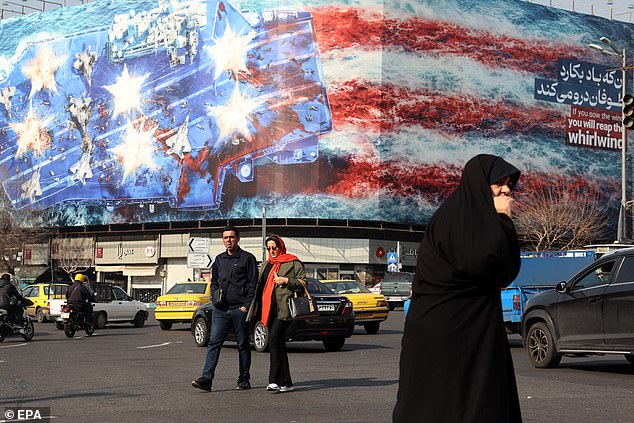
A huge anti-US billboard hangs in a public square in Tehran
A repeat of the overwhelming attacks Iran faced in June would not work, according to Behnam Ben Taleblu, senior director of the Iran programme at the DC-based Foundation for Defense of Democracies (FDD).
‘While suppression of Iranian long-range fire such as missiles will be critical,’ he says, ‘if the Iranian people sense the military response from America is going to be akin to a resumption of the 12-Day War, their behaviour will resemble that which we saw during that war, which is to flee into their homes rather than to protest.’
Critics are already grumbling that Trump is finally taking action because he wants to distract from the scandal over the recent killing of Alex Pretti by ICE agents in Minnesota.
Others say it is reckless, and risks escalation. Perhaps.
But inaction has its own escalatory logic. Every time the West draws a red line and erases it, the lesson learned in Tehran is simple: kill more – and then wait for the storm to pass as it surely will.
Inside Iran, the people are watching. Thus far we have abandoned them to their executioners. I speak to them and they want the regime that terrorises them to pay for its brutality – as Trump promised it would.
The United States has unrivalled military power. What it lacks, too often, is the will to translate moral language into concrete action.
Trump now has a chance to show he understands this.
If the armada is to be more than a photograph and a headline, it must provide the people of Iran with the tools to finish the job – and end the rule of the Mullahs themselves.