Just over a week ago, Iran‘s President Masoud Pezeshkian declared that his country is now at war with the US, Europe and Israel.
He spat his poison in an interview with state-controlled media. ‘We are in a full-scale war with the US, Israel and Europe,’ he fulminated.
We will need to be ready – not least as the regime grows more desperate under the pressure of protests on its streets. When the mullahs feel cornered, they lash out. And we will need tough, reliable allies – those capable of dismantling their machine of terror.
There is no better organisation for that task than the Israeli Mossad, and no better person to discuss it with than its former head, Yossi Cohen.
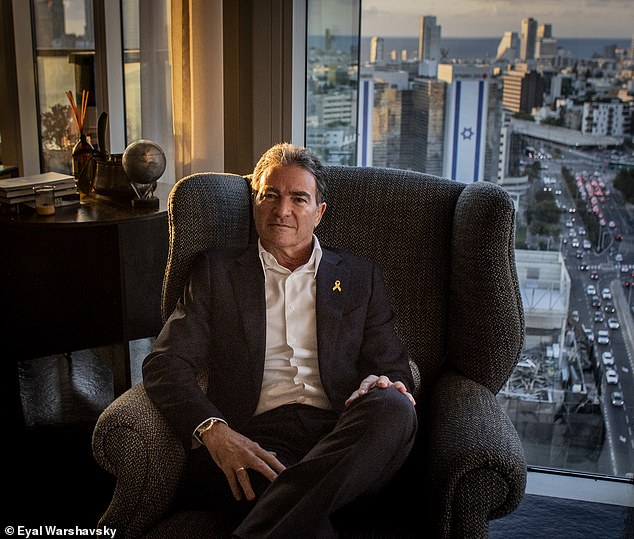
Cohen led the service from 2016 to 2021. They call him ‘the model’ for his sharp features and crisp suits.
He beams across from me in an unfussy office in central Tel Aviv. This is a man who, as a Mossad agent, repeatedly went undercover in the Arab world, risking torture and death each time.
For Cohen, the Mossad works to a single principle – one he returns to both in our interview and in his book, Sword of Freedom: Israel, Mossad and the Secret War, which lies between us on the polished table.
‘We can’t be number two on anything,’ he tells me. ‘Be first and be decisive – that’s the rule.’
The truth of his words is plain in the remorseless way Mossad hunted down Israel’s enemies after the October 7 atrocities.
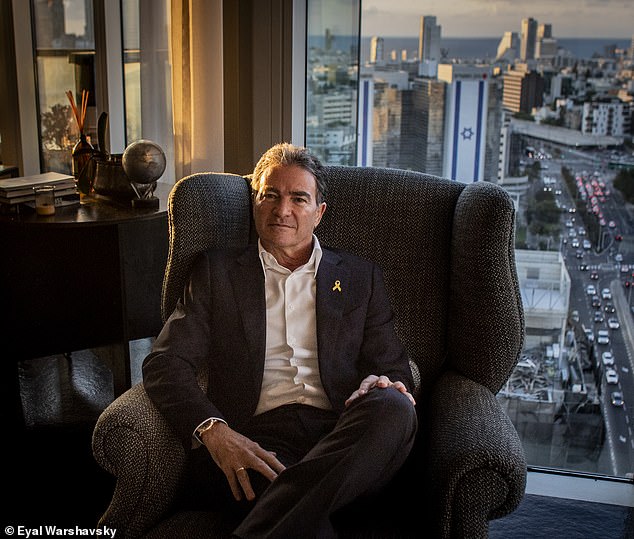
Israel’s former Mossad Chief Yossi Cohen lifted the lid on the country’s assassinations
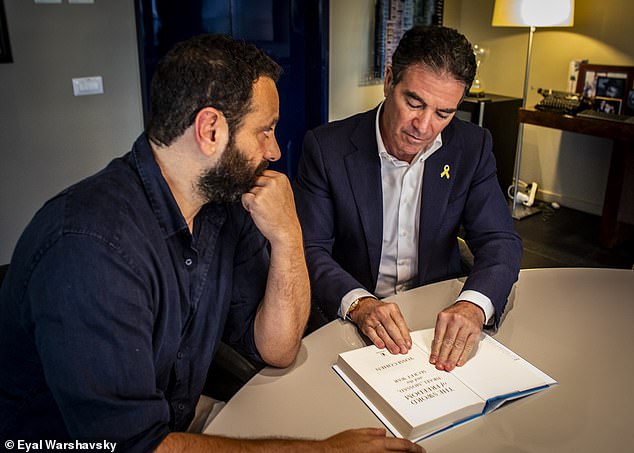
Cohen explained to David Patrikarakos (left) how Britain and Israel can ally together in the global battle against Jihadist terror
And of course, it was Israeli agents operating inside Iran who helped Jerusalem gain mastery of Iran’s skies within hours during the 12-day conflict in June 2025.
Under Cohen’s tenure, the message was simple: those who sought death for the Jewish state – or its allies – would meet it themselves, wherever they were.
He was as good as his word. His years in charge saw some of the most audacious operations in the agency’s history.
On 21 April 2018 in Kuala Lumpur, just before dawn prayers, two men on a motorcycle rolled up beside Fadi al-Batsh, a Hamas engineer and commander. Fourteen shots were fired at point-blank range.
The assassins melted into the morning traffic. Malaysia called it a ‘professional foreign hit’. Everyone knew who had carried it out.
That same year, in the Syrian hill town of Masyaf, an explosion tore open the car of Aziz Asbar, head of Syria’s missile programme, sending what remained of him corkscrewing through the air.
Asbar had been rebuilding Syria’s missile production after repeated Israeli strikes. His work ended there. And on it went.
On 7 August 2020 in Tehran’s Pasdaran district, a motorcycle screeched to a halt beside a white sedan. Two bursts of gunfire rang out.
Abu Muhammad al-Masri – al-Qaeda’s number two and architect of the 1998 US embassy bombings – slumped dead at the wheel.
His daughter, Miriam, the widow of Osama bin Laden’s son Hamza, was also killed. The hit was carried out at Washington’s request, timed to the attacks’ 22nd anniversary.
This was not merely an assassination. It was a message: attack Israel, or its friends, and nowhere on earth is safe.
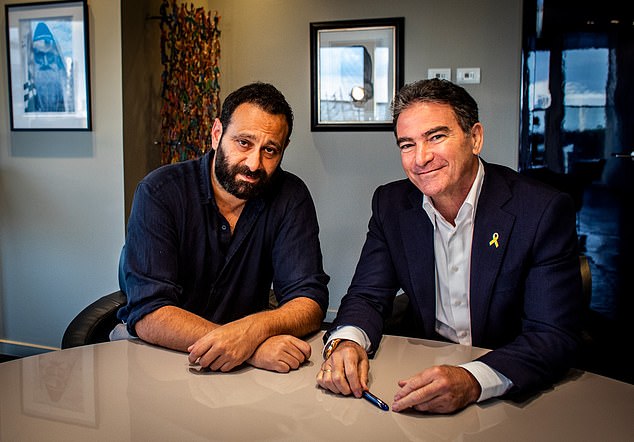
Cohen (right) is pictured here with David Patrikarakos. Cohen led Mossad from 2016 to 2021. They call him ‘the model’ for his sharp features and crisp suits
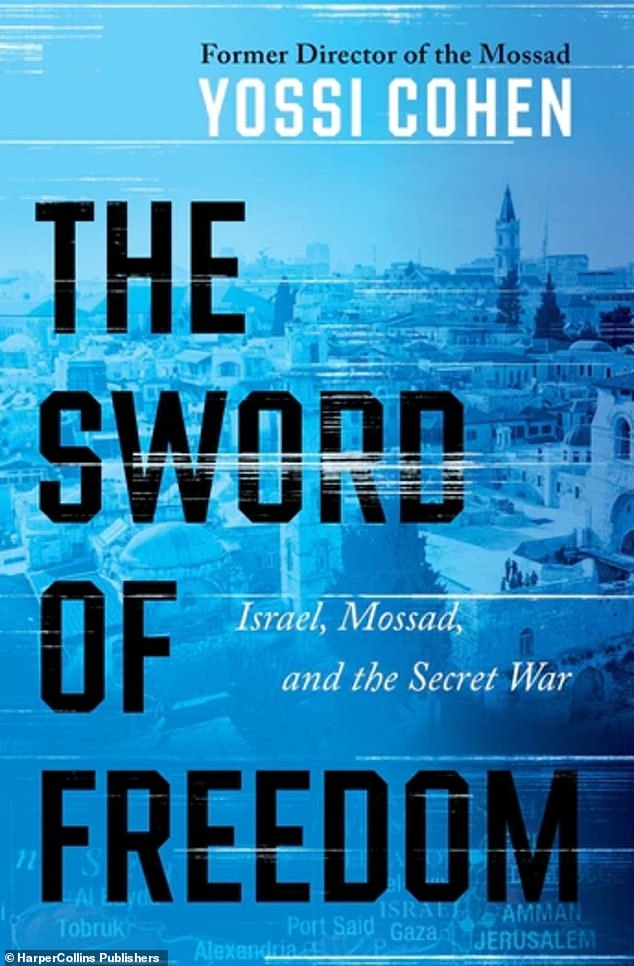
For Cohen, the Mossad works to a single principle – one he returns to both in our interview and in his book, Sword of Freedom: Israel, Mossad and the Secret War
The equation for the Jewish state is brutally simple: it fights, therefore it exists.
But the fight is not always about killing. Mossad is ruthless – and highly sophisticated. Disruption is the doctrine, Cohen tells me.
‘Knowing is important, but disrupting is more important.’ Timing is everything: let your enemy’s project collapse at the very moment they believe it is about to succeed.
Nowhere is this clearer than in Mossad’s campaign against Iran’s nuclear programme. On 31 January 2018, Iran’s nuclear archive vanished from Tehran – a heist worthy of Ocean’s Eleven.
Just after midnight, a small Mossad team slipped into a warehouse on the city’s outskirts.
Using industrial thermal cutters, they cracked open massive safes, sparks flying as they cherry-picked the most incriminating files.
They had roughly seven hours. By 6.30am, they were gone – with half a tonne of secrets: 50,000 paper documents and 55,000 digital files.
The archive later appeared on Israeli television. Iran’s nuclear ambitions were exposed. Jerusalem used the material to push Washington toward tougher action against the mullahs.
Spies do not believe in tidy categories. Law becomes a line drawn in pencil. You bend it to keep a city safe. You break it to prevent the greater lawlessness of bombs and bodies.
‘If you are second in cybersecurity,’ Cohen says, ‘the enemy has already been inside your systems. That is unacceptable.’
During the wave of ISIS plots across Europe, Mossad turned west, sharing intelligence that helped disrupt attacks in Turkey, Germany, France, and crucially, Britain.
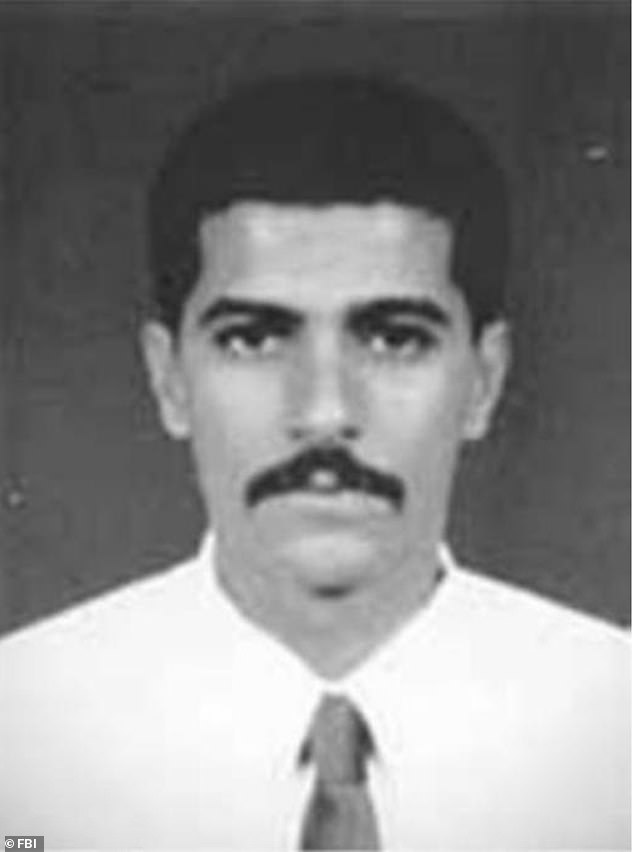
Al Qaeda’s second in command Abu Muhammad al-Masri was killed in Tehran on August 7, 2020
In Sword of Freedom, Cohen describes his close collaboration with British intelligence, noting that MI6 is perhaps Mossad’s closest counterpart in operational philosophy: global in reach, human-led, and unafraid of intrusion.
That partnership has saved lives. Just before his retirement in 2020, the former head of MI5, Sir Andrew Parker, was explicit about Britain’s debt to Mossad.
‘We do not give out Oscars in intelligence,’ he told Cohen. ‘But if we did, you would deserve one.’
In the wake of the Manchester synagogue massacre, and the atrocities at Sydney’s Bondi Beach, that debt feels newly tangible.
Modern espionage is hybrid warfare by other means – theft, sabotage, assassination, cyber intrusion and pressure. Mossad are its masters.
As Iran – and a wider ecosystem of jihadist murderers, foreign and domestic – declares war on the West, MI6 will be at the centre of the fight.
But alongside it will stand Israel’s intelligence services – allies once more on the frontlines against Islamist barbarism.