When Jenni Murray signed off as host of Radio 4’s Woman’s Hour after 33 years, she played herself out with Helen Reddy’s feminist anthem I am Woman (‘Hear me roar’). It’s hard to think of a more apt farewell for a presenter who was a cheerleader for a generation of British women.
Murray, who has died aged 75, wasn’t just a reassuring voice for female listeners amid a sea of challenges – the balance between work and family, caring for elderly parents and carving out time for themselves – she was a complex character who had experienced all of the same issues, and more.
She talked openly about her weight problems, her health issues and her difficult relationship with her mother, on the basis that if she spoke about things that were embarrassing or hidden, others would feel able to do so too.
More recently, as a columnist for the Daily Mail, she wrote stoically about ageing – even filing her copy from a care home in 2023 when she was recovering from a spinal fracture after a fall, followed by a bout of pneumonia.
She was an astute and amusing commentator on women’s lives, whether questioning 20-somethings for aping the Kardashians’ porn star look or regretting the invention of Viagra, which meant women her age were pestered for sex long after they really wanted it, in order to satisfy their frisky partners.
Woman’s Hour, under her lively stewardship, was a kaleidoscope of star names, women’s issues and campaigns. Interviews with stars like Angelina Jolie and Nicole Kidman were sandwiched in between items on domestic violence, childcare or female genital mutilation. Murray was never afraid to ask the hard question: a colleague once remarked she could lull interviewees into a false sense of security before going in for the kill with her ‘distinctive blend of disarming warmth and unnerving directness’.
She asked Hillary Clinton why she had stayed in her marriage despite being humiliated by her husband. She asked Monica Lewinsky why she had kept ‘that dress’. She asked Margaret Thatcher how she felt about being described by the French president Francois Mitterrand as ‘having the eyes of Caligula and the lips of Marilyn Monroe’. Men didn’t escape her scrutiny either: she asked Gordon Brown whether he would show his wife his tax returns.
Murray once said the joy of presenting the programme was that women were interested in everything. She was never limited, as other presenters were, to focusing solely on politics or social issues or the arts. She took her role very seriously and was so driven that, during her time presenting Women’s Hour, she lived apart from her family home in the Peak District for part of the week, even when her two sons were young.
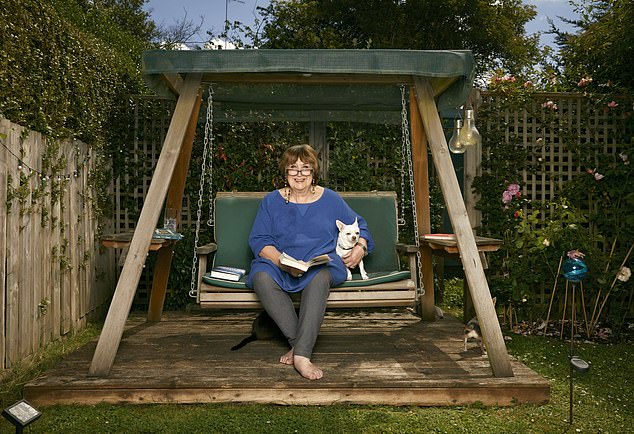
Dame Jenni Murray, who hosted BBC Radio 4’s Woman’s Hour for more than three decades, has died at the age of 75
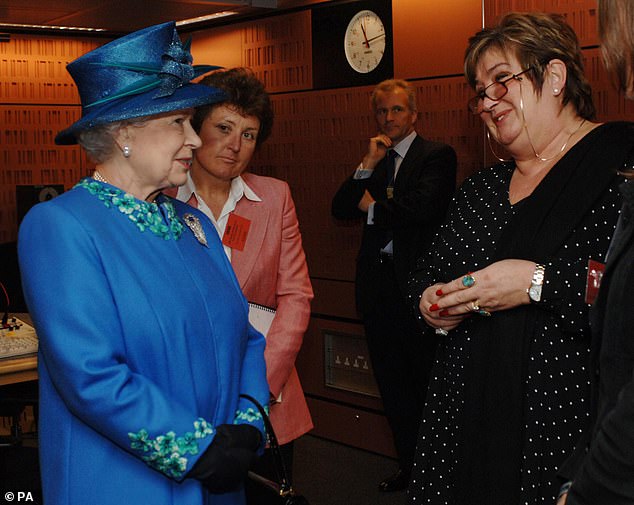
One of the nation’s most prominent and respected broadcasters, Dame Jenni joined Woman’s Hour in 1987 and left in 2020 as its longest-serving presenter
Woe betide anyone who did not live up to her high standards. She joked – if indeed it was a joke – that she might have reduced ‘one or two’ Woman’s Hour researchers to tears. Even great figures could incur her wrath.
When she first interviewed Aung San Suu Kyi, then a courageous activist who had given up her freedom to confront the army generals ruling Burma, Murray found so much to admire that she named her cat after her. Alas, once in power in Burma, Suu Kyi ‘disgraced herself’ by failing to stop attacks on the country’s mainly Muslim Rohingya community. So, the cat’s name was downgraded to ‘Soo’.
Murray was proud of her solid, working-class roots in Barnsley, West Yorkshire. She fondly recalled that, as a child, her maternal grandparents lived around the corner and ‘there was a hole in my granny’s hedge, so I went to and fro to whoever had baked scones that day’.
Her personal style was simple but instantly recognisable: short hair, discreet make-up, glasses perched half-way down her nose. Her wardrobe, she confessed, consisted of 20 identical, loose black tops and 20 pairs of black trousers which she wore on rotation, with one of a number of brightly-coloured scarves slung over her shoulder: ‘Easy peasy,’ she said, ‘and black makes you look slimmer’.
Her mother wanted her only daughter to look pretty and spent ‘hours’ doing her pigtails every morning when she was a child ‘but I was much more naturally inclined towards male interests, like having a gun and playing cowboys and Indians,’ said Murray. ‘I wasn’t really interested in dolls or sewing or cooking or any of that stuff.’
When her father, Alvin Bailey, an electrical engineer, got a contract to work in India for two years, and her mother decided to join him, a ten-year-old Murray insisted on staying behind and moved in with her grandmother as she was determined to get into Barnsley High School, the local grammar school.
At Hull University, as Jennifer Bailey, she met Brian Murray, an architecture student and married him, aged just 21. She said later that she had only agreed to the wedding, in 1971, to stop her mother going on about her ‘living in sin’. The union lasted only a few years but she spoke warmly of Murray long after – and kept his name.
In 1973, she joined BBC Radio Bristol, then became a reporter and presenter for the regional TV programme South Today, beginning to carve out what would be a stellar career in journalism at a time when it was still very much a man’s world.
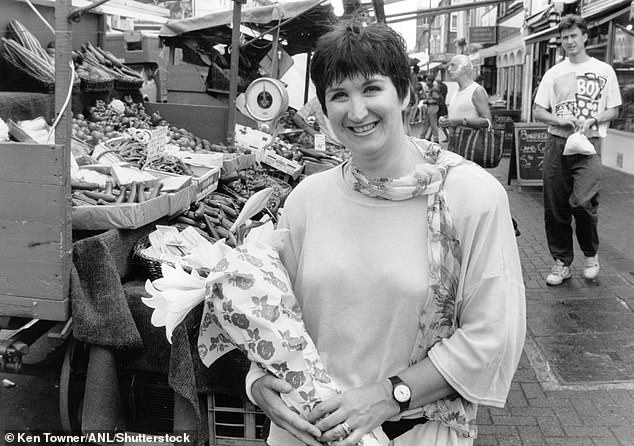
Dame Jenni pictured in Clapham, south London, in 1990 during her time as presenter of Woman’s Hour
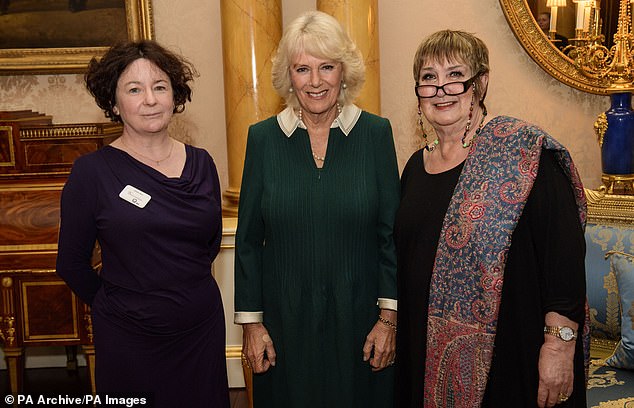
Dame Jenni with Queen Camilla and radio presenter Jane Garvey at Buckingham Palace
Within a decade, she was reading the news and was hired as a presenter on Newsnight in 1983. It says everything about the time that even on the BBC’s flagship nightly news programme, she and the only other female presenter were known as the ‘Newsnight wives’.
It was the kind of casual sexism she spent a lifetime kicking against. Veteran broadcaster Charles Wheeler once said that Murray possessed ‘the most beautiful voice on radio, ever’, but she was far more than just a presenter.
She was a firebrand feminist who made it her mission to highlight and campaign for better pay, better childcare, better healthcare, a more equal share of domestic chores – anything that would improve women’s lives.
If she cared about a cause, she went all in: becoming a patron of a breast cancer charity and of the Family Planning Association and vice-president of Parkinson’s UK (after her mother was diagnosed with the disease). She was also a patron of Women’s Aid.
When Vladimir Putin invaded Ukraine in 2022 she took in a Ukrainian woman and her teenage son.
Her high-profile support for women won her an army of devoted female fans and made her something of a feminist icon: the feminist writer Julie Bindel once described a friend, who had being contacted by Murray, saying it was ‘like getting a phone call from God’.
Murray’s book about the menopause – Is it me or is it Hot in Here? – was published in 2001. Just think about that for a moment: she was almost two whole decades ahead of the likes of Davina McCall and Mariella Frostrup in seeing that the menopause was an issue that needed to be discussed.
When Murray was diagnosed with breast cancer – a moment of irony, in that having urged women to check their breasts she did not notice the tumour in her own until it had grown to 6cm – she received hundreds of cards and messages from Women’s Hour fans wishing her well.
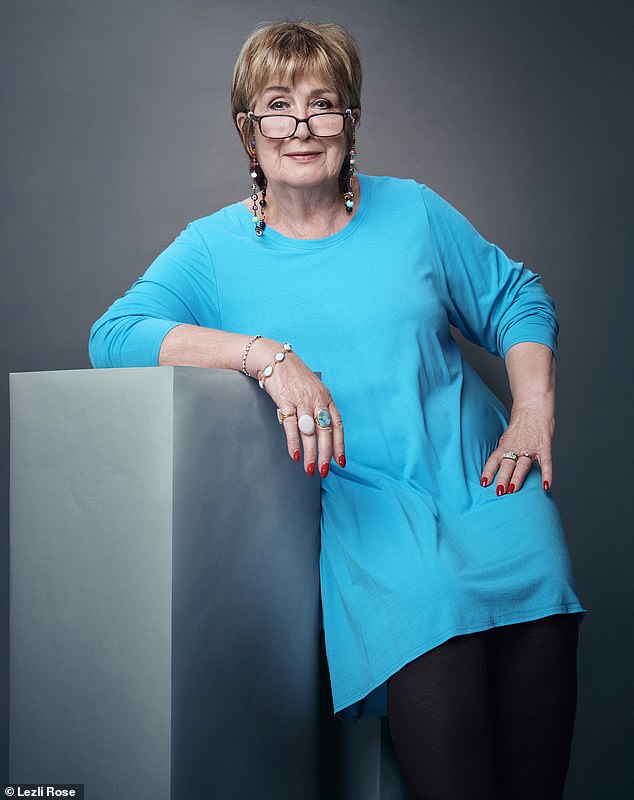
Her high-profile support for women won her an army of devoted female fans and made her something of a feminist icon
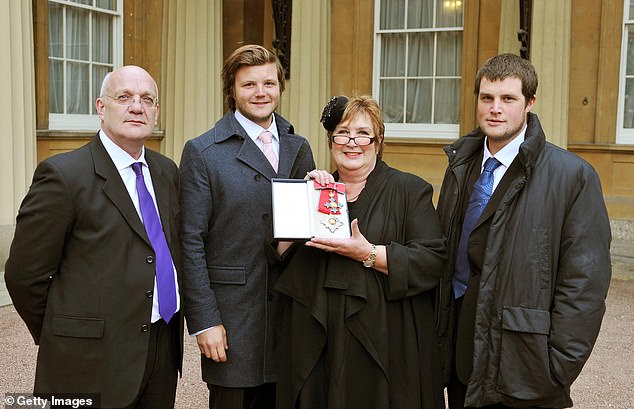
Jenni was made a Dame in in 2011. Pictured with her husband David and sons Charlie, second left, and Ed
Of course, not everyone was impressed by Murray, most notably her own mother, Winifred. The two locked horns all their lives. Murray sometimes put it down to the terrible experience her mother had suffered giving birth to her – an only child. Whatever the reason, a pattern of conflict was set that was never properly resolved.
When teenage Jennifer decided to become known as Jenni, her mother told her it sounded like a name a farmer would give a cow. When she started to put on weight at university, Winifred told her she looked like a baby elephant and called her ‘ten-ton Tess’ .
Winifred’s obsession with her daughter’s looks rather than her intellect infuriated Murray. Winifred resolutely refused to be impressed, even when she joined Newsnight and was interviewing the most influential people in the land
In her book, Memoirs of a Not So Dutiful Daughter, Murray recalled a phone call from her mother one night after the show: ‘What did you think of the interview with Norman Tebbit?’ [then a senior Conservative politician]. My mum said: ‘Oh, you were doing an interview with Norman Tebbit, I didn’t notice what you were talking about. I think your fringe has got a bit long and we couldn’t really see your eyes, which are your best feature, and you’ve put on a bit of weight. I am not sure that red top was quite right because you’ve got quite high colour cheeks’.’
It was only in the last year of Winifred’s life that they began to talk.
‘Do you love me? I’ve often wondered,’ Winifred asked as she lay in hospital. After that, Murray said, they began to discuss their differences and how much her mother’s refusal to accept Murray’s values and lifestyle had hurt.
In truth, though, Murray had every right to be proud of what she had achieved. Her OBE was followed by a DBE in the Queen’s 2011 birthday honours and she was awarded an array of honorary degrees and doctorates.
She stepped down from Woman’s Hour at the end of 2020, aged 70. She said she would probably listen in to hear her successor, Emma Barnett ‘If only to say ‘Oh, God, she made a mess of that’.’
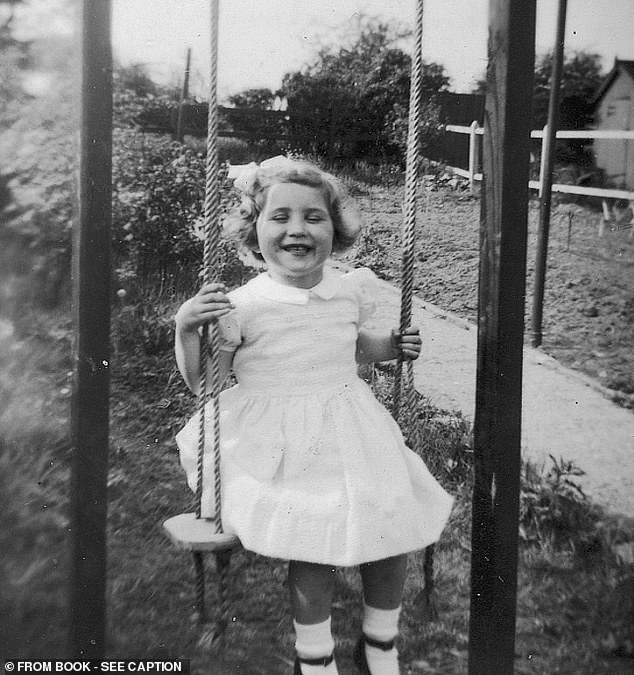
A picture of Jenni as a child in her Coronation frock
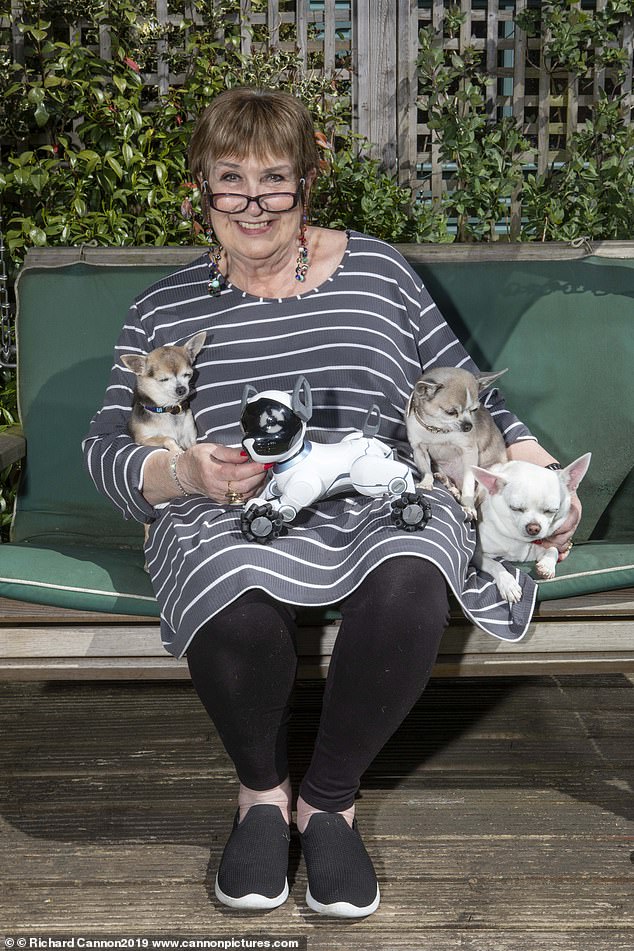
She was fond of dogs and owned several chihuahuas
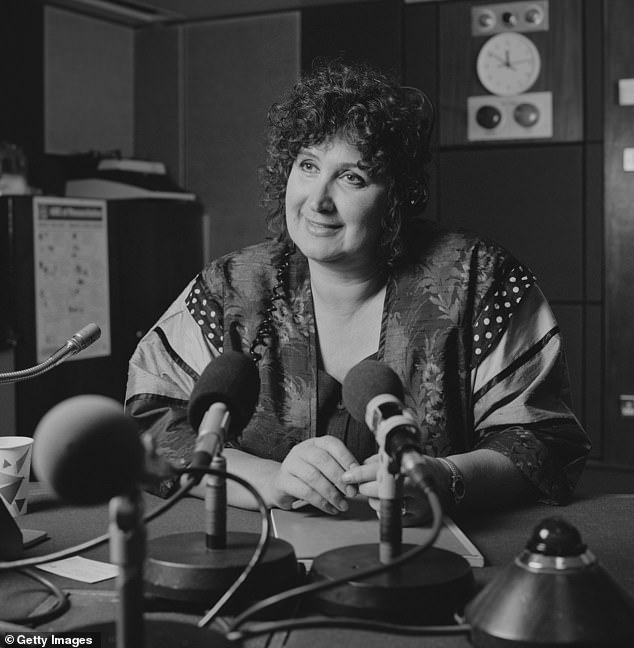
She stepped down from Woman’s Hour at the end of 2020, aged 70. She said she would probably listen in to hear her successor, Emma Barnett ‘If only to say ‘Oh, God, she made a mess of that’.’
Murray was as forthright and uncompromising in her personal life as she was in the professional sphere. When she married her second husband, David Forgham, a former naval officer, she regarded it strictly as a necessity to avoid inheritance tax. She recalled saying to the (presumably rather surprised) registrar beforehand: ‘Here are the rules. You do not refer to me as the bride. You do not refer to him as the groom. No flowers, no music, no romantic guff.’
When she and Forgham had children – sons Charlie and Edward – it never entered her head to give up work: ‘I loved it. I loved walking into the BBC, meeting the producers and colleagues, writing a script, doing the interviews. Going into the studio and performing. I loved it. Absolutely loved it.’
Her husband told her: ‘One of us needs to be at home to look after the kids and it’s clearly not going to be you’, so he gave up work and looked after the boys (one of whom is now a vet; the other a photographer. Jenni became a grandmother when her first grandchild was born at the end of last year).
In 1993, they decided they wanted both boys to attend the fee-paying Manchester Grammar School, so the family moved to the Peak District. From then on, Murray, by now in her early forties, commuted to London where she spent four days a week, living in a gloomy, basement flat in Camden, north London she nicknamed ‘Wuthering Depths’.
Though professionally she felt fulfilled, it was a very lonely time. Friends in London were busy with their own families and hers was far away. Having always struggled with her weight, she began to pile on the pounds, eating takeaways from the local pizza or Indian and washing it down with copious amounts of wine: ‘I’m afraid there were quite a few of us then who treated dry white wine as a non-alcoholic drink.
‘How come I didn’t have the sense to realise that, with the croissants, the toast, the sandwiches, the takeaways, the microwaved ‘quickies’ and the alcohol, my intake of calories was phenomenal? Actually, I did. I’m not a stupid woman. But I’d become so isolated and so miserable that I became a classic comfort-eater.’
One evening she felt so down, she called the Samaritans. Anti-depressants helped, but, despite trying endless diets, she never managed to shift the weight, until, years later, aged 64 and weighing 24 stone, she had a conversation that changed her life. She was walking her dogs in the park with her son, stopping to rest on a bench every once in a while, when a woman not much larger than her came by, on a mobility scooter, with her own dog leads attached to the handlebar. Her son said: ‘That will be you before long, if you don’t do something about your weight.’
She had gastric sleeve surgery and lost eight stone in less than a year. Over the next decade, however, she put it back on again, starting the weight-loss drug Mounjaro in September 2024, and losing four and a half stone on the medication, which she was evangelical about.
Whether it was to do with her weight or not, her later years were plagued by ill health. As well as being hit by breast cancer, which left her with cell damage after having chemotherapy, she had to have both hips replaced (saying with characteristic humour that ‘I’ve joined the hip-op generation’).
Her long spiral into ill-health began in 2023 with what seemed like a minor accident, when her cat knocked an ashtray on to her foot. That needed an operation, leaving her unsteady on her feet. Then her beloved chihuahua Minnie cuddling up to her at night led to her falling out of bed, the spinal injury, then pneumonia. While she continued writing her Daily Mail column – filing her last one on 4 March – she continued to suffer one ailment after another including post viral fatigue after a bout of Covid last autumn; atrial fibrillation; cataracts and lymphoedema.
She wrote movingly about how her loving sons had dropped everything to be by her side whenever she needed them and how they were every bit as capable of looking after a frail and elderly parent as a daughter – but then she’d always said that as an ardent feminist she would have been a terrible mother to a daughter anyway: ‘I would have expected her to be a high court judge by the age of six.’