A customer was marched out of his local Sainsbury’s store that he has shopped at for ten years after staff using facial recognition software wrongly identified him as an offender.
Warren Rajah was in the branch next to the Elephant and Castle station on Tuesday when two members of staff and a security guard suddenly escorted him outside.
When the 42-year-old asked why, they simply pointed to a sign showing that the store used facial recognition technology.
The store is one of six in London where Sainsbury’s has recently rolled out Facewatch technology, in response to rising theft and violence against staff.
The early results ‘have been encouraging’ with trial stores seeing a 46 per cent reduction in theft, harm, aggression and antisocial behaviour and 92 per cent of offenders not returning, Sainsbury’s website states.
According to the software’s website, it has 99.98 per cent accuracy and is ‘the only crime prevention tool that proactively identifies known criminals, allowing staff to act before a crime has been committed.’
In November, Facewatch sent 49,589 positive alerts of known offenders to protect its customers’ employees and assets.
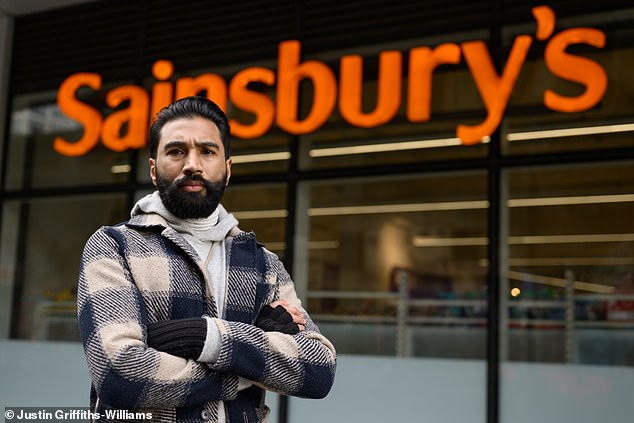
Warren Rajah, 42, was marched out of his local Sainsbury’s after staff made a facial recognition blunder
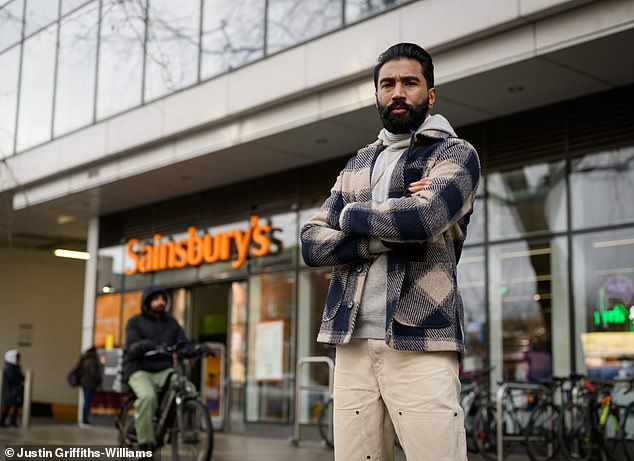
Mr Rajah has been shopping at the Elephant and Castle store for ten years
The software’s cameras scan the faces of customers, which are compared against a database of recorded offenders.
Store managers are then alerted to any matches so they can verify the match.
In Mr Rajah’s case, the error was made at the second stage of human verification.
Mr Rajah described the ordeal to Metro: ‘They came up to me and asked to see my “bar code”. I didn’t know what this meant so I just showed them my Nectar card.
‘Then they told me to leave. It was the most humiliating moment of my life, being escorted out the place I have shopped in for 10 years in front of my community.’
To prove he did not have any criminal convictions, he submitted a subject access request to Facewatch, asking them to explain what data they held on him to set off the alert in Sainsbury’s.
For this, he had to email an image of himself and a copy of his passport, which he said felt ‘like a massive invasion of my privacy.’
He said: ‘I started panicking massively because I don’t know anything about this company or what they do. Do they record crimes as they happen? Are they linked to law enforcement? Would this impact my career?’
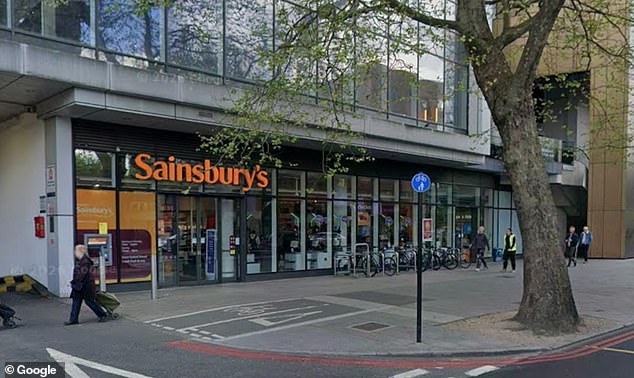
The Elephant and Castle store (pictured) is one of six in London where Sainsbury’s has recently rolled out Facewatch technology, in response to rising theft and violence against staff

Facewatch confirmed to Mr Rajah that he was not on its database
By law, before any information can be disclosed, Facewatch must first verify the identity of the person making the request to ensure they are who they claim to be, hence the request for such information from Mr Rajah.
Facewatch confirmed to Mr Rajah that he was not on its database and was redirected to Sainsbury’s, the BBC reports.
Mr Rajah said the supermarket called him to apologise and offered him a £75 voucher.
Both the supermarket and Facewatch claimed it was not the fault of the cameras, but human error by staff inside the store who approached the wrong person.
A Sainsbury’s spokesperson said: ‘We have been in contact with Mr Rajah to sincerely apologise for his experience in our Elephant and Castle store.
‘This was not an issue with the facial recognition technology in use but a case of the wrong person being approached in store.’
A Facewatch spokesperson said: ‘We’re sorry to hear about Mr Rajah’s experience and understand why it would have been upsetting.
‘This incident arose from a case of human error in-store, where a member of staff approached the wrong customer.
‘Our Data Protection team followed the usual process to confirm his identity and verified that he was not on our database and had not been subject to any alerts generated by Facewatch.’
This is not the first time a shopper has fallen victim to human error in a store using facial recognition technology.
One B&M customer Jenny was placed on a watchlist and barred from returning to her local store in Birmingham after she was falsely accused of previously stealing a bottle of wine.
She previously told BBC Radio 4’s Today programme: ‘It’s like we’ve made retail managers and technology companies judge, jury and executioner, with no legal due process.’
The retail company apologised and blamed human error.
Other cases involve a 64-year-old woman who was wrongly put on a facial recognition watchlist, accused of stealing less than £1 worth of paracetamol from Home Bargains and Danielle Horan, from Manchester, who was ordered out of two separate shops after being falsely accused of stealing toilet roll.