“We can never have enough of Nature,” New England writer and naturalist Henry David Thoreau declared in his 1854 work, “Walden; or, Life in the Woods.”
Given the accelerating discovery of species in recent years, humans are likely to keep having more of nature than Thoreau may have ever imagined. A lot more.
“We’re finding new species at a faster rate than ever before,” according to Professor John Wiens, author of a recently published University of Arizona-led study. Between just 2015 and 2020, the study documented an average of more than 16,000 new species identified each year.
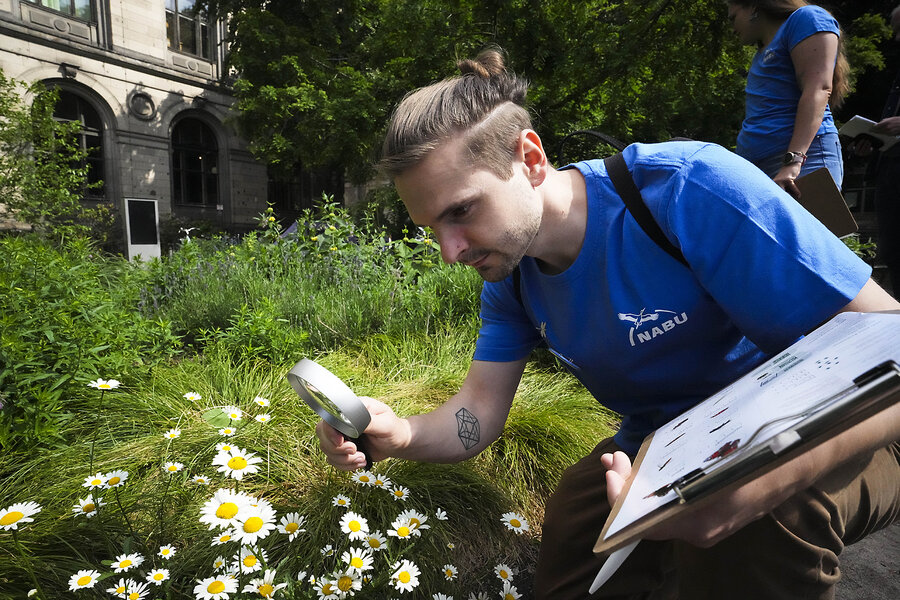
This soaring pace is cause for celebration among the professionals who study insects, amphibians, animals – and even among those who search for new objects in outer space. It is also a tip of the hat to the millions of amateur “citizen scientists” expanding the world’s knowledge and appreciation of nature.
New and easy-to-use technology, such as artificial intelligence, is helping to tap into and amplify human awe over natural wonders, both little and large. For instance, photos from a citizen scientist helped Australian researchers identify an entirely new genus (one classification level above species) of praying mantises in 2023. On the interstellar scale, amateurs scanning mountains of data from NASA’s Kepler space telescope discovered a system of exoplanets outside Earth’s solar system.
A multitude of apps are “helping to democratize science,” biology Professor Michael Friedman told the site Inside Climate News. They are “an equalizer,” he said, giving even those without a college degree “the ability to do … science that’s publishable” in academic journals.
Users of software such as Merlin (for birds) or the more general iNaturalist can upload sound recordings or images that are initially sorted by AI systems. Data from iNaturalist, with an estimated 3 million users, has reportedly been used in more than 4,000 scientific papers. The state of California is partnering with the site to incorporate the data into decision-making tools for conservation.
Just as important as the scientific and policy implications, said one of iNaturalist’s early developers, is “connecting people in nature and getting them excited about what’s in their backyards.”
And perhaps even more important, one might add, is that the same digital technologies driving social isolation and cyberbullying are also demonstrating their positive potential – to reinvigorate interpersonal connections.
“One of iNaturalist’s great strengths,” a research article noted, “is the facilitation of real-time interactions between users from around the globe.” Whether “experts” or “amateurs,” people of varied backgrounds can now collaborate in ways that can spark conversations and new discoveries – about the world and each other. That alone is awesome!