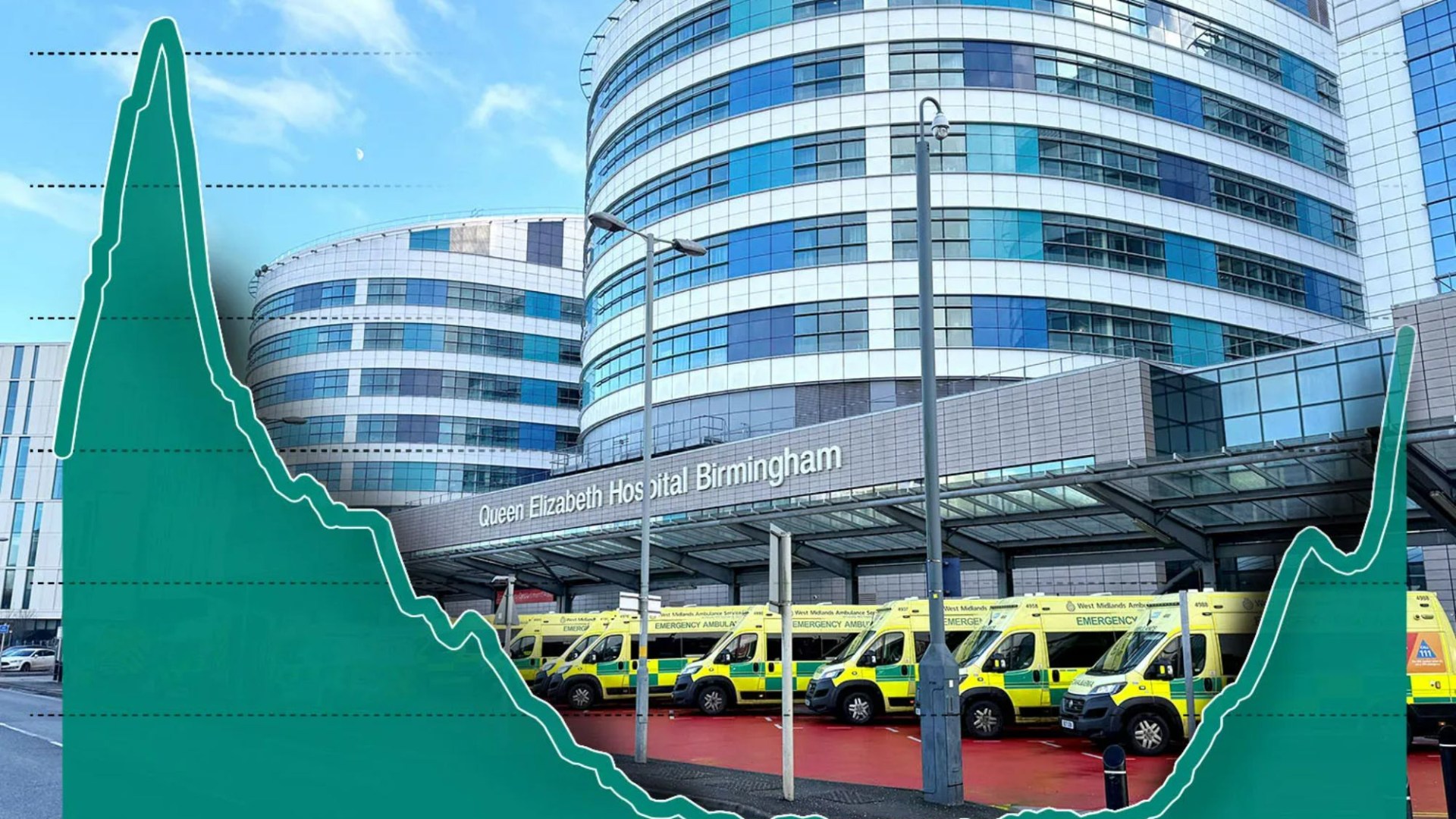
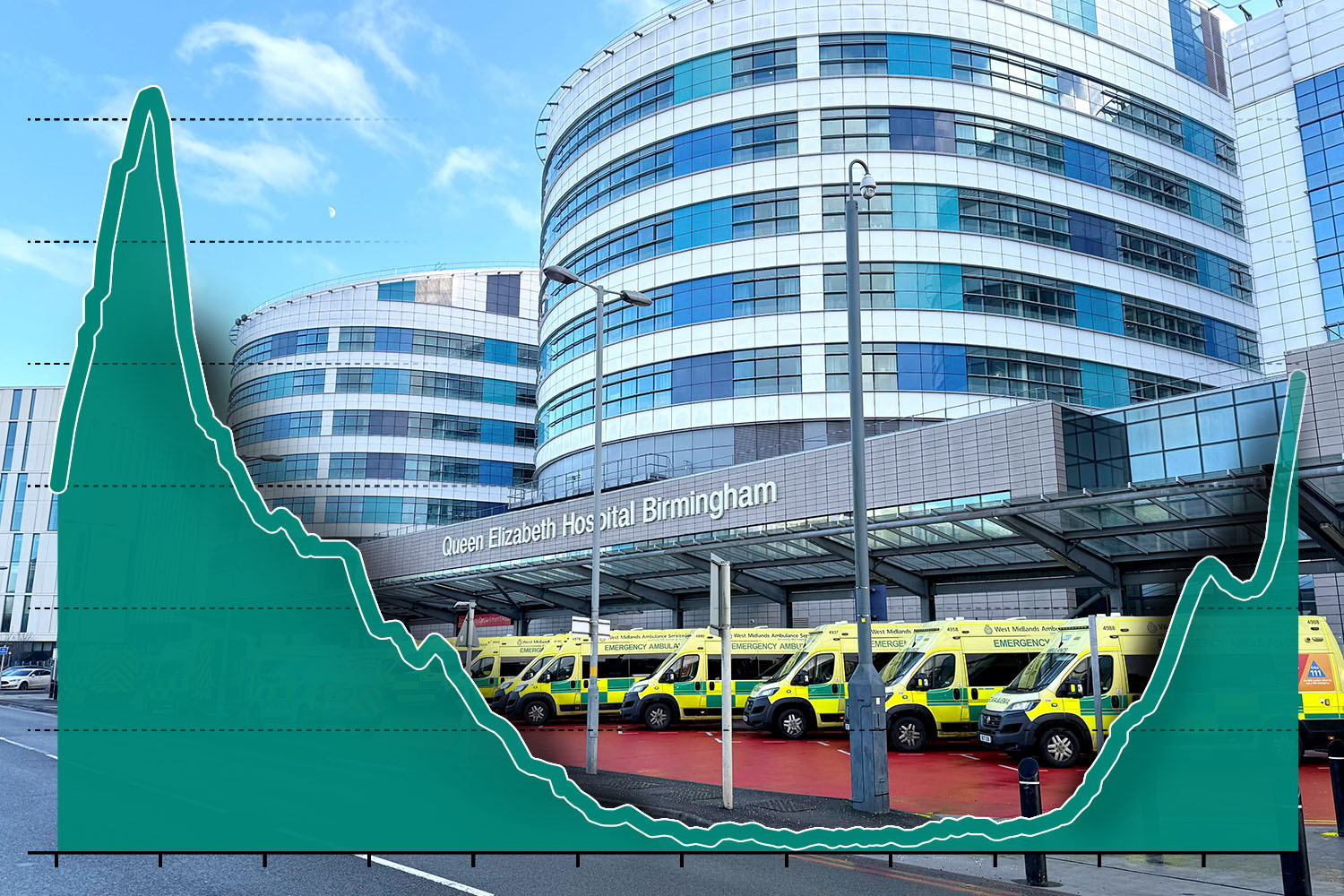
HOSPITALS up and down the country have declared ‘critical incidents’ as the flu-nami batters the NHS as it continues to tear through the UK.
Some schools have even been forced to shut while others have brought back Covid-esque “firebreak lockdowns” as hundreds are off sick.
The measures have been introduced as a mutant flu strain – known as H3N2 – which is driving rocketing illness rates and filling hospital beds.
Last week, there was an average of 1,700 patients in hospital with flu – more than 50 per cent higher than the same time last year.
This year’s strain, also now known as ‘subclade K’ or ‘super flu’, is relatively new, meaning many people won’t have much natural immunity.
At least two NHS Trusts have declared ‘critical incidents’ a term that’s used by hospitals when they can no longer guarantee that patient care can be delivered safely.
Such incidents are typically declared in response to overwhelming demand or infrastructure failure.
University Hospitals Birmingham NHS Foundation Trust, which is responsible for Queen Elizabeth, Heathlands and Good Hope Hospitals along with nearby Solihull Hospital, has issued the alert due to “extreme pressures”.
The Trust posted on all its hospitals’ social media sites saying it’s A&E departments are facing huge demand.
A Trust spokesperson said: “If you do not have an emergency or life-threatening condition you may be redirected to another healthcare service.”
Meanwhile, University Hospitals of North Midlands (UHNM) trust is urging people to only use A&E in a serious or life-threatening emergency.
The announcement covers both Royal Stoke University Hospital and County Hospital, Stafford.
Chief Operating Officer Katy Thorp said taking the difficult decision to declare a critical incident helped them take additional measures to maintain safe services for hospital patients and those waiting for an ambulance.
“As anticipated, the pressure is greatest in our emergency departments, which are facing continued challenges as patients cannot be admitted to bed promptly,” said Ms Thorp.
A&E units will continue to see the most ill patients first, said chief medical officer Dr Diane Adamson, warning that some patients may experience much longer delays than usual as a result.
“I would like to thank our staff for their ongoing efforts during this extremely challenging period and the public for their understanding and co-operation,” she said.
Hospitals have also started to reinstate Covid-style measures to keep staff and patients safe.
The Royal Surrey County Hospital in Guildford has asked people to wear face masks at its accident and emergency department.
Salisbury District and Great Western Hospitals in Wiltshire are asking all patients, visitors and members of staff in their A&E departments, as well as a number of other assessment units, to also wear face coverings.
Sir Jim Mackey, CEO of NHS England warned of a “really, really big increase” in cases that might require a “national response”.
Headteachers have warned it feels like “being back in Covid times”, with some even cutting singing in assemblies to curb the spread of illness.
St Martin’s secondary school in Caerphilly, South Wales, has been temporarily closed after 242 pupils and 12 staff members fell sick.
Headteacher Lee Jarvis told parents and carers about a “significant outbreak of flu-like illness”, saying there would be a “firebreak” period.
Elsewhere, Congleton High School in Cheshire shut for three days a fortnight ago after high numbers of pupils suffered flu-like symptoms.
Headteacher Heidi Thurland said the closure was to carry out a deep clean, with teaching continuing on a remote learning platform.
Simon Kidwell, Head at Hartford Manor Primary School and Nursery in Nantwich, Cheshire, admitted combatting flu had been a “real challenge”.
He told BBC Breakfast this morning: “The winter bugs spread really easily in schools.
“We do know that we can do things to make sure that it’s safer in schools.
“But we’ve seen schools close to us in Cheshire for three days, so it has been a real challenge this year”.
The rapid infection rate in the latest flu strain has sparked fears it could trigger one of the worst outbreaks in recent memory, if not ever.
It has already forced several wards to implement compulsory mask-wearing to help slow the spread.
And the big increase, which is ten-fold more than in 2023, leaves hospitals at an increased risk of being swamped.
The NHS issued an urgent vaccination plea on Monday as London flu hospitalisations have tripled due to an “unprecedented flu wave”.
They said patients in a London hospital bed was triple the daily average compared to this time last year and urged Londoners to get their flu jab as “a matter of urgency”.
The news comes after a Wigton Moor Primary School stopped singing in assemblies to curb the spread of flu.
The school, based in Leeds, introduced several Covid-style measures to counter the spread, including stopping singing in assembly.
“We’ve had assemblies, but we’ve not sung in assemblies because again, we know that that’s something that spreads it quite a lot, Mrs Bown said.
She told the BBC: “We are rehearsing for nativities at the moment and Christmas performances…
“…we know from Covid that singing in schools is one of the worst spreaders.”
Everything you need to know about flu
Flu will often get better on its own, but it can make some people seriously ill.
It’s important to get the flu vaccine if you’re advised to.
Flu symptoms come on very quickly and can include:
- a sudden high temperature
- an aching body
- feeling tired or exhausted
- a dry cough
- a sore throat
- a headache
- difficulty sleeping
- loss of appetite
- diarrhoea or tummy pain
- feeling sick and being sick
The symptoms are similar for children, but they can also get pain in their ear and appear less active.
There are things you can do to treat flu yourself:
- rest and sleep
- keep warm
- take paracetamol or ibuprofen to lower your temperature and treat aches and pains
- give paracetamol or ibuprofen to your child if they’re distressed or uncomfortable – check the packaging or leaflet to make sure the medicine is suitable for your child, or speak to a pharmacist or GP if you’re not sure
- drink plenty of water to avoid dehydration (your pee should be light yellow or clear)
But ask for an urgent GP appointment or get help from NHS 111 if you or your child have symptoms of flu and:
- you’re worried about your baby’s or child’s symptoms
- you’re 65 or over
- you’re pregnant
- you have a long-term medical condition – for example, diabetes or a condition that affects your heart, lungs, kidneys, brain or nerves
- you have a weakened immune system – for example, because of chemotherapy or HIV
- your symptoms do not improve after seven days
Call 999 or go to A&E if:
- get sudden chest pain
- have difficulty breathing
- start coughing up a lot of blood
How to protect yourself and your family
The flu vaccine helps protect against flu, which can be a serious or life-threatening illness.
It’s offered on the NHS every year in autumn or early winter to people at higher risk of getting seriously ill from flu.
You can get the free NHS flu vaccine if you:
- are aged 65 or over (including those who will be 65 by 31 March 2026)
- have certain long-term health conditions
- are pregnant
- live in a care home
- are the main carer for an older or disabled person, or receive a carer’s allowance
- live with someone who has a weakened immune system
If you’re eligible for an NHS flu vaccine, you can:
Source: NHS