This article is taken from the December-January 2026 issue of The Critic. To get the full magazine why not subscribe? Get five issues for just £25.
For decades, visitors to Parliament were told that a patch of mismatched floor tiles in St Stephen’s Hall, on the way to Central Lobby, marked where the prime minister, Spencer Perceval, had been assassinated in 1812. Two centuries later, these rogue tiles were lifted during restoration work and turned to fit the pattern of the rest, leading Robin Butler, the former cabinet secretary, to table a question asking why this quirky tribute had been erased. Reply came back that the mispatterned area never had anything to do with the late prime minister, who was shot at the other end of the room. It was simply a botched post-war repair job.
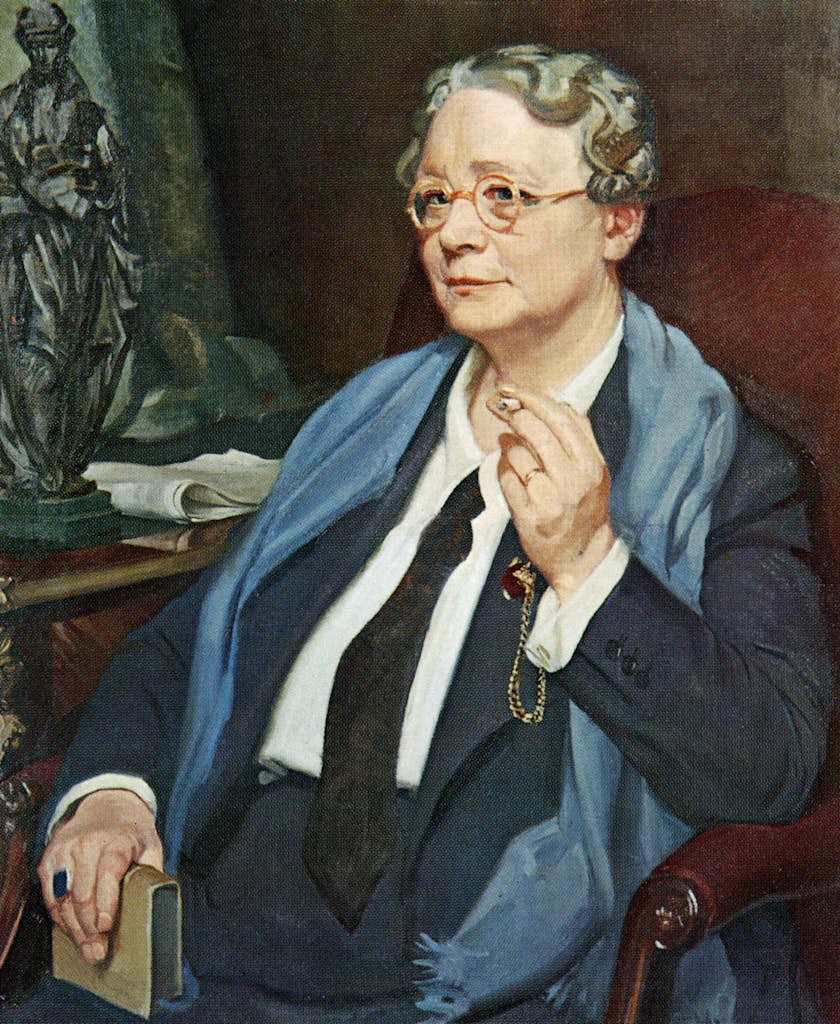
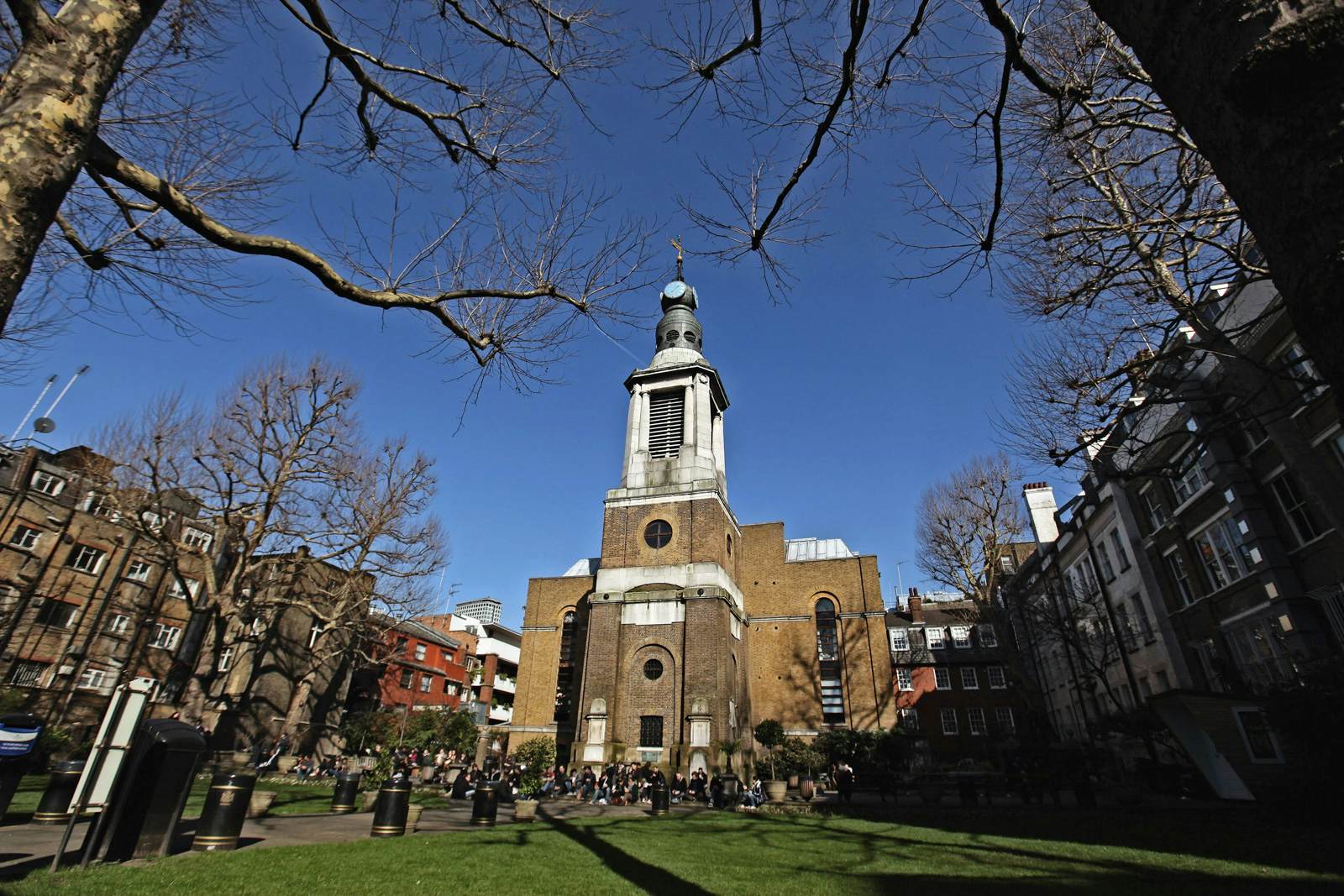
No such error lies beneath the red carpet tile in a sea of grey on the floor of the tower of St Anne’s church in Dean Street, Soho. That was chosen as a marker for the grave of the woman whose portrait hangs on the wall, smoking a cigarette with a wry, contented look. Here lies Dorothy L. Sayers, crime writer and theological scholar.
Almost 60 years after her death in 1957, no one was quite sure where she was. It was written that her remains lay in a vault 18 feet below the tower, but there is no vault. It was only when the church experienced bad damp that they took up the tiles and found a manhole cover, beneath which was a casket, just one foot below the floor, topped by a marble plaque on which was written “Dorothy Leigh Sayers” and then in brackets, in case posterity might forget her as an author, “Mrs Atherton Fleming”.
Her eternal rest almost ended up inside a Dustbuster. The casket was at a skewed angle and the parish architect bent down to straighten it. As he did, the sides began to collapse. Fortunately, her ashes lay in a hollow and the priest and his architect gingerly rebuilt the box, trying not to cough, tied it together with string and decided to mark the spot with a different piece of carpet. Red, the colour of blood. Well, you never know in detective fiction when someone might have a nasty encounter with a thurible.
Sayers had earned this as her place of repose not simply for her standing as an author but because for five years she had served the parish as its churchwarden, an ancient role, as old as Parliament. One guide in the 1920s described them as “the guardians of parochial morals and trustees of the Church’s goods” whilst a more recent manual suggested that they combine the functions of “front of house” and “stage manager”. That might aptly describe how Sayers approached the task.
Her religious devotion is well known, from her childhood in Oxford, where her father was chaplain at Christ Church, and the Fens, where he was rector of Bluntisham. Her detective fiction has been characterised by her “desire to find humanity in the world’s grubbiness”. This flowed into her later religious writing, including the 1941 radio play cycle The Man Born To Be King, on the life of Christ, which drew complaints from those who had not heard it and praise for its sincerity once it was aired.
Sayers told Barbara Reynolds, her biographer, that “Being inside [the Church] can be very exasperating. Nothing is so disillusioning as the company of one’s fellow Christians.” Despite this, and living in Witham, Essex, she agreed to a proposal in 1942 by Fr Patrick McLaughlin, vicar of St Thomas’s, Regent Street, to assist him in creating a mission centre at the nearby St Anne’s.
St Anne’s was consecrated in 1686 and before its churchyard was closed in 1845, there had been 100,000 burials on the site. One of the sextons, it turned out, was in the habit of dumping bodies in the ground out of the coffin, having sent the grieving family off to the pub, so he could reuse the coffin or sell it for firewood. The problem was that there is a water course running underneath Soho and so all these corpses caused a cholera outbreak. In the crypt, there is the body of a duke who was buried in women’s clothes. How very Soho.
On 24 September 1940, the church was burnt out in the Blitz, save the tower, and worship moved to St Thomas’s. In 1953 these two parishes were merged in a benefice with St Peter’s, Great Windmill Street, though St Anne’s is the only building that survives. A new chapel was consecrated there in 1990.
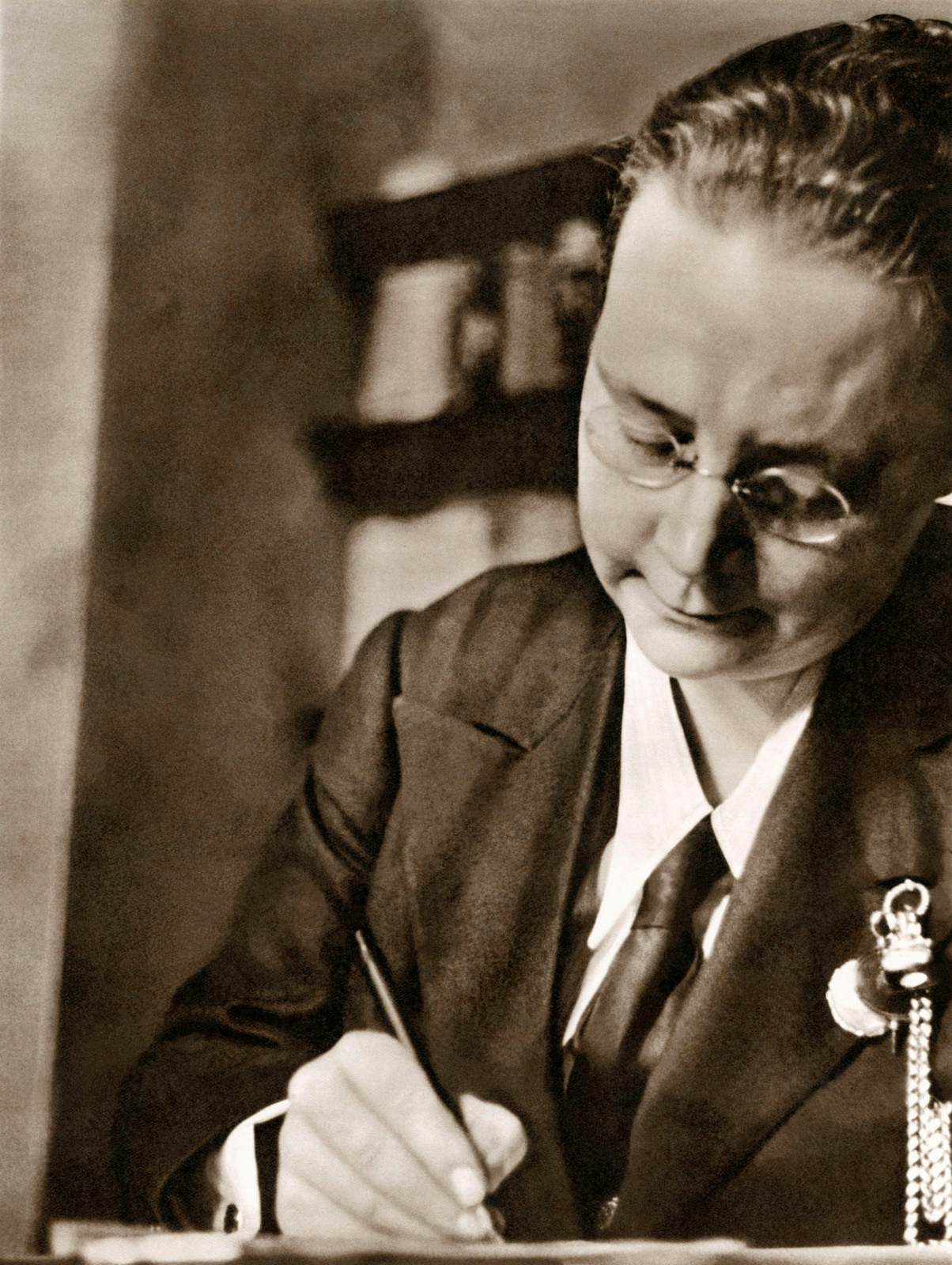
Fr McLaughlin had been given permission to set up a literary society, with Fr Gilbert Shaw, in the St Anne’s tower, a place for “reasoned debate about the Church with open-minded agnostics”. Sayers was asked to start a series on “Christian faith and contemporary culture” with a talk on drama, followed by T.S. Eliot on literature. Later speakers included C.S. Lewis, Agatha Christie, John Betjeman and Iris Murdoch.
David Coomes, another Sayers biographer, argued that this venture gave her a new vocation. “It offered her meaty argument amongst friends, a chance to get away from a quarrelsome and often drunken husband and the revival of a life in London unknown since the 1920s,” he wrote. She was much closer in temperament to McLaughlin than Shaw, who was keen on exorcism and would disrupt seminars with bloodcurdling shrieks from the basement. Fr McLaughlin would have to soothe his group, telling them: “Please don’t be alarmed. It’s only my colleague dabbling in devilry.”
Fr McLaughlin often invited Sayers to read the lessons at St Thomas’s. Word got around about this, he later wrote, and he heard people saying: “Do you know that there is a church in London where they have a woman reading the Epistle? Did you ever hear anything so disgraceful?” At the end of 1951, Fr McLaughlin asked Sayers to be one of his two wardens. The vicar told the Daily Telegraph it was “unusual but not without precedent” for a woman to have the role. He later recalled that she asked what it would involve. “Nothing very much,” he said, “unless the Bishop comes.”
“Nothing very much” does seem to describe her written involvement in the parish, to judge by the records in the City of Westminster Archives, especially on the matter of fabric and repairs, which she left to her co-warden or the PCC secretary.
In 1952 she was appointed for the start of St Thomas’s 250th anniversary year, and perhaps it was felt she would be of most use in promoting it at a time when it needed to raise money for much-needed repairs. Of the £8,000 required, fundraising made only £250. After sitting empty for 15 years, St Thomas’s was finally sold in 1972 for £805,000 (about £14 million today) and demolished.
Sayers’s strength, of course, leaned more to literary matters than the ongoing problems of maintenance and its funding. It is probable that she was behind the publication of the first parish yearbook in 1956, which has unbylined pieces on “Why I am a Christian”.
She was also deployed in staging plays at St Thomas’s. Within a month of her taking office, they put on The Emperor Constantine, which she had produced in Colchester. Three years later, however, one of her plays landed the vicar in hot water. In April 1955, he received a letter from the archdeacon about a “very serious situation” that had arisen. The deputy Lord Chamberlain could “no longer turn a blind eye at the overt breaches of the law” and was minded to hand the case to the public prosecutor.
This was over a production of Sayers’s The Man Born to Be King, which had been broadcast 13 years earlier but was not cleared for use on the stage as it contained a representation of Our Lord. Worse, the public had been charged admission.
The archdeacon said the bishop was “most concerned” and warned Fr McLaughlin: “If you are prosecuted, you will not have a leg to stand on. The church will be brought into disrepute and a lot of the undeniably useful work you are doing will be brought to a very abrupt end.” He advised that the priest give an immediate grovelling apology, adding: “The Lord Chamberlain is in deadly earnest.”
This Fr McLaughlin clearly did, for a letter four days later came from the Lord Chamberlain’s assistant-comptroller saying: “Pray do not upset yourself too much over this play-producing business. You will not on this occasion find yourself in the Courts!”
He said the main issue was the sale of tickets and that, in future, adverts for church productions should say they were for “members only” of a theatre club, though he warned that selling a subscription with a ticket would not be allowed. Fr McLaughlin replied to the archdeacon in a rather weaselly manner that he had lent the church to an outside organisation of which Sayers was a director and that he had assumed they would follow the law. The archdeacon replied that one does not “lend” one’s church without checks.
Despite this buck-passing, the vicar was very fond of his warden and had intended to meet her on 17 December 1957, when she came up to London to do some Christmas shopping. In the end, Sayers rang him from Liverpool Street saying that her purchases had taken too long, and she needed to get home to feed the cats. She would see him on her next visit. That evening, she collapsed and died, aged 64.
She was cremated on 23 December and her ashes interred, as she wished, in the parish. The next year, the Society of St Anne’s, lacking its literary godmother, was wound up. Four years later, Fr McLaughlin resigned his Anglican orders and became a Catholic. So ended a distinguished joint effort to use culture to stimulate theological discussion.
Dorothy L. Sayers may not have been the most assiduous warden when it came to inspecting the drains or doing paperwork, but she served her church in the best way she could. That is why it says in the plaque below her portrait in the tower of St Anne’s: “The only Christian work is good work well done”.