TURN on the news and you can be forgiven for thinking the world is going to hell in a handcart.
But one singer is refusing to go down without a fight.
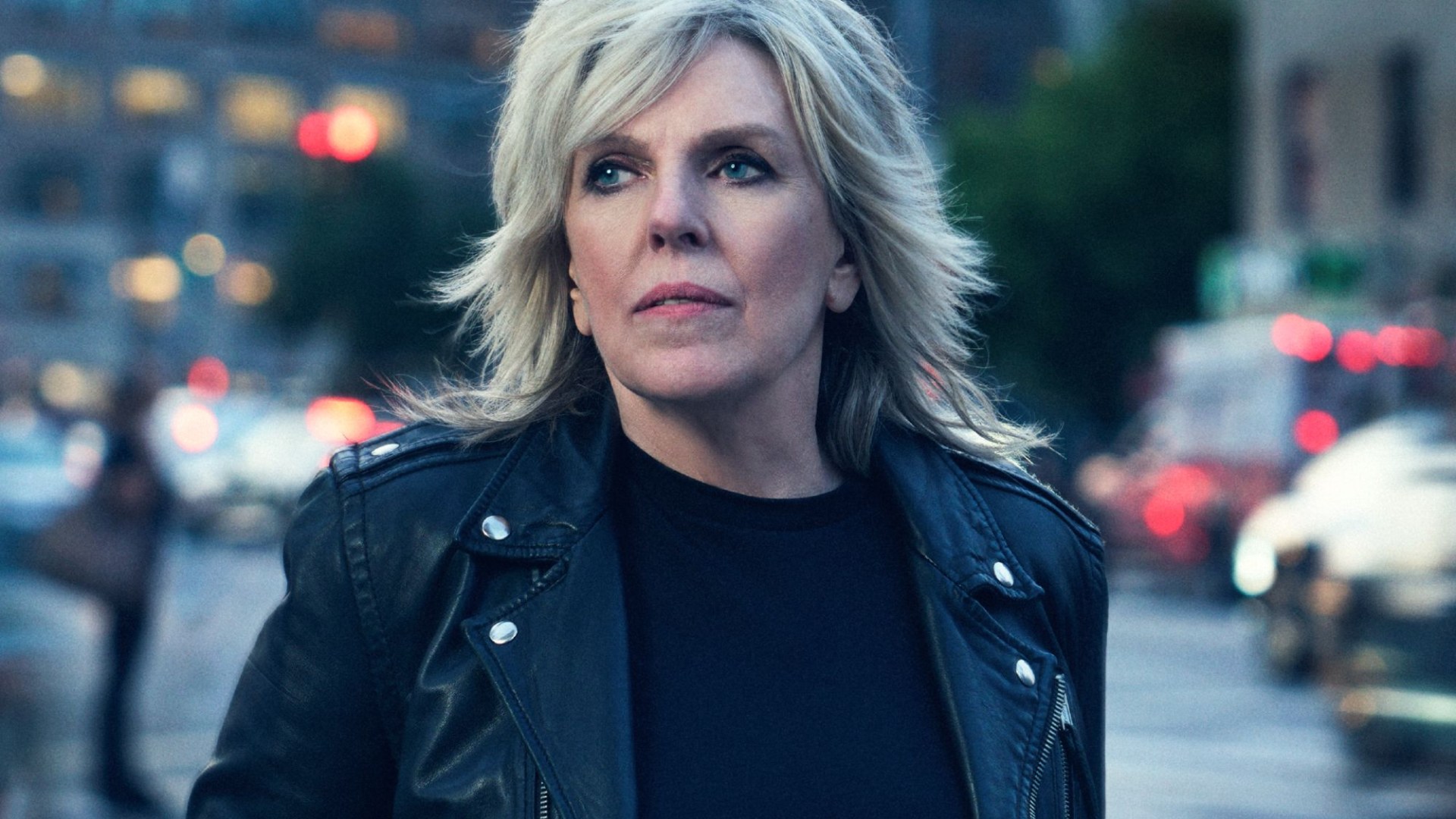
Lucinda Williams, bearer of one of America’s most impassioned voices, is delivering a rallying cry for troubled times.
Her latest album, World’s Gone Wrong, bristles with righteous indignation at events in her divided country.
But it also offers a much needed dose of resilience while harbouring dreams of better days ahead.
“I didn’t set out to do an album like this,” she says via video call from her home in Nashville.
READ MORE ON LUCINDA WILLIAMS
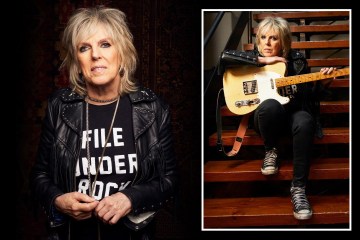
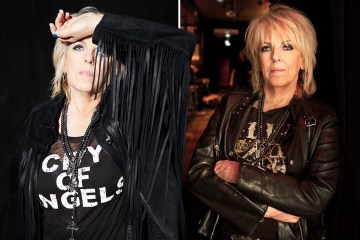
“But it had to be done. It had to be said. The climate we live in is pervasive. Every day, there’s some crazy weird story.”
Born 72 years ago in Lake Charles, Louisiana, Lucinda is a fighter in more ways than one.
After suffering a stroke in 2020, she has battled her way back to studio and stage — and is showing no signs of giving up.
“The alternative didn’t appeal to me,” affirms the fiercely independent spirit, “which would be to just sit in a wheelchair or on my couch at home, and gain weight.”
After a stop-start early career, Lucinda’s big breakthrough came in 1998 with Car Wheels On A Gravel Road, the blueprint for modern Americana.
The album confirmed her belief that she’s “too country for rock and too rock for country”.
She tells me that one of the first songs written for her 16th studio album, World’s Gone Wrong, was We’ve Come Too Far To Turn Around.
Cast as a country-tinged waltz with Norah Jones contributing vocals and piano, it serves as the defiant closing track.
“I was thinking a lot about songs from way back such as We Shall Overcome,” adds Lucinda.
That anthem became synonymous with America’s civil rights movement in the Sixties — and its most prominent leader, Martin Luther King.
Four days before his assassination in 1968, King recited the words of We Shall Overcome, a plea for peace and equality, in his final sermon.
Lucinda believes there are strong parallels between those times and today, perhaps explaining why the current situation has rekindled the old anxieties in her.
She says: “Back in the Sixties when I was in high school, I was quite the activist.
“I’d go on demos and marches and I would take my guitar along with me. I learned protest songs and I would sing at events. I was so passionate about it all, especially the anti-war movement.”
She adds with a wry smile: “Now people say I’m too idealistic but I don’t care. If they want to say that, they can.”
Her late father, poet and literature professor Miller Williams, gave Lucinda some advice that she heeds to this day.
“My father had a great way of putting things,” she says. “He told me, ‘Never lose your sense of wonder’.”
She remembers her first musical loves being Bob Dylan, Joan Baez, Donovan, Judy Collins, Gordon Lightfoot and Buffy Sainte-Marie.
‘Protest songs made me feel good’
“I just dove headfirst into the whole folk music scene,” she says.
“I also discovered Woody Guthrie and Pete Seeger, so I was hearing all these protest songs — and it made me feel good.”
“Later, I got into The Doors and the Stones but even they were doing songs about changing the world.
“The Doors had that [anti-Vietnam] song The Unknown Soldier — it was dark but brilliant.”
Now, in 2026, Lucinda has decided to take a stand again with World’s Gone Wrong, even if its uncompromising songs might draw some heat.
“I’ve gotten all kinds of responses from people who have heard the album,” she reveals.
“Some have asked me, ‘Are you afraid to sing these songs?’ and others have said, ‘Thank you for writing them.’”
She acknowledges that she’s not alone among musicians when it comes to airing her views and praises Bruce Springsteen, who appeared on her previous album, Stories From A Rock N Roll Heart.
The Boss shared his dismay at the US administration on his latest European dates with a jaw-dropping speech.
“He’s so articulate,” she says. “It makes me feel happy that he’s doing that. It makes me respect him even more.”
But, as you may have gathered, Lucinda is not a fan of the sandy-haired incumbent at the White House, even if she prefers not to mention him by name too much.
She laughs about a recent interview with an Australian journalist who said to her: “Go on admit it, Man Without A Soul is about Donald Trump.”
“I replied, ‘It could be about any number of people but, yes, that is who I was thinking of when I wrote it!’ ”
I’m intrigued to find out if Lucinda encounters Trump supporters in her adopted hometown of Nashville.
The Tennessee capital is where liberal indie musicians rub shoulders with traditional Republican types.
“Well, you don’t want to go out to dinner with them unless you want to get into a big heated discussion, which I actually enjoy every so often,” she admits.
“I love a good, heated right and left kind of discussion.”
Her new album begins with the Springsteen-esque title track, featuring Brittney Spencer on backing vocals and telling the story of a hard-up couple — “he sells cars and she’s a nurse”.
They struggle as “dark days are getting long” but the song ends on a high note.
The pair “put on some Miles [Davis] and dance barefoot across the tiles/And forget our troubles for a little while.”
Another emphatic effort is Freedom Speaks, which addresses Lucinda’s concerns about erosion of free speech.
She draws my attention to the threats to US talk show hosts Stephen Colbert, Jimmy Kimmel and Seth Meyers and says: “It’s almost impossible for me to imagine censorship in this day and age — but I just had to look at the news to see it’s a real thing.
“For me and a lot of people, the challenge in our country is accepting that this is happening here and it’s happening now.”
No Lucinda Williams album is complete without the blues, in this case the grinding Black Tears, which focuses on enduring racial divides in the States.
It borrows the line “the dream is deferred”, written in 1951 by black poet and activist Langston Hughes long before King’s “I have a dream” speech.
Lucinda’s love of the blues goes back a long way.
Her debut album, Ramblin’ On My Mind, released in 1979, is a covers collection drawing heavily on delta blues.
“Robert Johnson was just it for me when I discovered him,” she says. “It’s almost impossible to verbalise his music — it’s such a feeling. It just hits you.
“That started me looking out for other blues artists, the more obscure, the better. I would go into record stores and hunt through the bins.”
Despite its overt message, one of Lucinda’s most uplifting new songs is a cover from a different genre — reggae.
So Much Trouble In The World, written by that champion of freedom and justice Bob Marley, finds her duetting with the incomparable Mavis Staples, who is still going strong at 86.
Mavis came to fame as part of family gospel group The Staple Singers, who worked closely with Martin Luther King in the Sixties.
She has just released her own powerful statement, the lauded Sad And Beautiful World album, but was more than happy to join Lucinda’s recording sessions.
Lucinda says: “Mavis is a treasure. She and I have done a handful of shows together over the years and she was always very sweet and supportive of me and my music. We would always end up chatting to each other, so I felt like we were friends at a certain point.
“When I was in the studio this time, I thought, ‘We’ve got to get Mavis in’.
“I would have had her sing on everything but we didn’t want to overwork her. I didn’t tell her what to sing or how to do it. She just came in and did her thing.”
So, what’s Mavis like as a person these days?
“She looks very youthful,” answers Lucinda. “Her skin is smooth and beautiful.
“And she still talks about how Bob Dylan asked her to marry him.”
This is cue for Lucinda to cry out: “I HAVE to tell you this story. I hope you’ll appreciate it.”
It turns out Mavis once told Dylan that somebody in the press had started referring to Lucinda as “the female Bob Dylan”, much to his amusement.
“Apparently, he got a big kick out of it and was probably laughing about it,” she continues. “But it was still a huge compliment to me.
“Then, last summer, I did a music festival with Bob and Willie Nelson. Right after he’d been on, I was able to speak with Bob for a few minutes. I said, ‘You know that thing about the female Bob Dylan . . . ’
“And he turned to me with a big smile on his face and said, ‘Is that you?’
‘Norah really lifted the song’
“I was kinda embarrassed and said rather sheepishly, ‘Yes’. Then, and this is the one comment that really got me, he said, ‘Who else would it be?’ ”
Lucinda says it made her summer to think that the great man considered her to be the only fitting candidate for such a description.
“I’m still in awe of him,” she says. “I loved what he did back in the day and I love what he does now.”
Story over, we return to her album and the stellar contribution of Norah Jones on We’ve Come Too Far To Turn Around, recorded during a visit to New York City.
“Norah was there for some event at the studio and that’s when I realised how amazing she is,” says Lucinda.
“During a few minutes of downtime, she sat at the piano, playing and singing little snippets of jazz songs.
“Then she offered to add piano and vocal to my song and really lifted it. It needed that because I don’t want these songs to fall into the mud.
“I want them to be good and thick and heavy because of the lyrics — but not musically.”
Before Lucinda and I go our separate ways, she spares a thought for two people who helped her create World’s Gone Wrong — her producers, Ray Kennedy, who first worked with her on Car Wheels, and Tom Overby, who also happens to be her partner.
She says: “The first time I worked with Ray was when Steve Earle invited me to sing on his song, You’re Still Standin’ There [in 1996].
“I really liked the way Ray got the vocal sound. I also like to play live in the studio with the band and that’s how we always record.”
As for Overby, she says: “He came up with ideas for songs and wrote a lot of the lyrics.
“Working with your partner has its ups and downs but we’ve had pretty good luck together.”
Next up for Lucinda is a UK and Ireland tour starting in Dublin on Monday, her 73rd birthday.
The “world’s gone wrong” — but there’s plenty going right in the world of Lucinda Williams.
LUCINDA WILLIAMS
World’s Gone Wrong
4.5 stars