The countdown to the Vatican sealing the four sacred ‘portals’ has begun.
The Holy See, the central authority of the Roman Catholic Church, announced that the Holy Doors, which opened in December 2024, will be ceremonially sealed starting on Christmas Day.
These doors were opened during the 2025 Jubilee, a tradition celebrated every 25 years since 1300, marking a special period of celebration, forgiveness, and spiritual renewal for the faithful.
The door at St Mary Major Basilica will be sealed first on December 25, followed by those at St. John Lateran Basilica and St Paul Outside the Walls on December 27 and 28, respectively.
St Peter’s Basilica, the most prominent of the four, will remain open until January 6, 2026, when Pope Leo XIV will close it during the final Jubilee Mass.
The door at Rebibbia Prison has not yet received an official closing date, though it is expected to follow the overall schedule.
The Holy Doors will be sealed with reconstructed brick walls and will remain closed until the next Jubilee, expected around 2050.
While the Vatican frames these closings as a routine liturgical conclusion to a year of hope and pilgrimage, apocalyptic and conspiracy theories tie the events to biblical end-times prophecies.
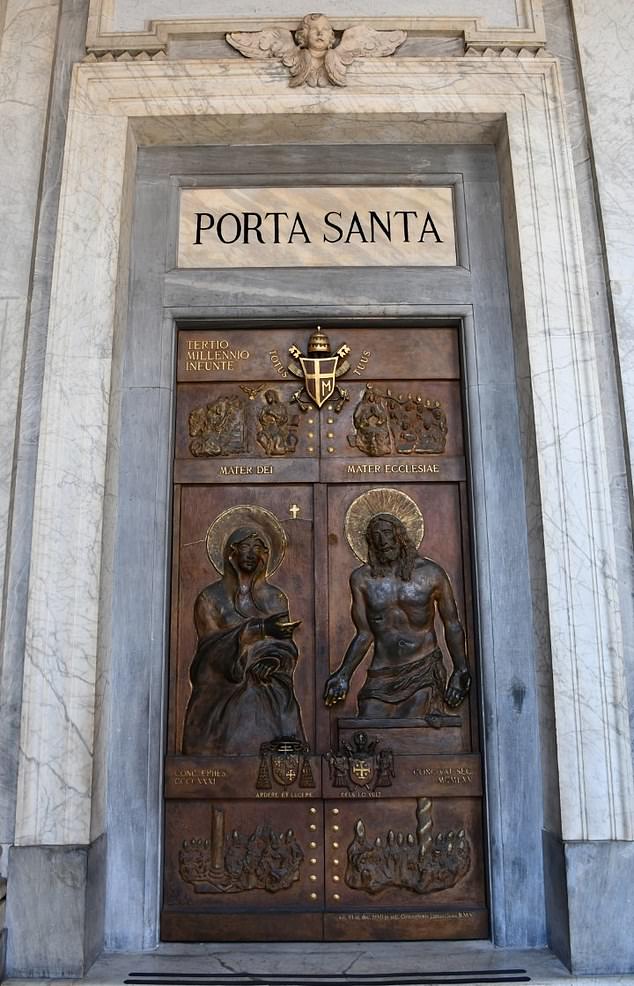
The basilica of St Mary Major was tied to the Council of Ephesus of 431 AD, which proclaimed Mary Theotokos, which is Greek for ‘Mother of God’
Some conspiracy enthusiasts claim the Holy Doors are ‘portals to hell’ or Satanic gateways, not mentioned in the Bible and thus unbiblical or occult.
They argue that opening and closing them during the Jubilee invites demonic forces or aligns with the rapture, as the doors symbolize forbidden spiritual access.
Another wild theory, inspired by occult writer Alice Bailey, predicts a ‘externalization of the [demonic] hierarchy’ around 2025.
Some see the Jubilee closings as the culmination of long-planned Luciferian schemes, revealing hidden evil forces.
However, the Vatican has been opening and closing the Holy Doors since the tradition was adopted in 1300.
The process of opening the four basilica doors involves removing the brick wall that covers each door from the inside of the basilica, followed by the Pope pushing the doors open to signal the beginning of the Holy Year.
When Jubilee finishes on January 6, 2026, the Pope will be the last person to walk through each of the four doors before closing them, which will then be bricked up and sealed.
The Vatican announced the schedule on Monday, saying the closure will begin at the Basilica of Santa Maria Maggiore, the first Holy Door scheduled to close on the evening of Christmas Day, December 25.
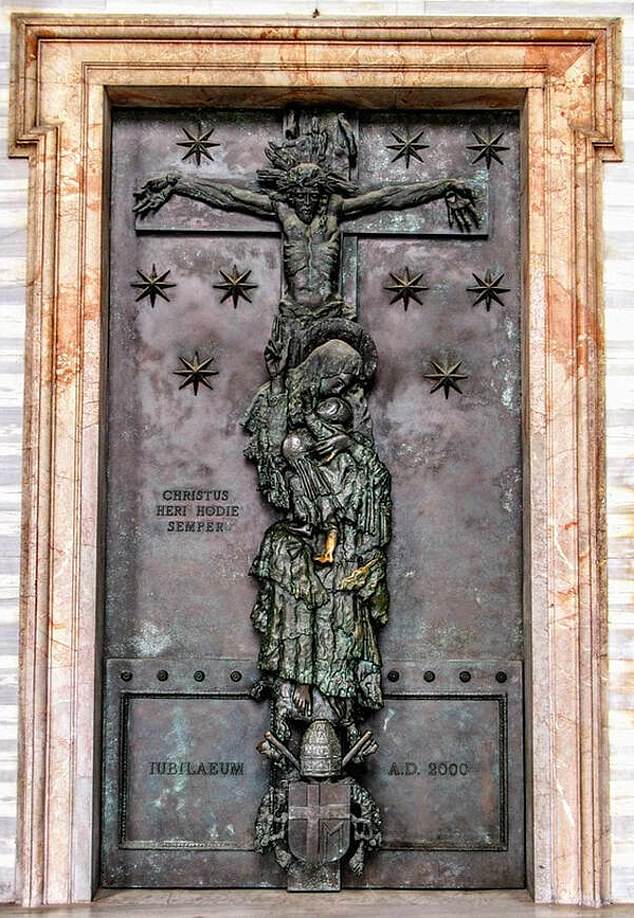
The first Holy Door was opened in 1425, the archbasilica of St. John Lateran. This is the oldest church in Rome being built in 324 AD.
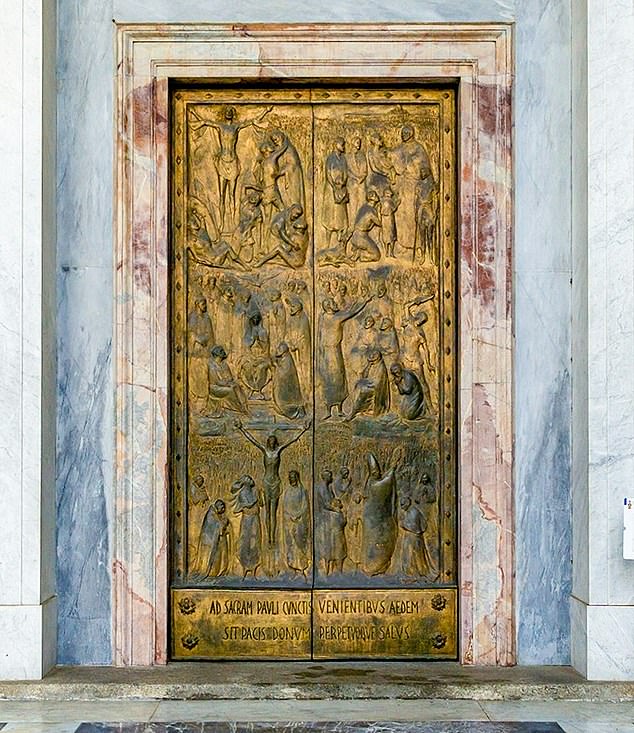
The Basilica of Saint Paul is the second largest basilica after St Peter’s and is believed to be the burial site of St Paul. It has been a pilgrimage destination since 300AD
The date was chosen for its profound significance: as the ‘Basilica of the Holy Nativity,’ it preserves the relics of the Sacred Crib.
By closing the door on the day of Christ’s birth, the Church offers a powerful reminder to the more than 20 million pilgrims who passed through its bronze gates that the foundation of faith lies in God becoming man.
The ceremony, led by Cardinal Rolandas Makrickas at 5:00pm local time, will be marked by the tolling of ‘La Sperduta’ (‘The Lost One’), the ancient bell long used to guide pilgrims on their journey home.
On December 27, the focus shifts to the Cathedral of Rome, St. John Lateran, which was the first Basilica to have a Holy Door.
The stunning bronze door features Mary and Jesus as a child reaching for the cross.
Cardinal Baldo Reina, Vicar General of Rome, will preside over the 11:00am rite, paying tribute to the thousands of Roman parishes that have made this ‘Mother of all Churches’ the center of their spiritual journey during the Jubilee Year.
The next day, at the Basilica of St. Paul, Cardinal J.M. Harvey will preside over the 10am Mass and the sealing of the door.
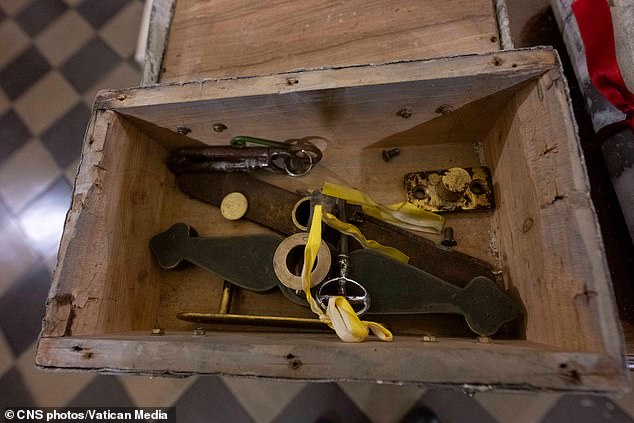
The Catholic church began the ritual in December 2024, praying at the door in St Peter’s Basilica and removing a metal box (pictured)that held a key, which was followed by ceremonies at the other four doors
Unlike other Jubilee ceremonies that require strict ticketing, the Basilica is welcoming the faithful to attend this rite freely.
It concludes a year in which the ‘Great Apostle’ welcomed millions of pilgrims seeking spiritual strength and renewal through their witness to the Gospel.
The grand finale will take place at St. Peter’s Basilica on January 6.
The sealing of the door is a moment of high ceremony, with the bronze panels closed first and a brick wall later reconstructed inside, enclosing a parchment deed and commemorative medals of the pontificate, this time bearing the names of two different Successors of Peter.
The door at Rebibbia Prison is hypothetical, which was added for the first time this Jubilee. The pope walked through the main door as ‘a symbol of all the prisons dispersed throughout the world,’ and will likely do the same for the closing rite.
Pope Boniface VIII was the first to Christianize the ceremony and later proclaimed it to be held every 100 years, but two years later Jubilee was changed to every 50 years.
It was not until 125 years after the first celebration that the first Holy Door was opened in the archbasilica of St. John Lateran, the oldest public church in Rome, built in 324AD.
In 1474, Pope Paul II established Jubilee should be held every 25 years, which followed the tradition of opening all four basilica doors.
St Peter’s, located in Rome, is deemed one of the holiest sites of Christianity.
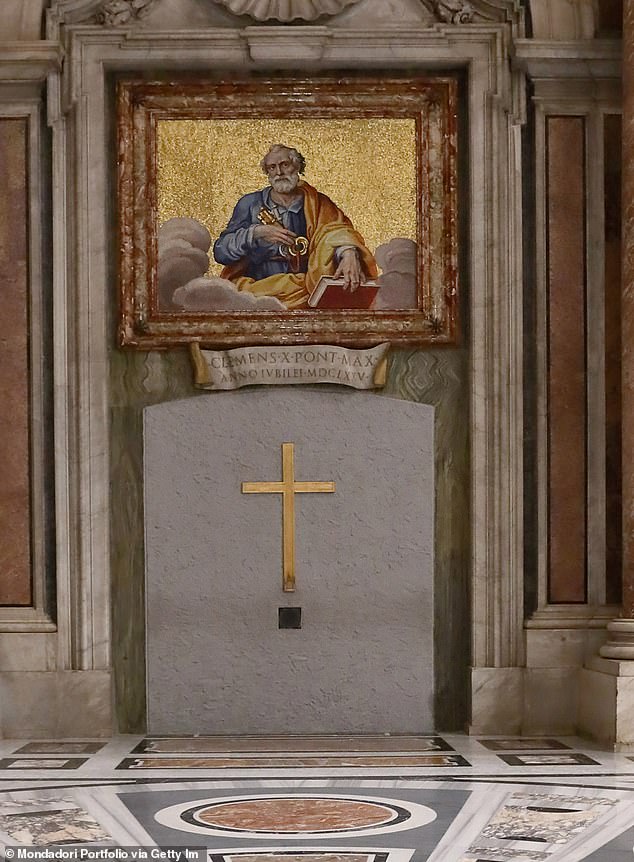
The process involves reconstructing a brick wall that covers the door (pictured inside St Peter’s) from the inside of the basilica. Pictured is the door closed before it was opened last year
Saint Peter the Apostle, originally named Simeon, or Simōn, was a disciple of Jesus. He died around 64 AD in Rome and was recognized in the early Christian church as the leader of the disciples.
The basilica construction started in the 4th century when Roman Emperor Constantine decided to build a basilica where the apostle had been buried.
Constantine was the first Roman emperor to convert to Christianity.
The basilica of St Mary Major was tied to the Council of Ephesus of 431 AD, which proclaimed Mary Theotokos, which is Greek for ‘Mother of God.’
It is the largest of the 26 churches in Rome dedicated to the Virgin Mary.
Constantine also ordered the construction of the basilica of St Paul, completing construction in 324, which is believed to house the remains of the Biblical figure.