The cost of eating out at the UK’s most popular restaurants has soared in recent years with some dishes almost doubling in price.
The economy has been hit by wave upon wave of inflation since 2020 with prices increasing by 27.7 per cent overall in that time, including a rise of 3.8 per cent in the last year.
This has been particularly devastating in the hospitality industry which has seen 31.3 per cent inflation since the pandemic, climbing to 35 per cent when honing in on takeaway businesses.
And the country’s most loved chains are not immune from the phenomenon plaguing the sector.
Grabbing a pizza is no longer the cheap thrill it once was, taking a bigger slice out of diners’ spending money than ever before.
The price of a margherita at Pizza Express, which has more than 300 restaurants across the UK, cost an affordable £9.30 back in 2020.
But the meal is now priced at £14.45 – a leap of over 50 per cent.
Much of this increase is down to the soaring costs of ingredients. Olive oil is 188 per cent more expensive than in 2020, while tomatoes and cheese are 44 and 39 per cent steeper respectively.
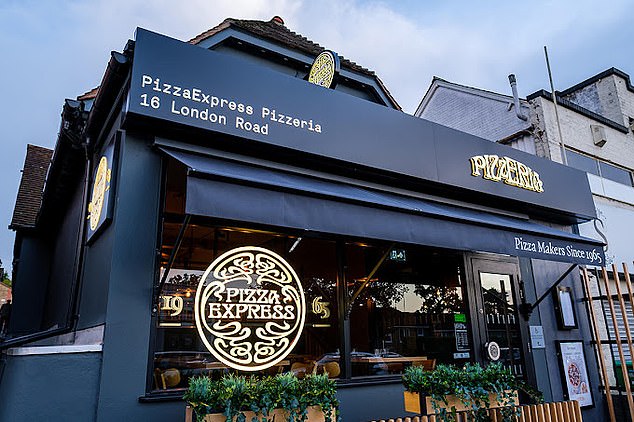
Eating out at the UK’s most popular restaurants has soared over recent years with some dishes, including those at Pizza Express, pictured, almost doubling in price since the pandemic
The Covid-19 pandemic caused severe disruption to supply chains, while the war in Ukraine sent prices of certain products, including vegetable oils, spiralling.
Food inflation nudged above 5 per cent for the first time in 18 months this August, going from 4.9 per cent to 5.1 per cent, according to the latest figures.
Kate Nicholls, chair of UK Hospitality, said: ‘Hospitality businesses have faced significant challenges over the past five years, including a pandemic, an energy crisis, record inflation and now one of the highest tax burdens in the economy.’
Helen Dickinson, chief executive of the British Retail Consortium, added: ‘Food inflation held steady after seven consecutive months of rises but increased labour and energy costs continue to push up input prices for many farmers, particularly of cattle, with dairy and beef prices remaining high.
‘Households are finding shopping increasingly expensive. The impact on retailers and their supply chain of both global factors and higher national insurance and wage costs is playing out in prices for consumers.’
Pizza is not the only meal out which is becoming increasingly unaffordable.
Wagamama’s, which has been seen as an affordable option for lovers of Asian cuisine since it arrived in the UK in the 1990s, has hiked the price of its staple yasai katsu from £10.25 in 2020 to £14.50 now.
Meanwhile, cheap and ‘cheeky’ Nando’s now charges high end prices for its spin on fast food, with a half chicken and two sides now costing £15.20 – 35 per cent more than the £11.20 it cost five years ago.
Frankie and Benny’s beloved lasagne set fans of the Italian-American-themed diner back just £10.49 in 2020 compared with a whopping £14.95 now, another increase of more than 40 per cent.
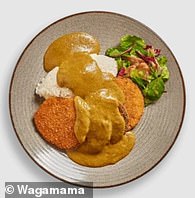
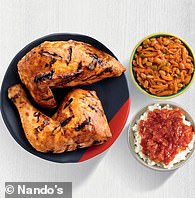
The prices of these Pizza Express, Wagamama’s and Nando’s staples have increased by 55 per cent, 41 per cent and 35 per cent, respectvely, in the last five years
Clive Black, chairman of Shore Capital, claimed that the Labour Government does not care about the sector, causing a wave of frustration among people who are struggling with the cost of living.
‘For many good businesses, good working people, it has been just too much, and they have thrown in the towel,’ he added.
‘There is, however, properly justifiable anger about a detached and incapable Government, most particularly, actually civil servants and the agencies, that do not give a toss about UK hospitality.’
Mark Richdon, a tax director at Bishop Fleming, highlighted the impact of Labour’s National Insurance Contributions (NICs) hike from 13.8 per cent to 15 per cent back in April.
He added: ‘Many operators were put under pressure by the National Minimum Wage increase and, with the additional NIC burden, were forced to reduce staffing levels, slow hiring plans, and raise prices.
‘For the end consumer, these costs had a compounding effect that translated into higher menu prices and hotel rates at the height of the summer season.’
Many businesses are also expecting to be hit by new laws making them responsible for packaging waste costs. In the past, this burden has been taken on by local councils.
Ms Dickinson added: ‘The new packaging tax, set to take effect in October, will put further upward pressure on inflation. While retailers continue to absorb higher costs as much as possible and deliver value to customers, any further tax rises in the upcoming Budget would keep shop prices higher for longer.
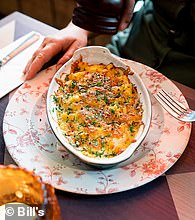
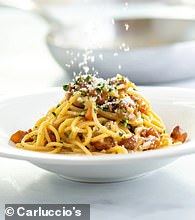

Bill’s have hiked their fish pie up by 28 per cent, while Carluccio’s and Comptoir Libanais are charging 36 per cent and 77 per cent more, respectively, for their classics
‘Ultimately, it is British households who will bear the consequences—positive or negative—of the Chancellor’s decisions.’
British restaurant and bar chain Bill’s have hiked their fish pie up from £13.95 to £17.95 making the restaurant another unaffordable destination for the casual diner.
Compared with 2018, the carbonara at Carluccio’s has soared in price from £10.95 to £14.95, up 36 per cent.
One of the most popular items on the Comptoir Libanais menu, the full breakfast, is also slipping out of the budget of those looking for a laid-back brunch.
The Middle Eastern take on the full English used to cost just £8.45, but now is priced at a hefty £14.95, an increase of more than 75 per cent.
And the Real Greek’s centrepiece, the souvlaki wrap, was available at a snip in 2020 – just £6.45 – but now costs a wallet-busting £11, another hike of more than 75 per cent.
While inflation has steadied from its worrying peak of 11 per cent in October 2022, rising prices in the hospitality industry specifically have persisted. But why?
Finance and insurance expert Carlton Crabbe of Capital for Life, said: ‘UK inflation over the last five years has been shaped by overlapping crises.
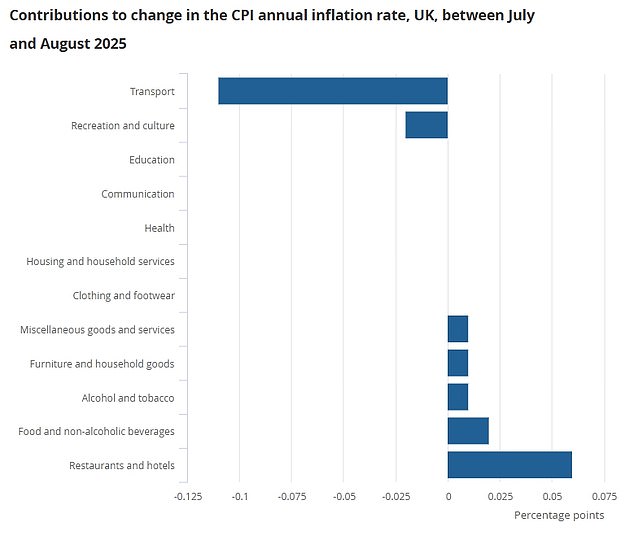
Food inflation nudged above 5 per cent for the first time in 18 months, offset by falls in areas such as transport costs
‘The long-term effect is structural: eating out, once a weekly norm for many households, is increasingly becoming a luxury.
‘While inflation has cooled to around 2.2 per cent as of August 2025, restaurant prices have proven “sticky”: unlikely to return to pre-pandemic levels because businesses have locked in higher costs for wages, leases, and utilities.’
Samuel Fuller, director of Financial Markets Online, pointed out that restaurant prices have remained fairly steady amid inflation elsewhere, but the ‘dam has burst’ in recent month.
He said: ‘Many customers regard eating out as a treat or a luxury, and for a long time the fear of losing business led many restaurants to swallow their rising costs rather than pass them on.
‘But the dam has burst and this is why we’re now seeing many restaurant prices shoot up as they try to protect their margins.’
And supermarkets are sweeping up the diners who have finally realised a meal out is unaffordable.
‘While many customers treasure their morning coffee or bacon butty, demand for family meals which now easily cost over £100 a time is more elastic,’ Mr Fuller added. ‘Put simply, people will cut out treats like this if they feel prices have got too high.
‘This may be why many supermarkets are seeing surging demand for their premium ranges. While shelling out £8 for a fancy supermarket pizza sounds strange in the current environment, it is a way to treat yourself for a fraction of what it would cost in a restaurant.’
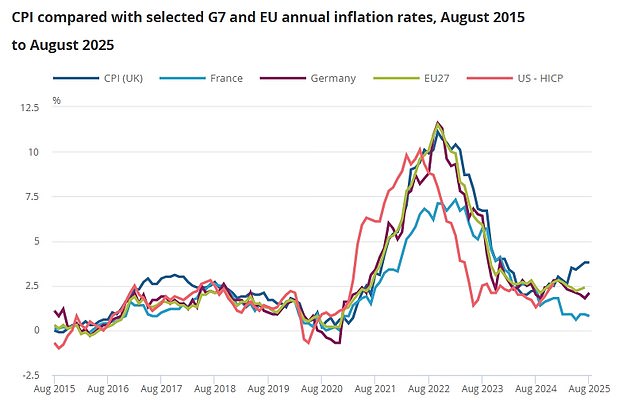
UK inflation has been running higher than in other G7 countries
Experts also warned people to expect some changes in their dining out experiences in the coming years as restaurants adjust to soaring costs.
‘For the hospitality industry, adaptation is now key,’ Mr Crabbe said. ‘Expect to see: menu simplification to reduce overheads; dynamic pricing models similar to airlines and hotels; greater adoption of technology like QR-code ordering and AI-driven staffing efficiencies.
‘Inflation has reshaped the sector not just by raising prices, but by changing consumer expectations and the very business models of UK restaurants and pubs.’
Consumer champion Martin Newman agreed but suggested that the industry could become more ‘polarised’ as restaurants try to adapt to rising costs.
‘What used to be an affordable weekly dinner has, for many, become an occasional treat,’ he said. ‘Consumers are being far more selective and want real value — whether that’s exceptional food, service, or atmosphere.
‘For restaurants, it means differentiation is now critical. The risk is a more polarised industry: premium players thrive, value brands fight hard on price, and the mid-market gets squeezed.’
The situation looks bleak, and prone to getting worse, but economists insisted that the Labour Government can turn the tide with some hospitality-friendly policy decisions.
Ms Nicholls called on the Government to ease the industry’s tax burden at the next Budget, which is to be unveiled on November 26.
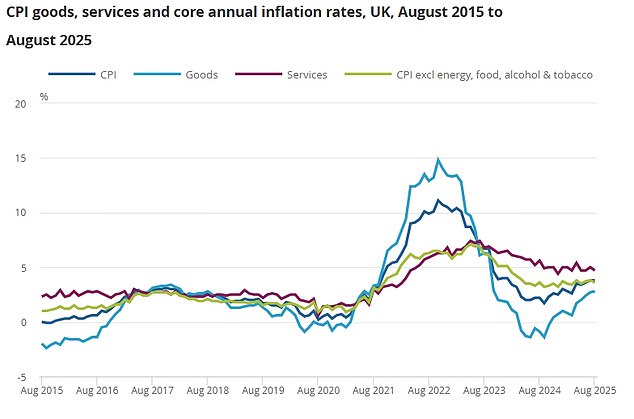
Increases in goods prices have been driving the CPI number recently
She said: ‘The £3.4 billion additional annual cost imposed upon the sector at last year’s Budget have now made [absorbing costs] impossible and many have had to pass these increases onto the consumer.
‘We desperately need to see hospitality’s tax burden reduced at the Budget in November.
‘The Government should lower business rates, fix NICs and cut VAT to stop businesses being taxed out.’
A spokesperson for Frankie & Benny’s said: ‘Our restaurants are all about good times, tasty food, generous portions and great value. Since 2020, a lot has changed from Covid to rising food costs to increases in wages and national insurance just this year.
‘But value remains at the heart of what we do. With plenty of deals, offers and family-friendly menus, we’re committed to making sure everyone can enjoy a meal out without it costing the earth.’
The Daily Mail has approached the restaurants mentioned for comment.