A coin once used to pay a bus fare in Leeds was made more than 2,000 years ago, researchers have found.
James Edwards, chief cashier for Leeds Transport Company in the 1950s, put aside any fake or foreign coins he found when gathering fares from the city’s bus and tram drivers, before passing them to his grandson Peter.
Peter, now 77, kept the coins safe for more than 70 years and has now discovered one of the collection is so old that Jesus hadn’t even been born when it was minted.
He found that the small coin was made in the 1st Century BC by the Carthaginians, an ancient Mediterranean civilisation with Phoenician roots, in Cádiz, Spain.
On one side it bears the face of the god Melqart, resembling the Greek hero Herakles and wearing his famed lionskin headdress.
Some Phoenician coins of that time were inscribed with Greek imagery to make them more appealing to traders.
Peter contacted Leeds Museums and Galleries after finding out about the coin’s origin and donated it to the collection of ancient currencies.
He said: ‘My grandfather would come across coins which were not British and put them to one side, and when I went to his house, he would hand me a few.
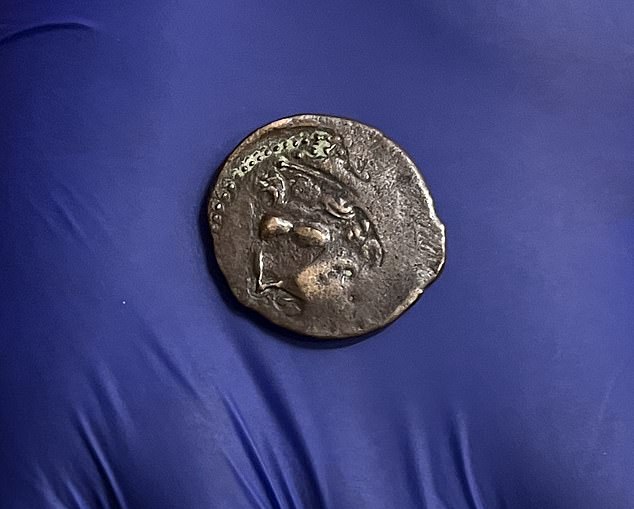
On one side the coin features the face of the god Melqart, resembling the Greek hero Herakles and wearing his famed lionskin headdress
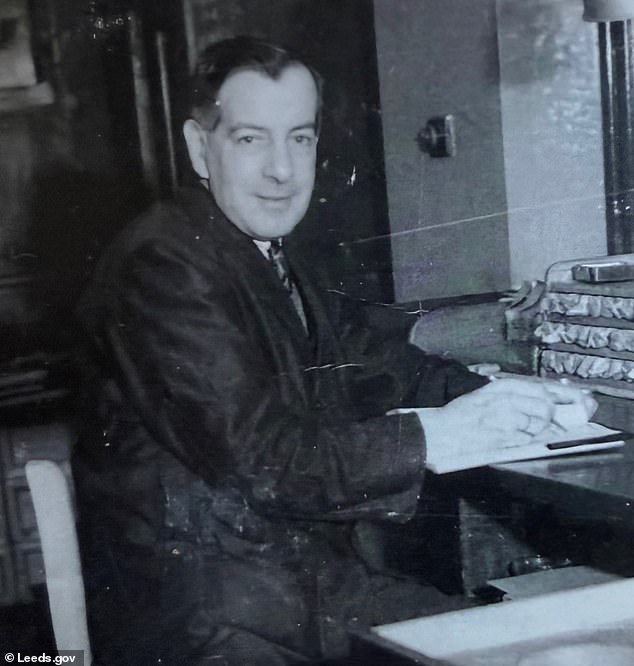
Peter Edwards’ grandfather James (pictured) was chief cashier for Leeds Transport Company in the 1950s and passed coins down to him
‘It was not long after the war, so I imagine soldiers returned with coins from countries they had been sent to.
‘Neither of us were coin collectors but we were fascinated by their origin and imagery – to me they were treasure.’
He added his grandfather would be ‘proud’ to know the coin was coming back to Leeds.
‘The coin always fascinated me because it was hard to decipher where it came from,’ he added.
‘My first thought when I found out its origin was that I would like to return it to an institute where it could be studied by all, and Leeds Museums and Galleries kindly offered to give it a good home.
‘My grandfather would be proud to know, as I am, that the coin is coming back to Leeds. However, how it got there will always be a mystery.’
The coin will be kept at Leeds Discovery Centre, which includes currency from cultures around the world across thousands of years.
Councillor Salma Arif, Leeds City Council’s executive member for adult social care, active lifestyles and culture, said: ‘It’s incredible to imagine how this tiny piece of history created by an ancient civilisation thousands of years ago has somehow made its way to Leeds and into our collection.
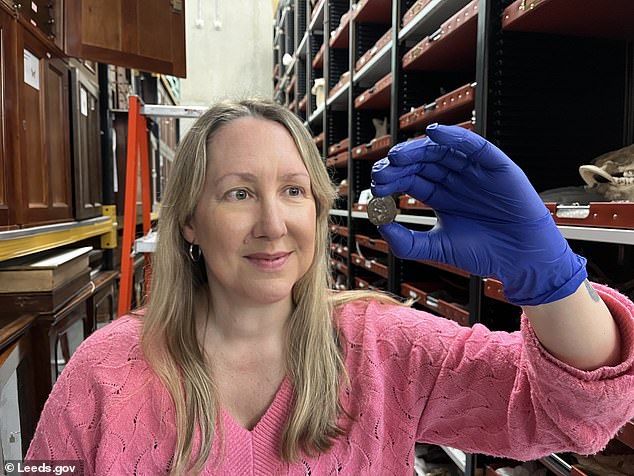
The coin will now be kept at Leeds Discovery Centre after Peter donated it. Pictured: The coin the hands of Cat Baxter, curator of archaeology and numismatics for Leeds Museums and Galleries,
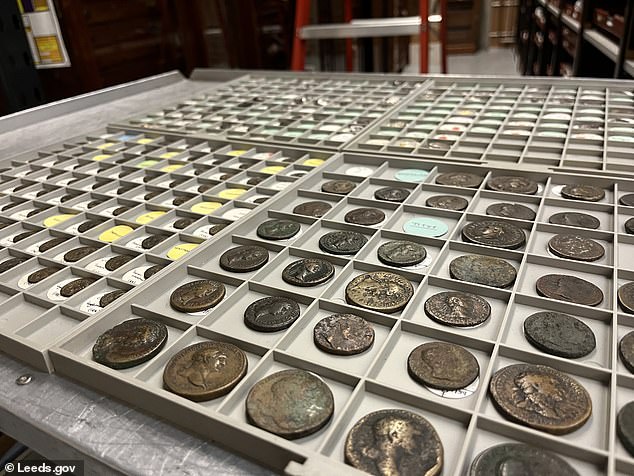
The collection in Leeds includes currency from cultures around the world across thousands of years
‘Museums like ours are not just about preserving objects, they’re also about telling stories like this one and inspiring visitors to think about the history that’s all around us, sometimes in the most unlikely of places.’
In October a haul of up to 15,000 Roman coins buried in two clay pots was found in a Welsh field by a metal detectorist.
The South Wales and Monmouthshire Numismatic Society told the BBC at the time the hoard could be the biggest discovery ever made in Wales.
And last year experts published a report investigating why a £4million collection of 70,000 coins and jewellery found in 2012 was buried in Jersey.
Archaeologists speculated the hoard was brought to the Crown Dependency to stop it falling into the hands of Julius Caesar’s Roman army during the Gallic Wars.