Since the end of World War II, the United States has built an ever-expanding global network of military allies. The term “ally” may legitimately apply to Britain, France, Japan, Germany, and a few of Washington’s other security partners, but most of the so-called allies are merely small U.S. security dependents. They constitute potential burdens and dangerous geopolitical snares for the United States while providing few if any strategic benefits.
An especially worrisome aspect of these relationships is that such clients spend considerable effort trying to manipulate, even pervert, U.S. policy to support their parochial objectives. That dynamic creates the danger of small clients gaining undue influence over Washington’s behavior. A security client tail thus may succeed in wagging the U.S. dog.
There are ample signs that such a development is currently taking place in three regions. One is the Middle East, where Israel has made a concerted effort for years to drag the United States into an armed confrontation with Iran. The second region is central and eastern Europe, where NATO countries, especially some of the smaller and least responsible members, seem determined to keep the United States entangled in the Western alliance’s proxy war pitting Ukraine against Russia. The third region is East Asia, especially the Taiwan Strait, which could become an arena for a confrontation between Washington, Taiwan’s de facto protector, and the People’s Republic of China (PRC).
Washington would be wise to jettison or at least sharply limit all three sets of commitments as soon as possible.
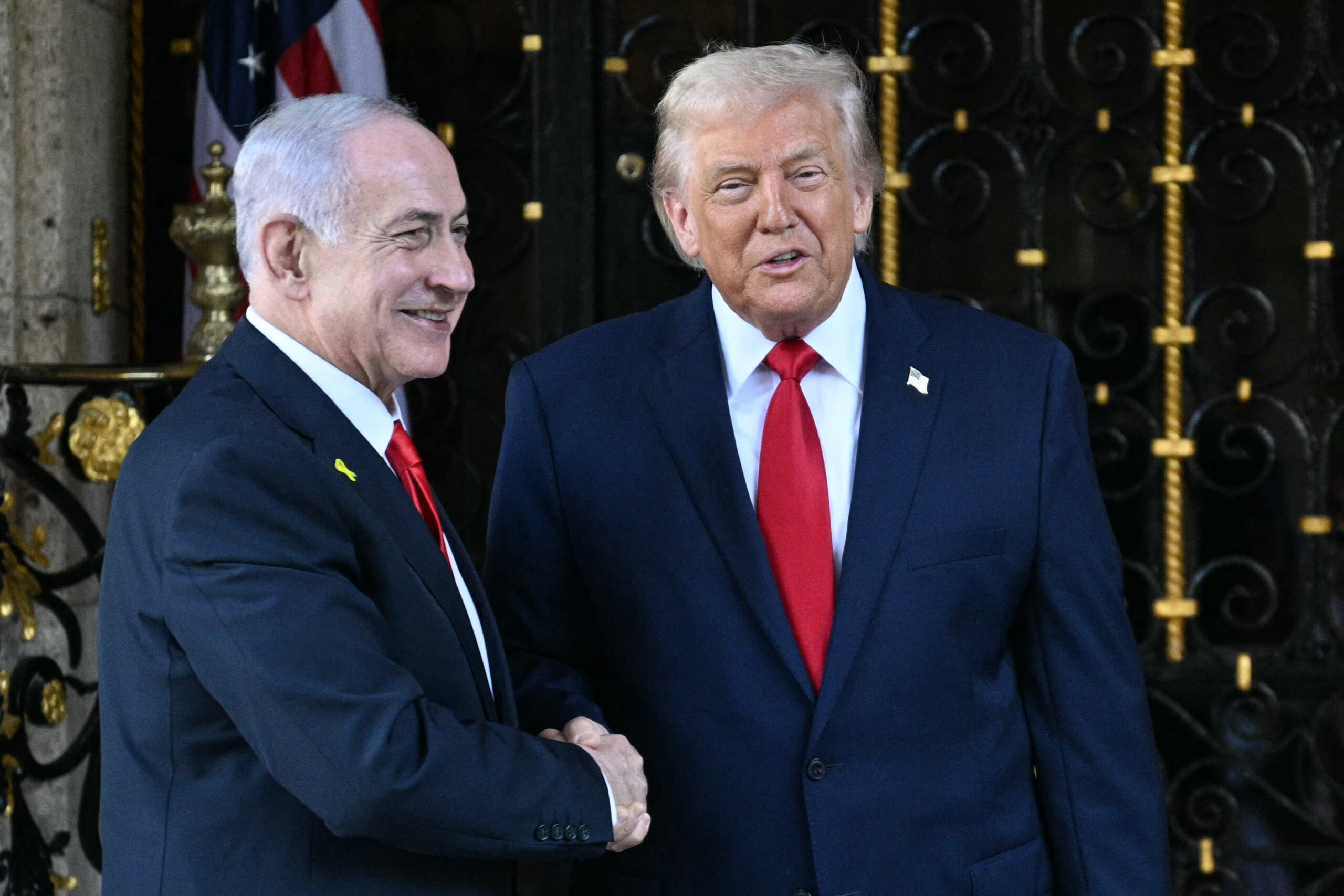
Israeli Prime Minister Benjamin Netanyahu has pursued a blatant strategy of trying to manipulate the Trump administration into eviscerating Iran, Israel’s principal regional adversary, and he has been extraordinarily successful. The Israeli regime convinced Trump and other U.S. officials that Tehran poses an imminent threat by building a nuclear arsenal. It was the same discredited argument that Tel Aviv has used since the 1980s, but this time it succeeded. When Israel launched aircraft and missile strikes against Iran’s air defenses and other targets in June 2025, Washington assisted that effort in myriad ways, like sharing important intelligence data. Ultimately, the Trump administration authorized its own attacks using America’s B-2 stealth bombers.
In late February, Israel launched another assault against Iran, this time joined by the U.S. White House officials and lawmakers have argued that the United States had to take military action against Iran because Israel was going to attack regardless and American troops and assets would be exposed to retaliation.
For a superpower to implicitly concede that a small client state had forced its hand was more than a little unsettling. Such an admission highlights the potential risk of linking America’s policy and fate to that of a foreign client.
The behavior of Washington’s NATO clients in Europe has been just marginally less dangerous and irresponsible. Influential officials in those countries appear to have no interest in improving the West’s dangerously tense relations with Moscow. Ursula Von der Leyen, the head of the European Commission, and Kaja Kallas, the European Union’s High Representative for Foreign Affairs and Security Policy, are among the worst offenders.
NATO’s central and east European hardliners continue to demand that Russia withdraw its forces from all portions of Ukraine occupied since 2014, including Crimea, which the Kremlin seized in retaliation for the U.S.-facilitated coup that ousted Ukraine’s elected president, Victor Yanukovych, whom many in the West perceived to be pro-Russia. European Union foreign ministers have frequently insisted that Ukraine be allowed to join both the EU and NATO, with the strong implication that Kiev would then have the right to allow its new allies to station troops and even offensive weaponry on Ukrainian territory. Indeed, news reports indicated that the EU is considering establishing two military bases in Ukraine to train new soldiers even though Russia has threatened to strike any Western forces operating inside Ukraine.
“We have been discussing the training of the Ukrainian soldiers, also on the soil of Ukraine,” Kaja Kallas said. “We have identified two training centers that could be used for that purpose.” Such inflammatory posturing has more than a little potential to draw the United States into an expanded confrontation with the Kremlin.
Taiwan, a longtime U.S. economic and security client, is roiling the situation in East Asia. From 2008 until 2016, Ma Ying-jeou of the moderate Kuomintang Party (KMT) served as Taiwan’s president. Ma embraced a policy of conciliatory engagement with Beijing, an approach that stood in marked contrast to the extremely assertive policies of his predecessor, Chen Shui-bian, the first candidate of the pro-independence Democratic Progressive Party (DPP) to win the island’s presidency. During Ma’s two terms, economic ties between Taiwan and the mainland soared, as did tourism and other interactions between the two political entities.
However, a combination of external and domestic factors (including rampant corruption in the KMT) produced a decisive victory for DPP presidential candidate Tsai Ing-wen in Taiwan’s 2016 presidential election. PRC leaders denounced Tsai in the most inflammatory terms and returned to the policy it pursued during Chen’s tenure of trying to isolate the island diplomatically and intimidate it militarily. The PRC intensified its efforts to induce the few small countries that still maintained diplomatic relations with Taipei to switch their ties to Beijing, and 10 of them did so during her presidency. Militarily, the PRC boosted both the frequency and size of its exercises in the Taiwan Strait.
Those coercive measures against Tsai’s administration backfired. She won a landslide re-election victory in 2020, and for the first time, the DPP also secured control of parliament.
Subscribe Today
Get daily emails in your inbox
Tsai’s vice president, Lai Ching-te (William Lai) succeeded her following the January 2024 election, and he is even more hardline than she was. Indeed, Lai devoted nearly all of his initial national address to making the case for Taiwan’s right to sovereignty. As one prominent Taiwanese columnist noted, “Never before has a Taiwanese president devoted an entire speech to laying out clearly, point-by-point and unequivocally how Taiwan is unquestionably a sovereign nation.”
Just a few months after Lai’s election in 2024, PRC forces conducted extensive military drills directed against Taiwan. That pattern occurred again later in the year. Throughout 2025, the pace and scope of PRC military activity continued to increase. In late 2025, especially menacing exercises took place. Given Washington’s longstanding implicit commitment to defend Taiwan, those are not soothing developments.
Small security clients are thus creating serious potential problems for the United States in at least three major regions. Smart great powers do not incur such risks on behalf of dependents masquerading as important allies. Washington should offload these geostrategic liabilities as soon as possible.