We need more collaboration and more experimentation for classical music to flourish
As a lover of classical music, and a trained classical pianist, I never thought the day would come when the name Bach would make me sigh — not out of relief but out of quiet resignation.
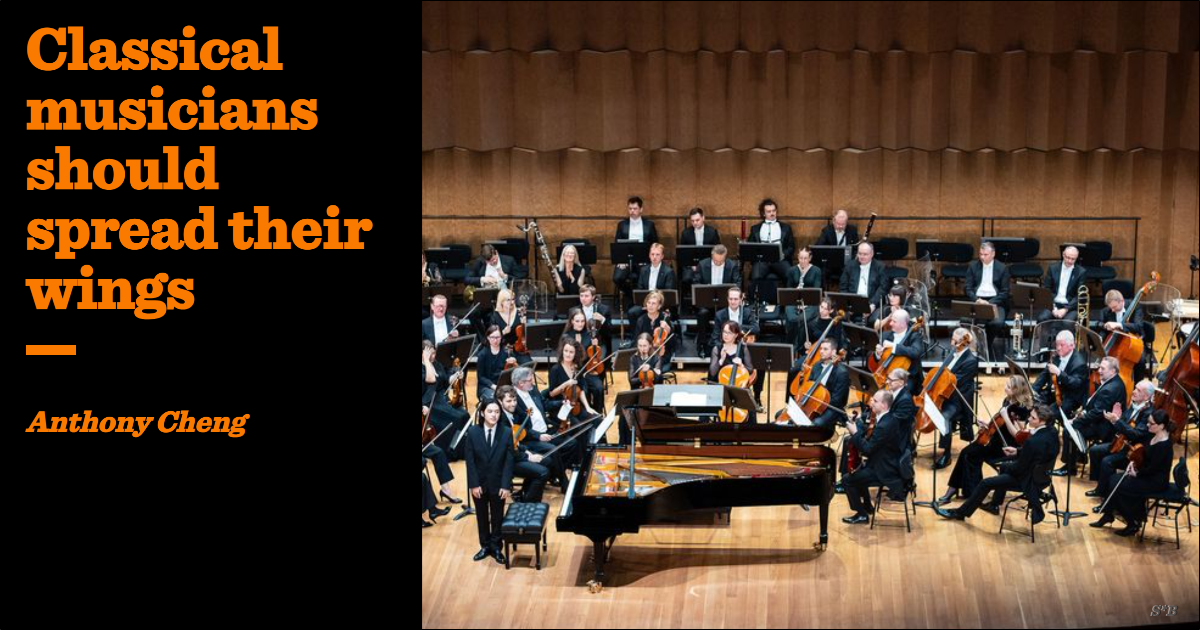
Another Bach Goldberg Variation recording is set to be released by the youthfully exuberant South Korean victor of the 2022 Van Cliburn International Piano Competition, Yunchan Lim. He has been dubbed the “classical music’s answer to K-pop”. It’s no surprise. His precocious rendition of Rachmaninoff’s Third Piano Concerto under the baton of Marin Alsop raked in around eighteen million views. This is astronomical by classical music standards.
Wielding that much power and influence, he could use his platform to advance the world of contemporary music — music that often invites ridicule for not being melodic or memorable. There seems to be a tendency in our culture where audiences like to latch onto the classics and cast away the experimental.
I can’t blame them. I’m a sucker for Mahler symphonies. But another recording of the complete cycle? I want to give it a pass. Up-and-coming composers, looking for a break-out moment with their immense musical feel and depth, probably have their arms and tapping their feet wondering to themselves: where are our champions of new classical music?
In thinking about the future of the art I have loved since I was eleven, it’s hard to think of an established contemporary composer/performer duo that exists on the world stage today. Looking at musical history, one recalls the relationship that existed between the Soviet-Russian greats — pianist Sviatoslav Richter and composer Sergei Prokofiev.
In 1937, Richter went to seek the tutelage of Heinrich Neuhaus at the Moscow Conservatoire. It was in the orbit of Neuhaus that the young Russian met Prokofiev; the Neuhases had lived in the same building as him, and Richter was lodging with his teacher at the time. Prokofiev’s music, no doubt, had a tremendous effect on him. As per a Russian music circle tradition possibly from Mily Balakirev’s time, a group of musicians used to gather at an old Muscovian apartment. Neuhaus took Richter along. And there would be a surprise guest there: Prokofiev himself. The music at the centre of this discussion was his Sixth Piano sonata, one third of his War Sonatas written in 1940. Richter reflected in a letter after the informal performance that it “was a magnificent sonata, classically well-balanced in spite of all the sharp corners”. Richter’s fingers had never tackled such a stark composition. He then learnt it in the summer and performed it in the following autumn. But his father, Teofil Danilovich Richter, was more attuned to romantic and classical melodies. “Terrible”, he exclaimed. “Like being slapped in the face all the time. Again smash. Again … it takes aim: bash!”
Prokofiev was looking for an exponent of his music. It was the Fifth Piano Concerto that the composer saw in Richter a sense of hope that he could elevate the piece to another level; that in his dexterous and powerful hands, he could find a way to bridge the music to the audience. “Maybe the young musician will play my Fifth Piano Concerto, which has been a failure and never been successful anywhere? Maybe he will play it and the public will like it?” As Richter reflects, the public at the Tchaikovsky Hall, where the pianist played with “nervousness” and “uncertainty”, received the new music well. And nearly a hundred years on, the name Richter has been closely associated with this piece (among many others such as the Seventh Sonata).
Perhaps established musicians are playing it too safe
Where is this devotion to interpreting a singular new contemporary composer these days? Deep musical friendships between well-established pianists and composers seems to have disappeared. Is there no time for long-term collaboration? A composer writing music who sees you especially in mind, for your unique musical fingerprint, is a magical thing. You don’t take it for granted. And it’s true the other way. Composer colleagues of mine always feel awe in how the right musician brings their music to life, or even to a place where they thought not possible in their heads. I was privileged enough to be in this position at the Royal Welsh Conservatoire of Music and Drama. I give a lot of credit to our piano department director of the time. He had devised a course where student pianists would collaborate deeply with the composition students. The end goal? To harness each other’s creative power, writing music that accentuated the style of the respective artists. It was like an expert tailor helping you into your bespoke suit — for you and no one else. It’s fertile ground for you to develop your own sonic identity. I always found it a great privilege for people to hear a voice, a note, or perhaps read a word, and immediately recall your name. Finding your voice is the ultimate aim of an artist.
Perhaps established musicians are playing it too safe. Commercialisation of their albums are top of the agenda, hoping that another Beethoven or Prokofiev Sonata cycle will keep the sales in the green. Or even that professional musicians simply don’t have the time to devote to curating life-long musical friendships with other established composers on the stage.
Yes, I can already anticipate a response: if you’re a pianist, why don’t you just compose new music yourself and perform it. I tried but spectacularly failed. Writing music, especially piano, is a task that requires a specific talent, one that dwells deep within; a great intuition forges great music. Unfortunately, it’s an institution I don’t possess.
But Richter, explaining the reason why he had given up composing new music, said in a humility expected from a shy man who dominated 20th Century pianism: “Perhaps the best way I can put it is that I see no point adding to all the bad music in the world.”
Like you, Maestro, I may not want to compose, but you certainly did what any composer would appreciate dearly: breathing life into music that would shape audiences for generations to come.
So, Mr Yunchan Lim, for your next album it would be a thrill to see you establish a long-lasting relationship with a brilliant composer. Under your hands, the new contemporary piece will certainly be a success.