Molly vs The Machines (Channel 4)
To understand how immoral, feeble, nonsensical and dangerous British laws around social media are, you only have to think about Wuthering Heights.
The raunchy hit adaptation of Emily Bronte’s wild romance, starring Margot Robbie and Jacob Elordi as Cathy and Heathcliff, has a 15 certificate.
It’s illegal for any child younger than that to see it in a cinema, even if accompanied by an adult. No one protests that’s ‘censorship’ or an infringement of ‘free speech.’
But according to current laws, it’s fine for 13-year-olds to have social media accounts that give them access, on Instagram, TikTok and the rest, to an unlimited slew of toxic mental sewage.
These torrents of abuse, powerhosed into children’s brains by the internet, can kill.
Molly vs The Machines opened with the heartbreaking death of 14-year-old Molly Russell, who kissed her family goodnight one evening in 2017 before going to her bedroom, where she looked at self-harm and suicide content until the early hours.
Her mother found her dead the next morning. She took her own life – or, as the coroner at her inquest phrased it, she ‘died from an act of self-harm whilst suffering depression and the negative effects of online content.’
By the end of this documentary, it was clear that the social media companies and their CEOs are both unwilling and unable to control the foul content on their digital services.
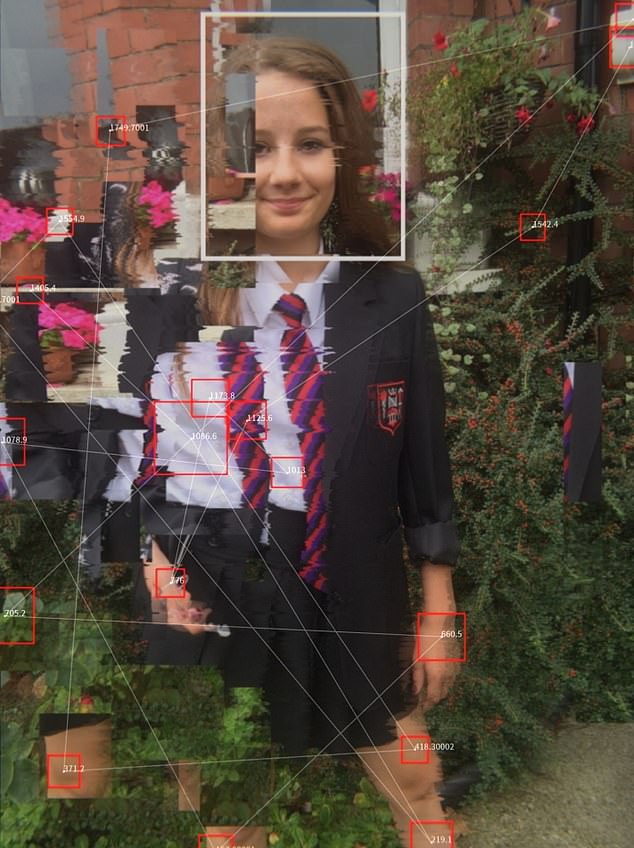
Molly Russell (pictured) in Molly vs the Machines. The teenager died by suicide in 2017
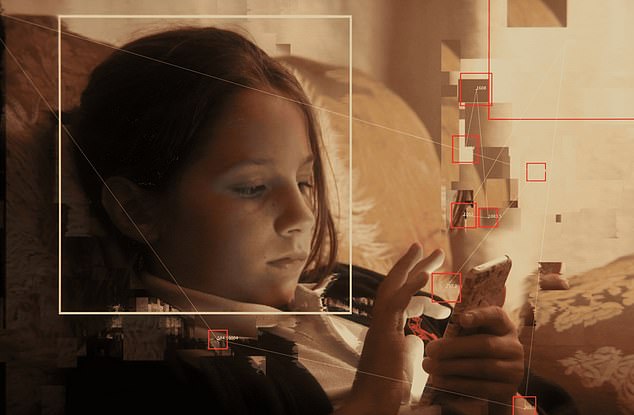
The documentary explores how Molly ‘died from an act of self-harm whilst suffering depression and the negative effects of online content’

Molly’s father Ian Russell (pictured in 2022) has campaigned tirelessly for justice for his daughter
‘They’re not playing by normal human moral laws,’ argued Molly’s father, the tireless campaigner Ian Russell.
At a minimum, some argue, the British government should do what Conservative leader Kemi Badenoch is urging, and implement a full social media ban on anyone under 16. Australia has already done this, and a public consultation is under way in the UK.
Personally, I’d like to see the courts go much further, by prosecuting companies that fail to police their platforms. If they bleat that it can’t be done, they should be outlawed in Britain until they develop and implement a solution.
This rather artsy and stylised documentary, though, was not arguing for a ban for under-16s. It didn’t even address the possibility.
Instead, it took a quasi-Marxist standpoint, that the internet giants represent a new business model called ‘surveillance capitalism,’ making money by treating their customers as ‘users’ and harvesting their data.
As one Silicon Valley philosopher explained, algorithms then manipulate that data to influence social behaviour, a process labelled ‘computational governance.’
It’s a nebulous idea, best suited to a PhD paper on political science that no one will read.
The reality for the rest of us is simpler than that.
All the online hate content, the mantras telling adolescents to cut their wrists and the videos showing them how to do it, might be spread by machines, but it is created by human beings.
Some humans are evil – and it is everyone’s responsibility to protect children from them.