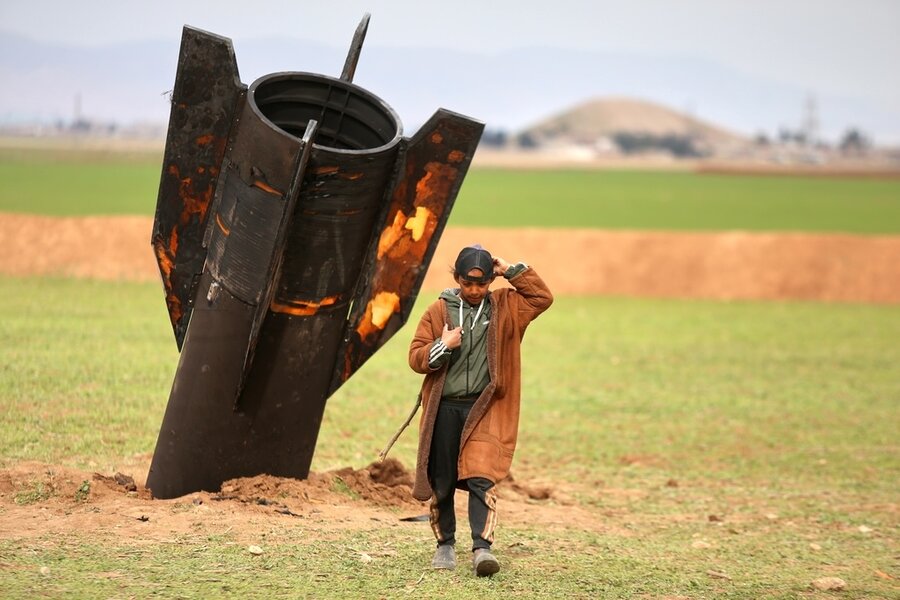
One theme of the Iran war has been rising concern – from nearly all sides – for children. More to the point, the concern is for how to safeguard their inherent innocence and propensity for peace.
The latest example focuses on Iran’s new campaign to enlist 12- and 13-year-olds in “war-related roles,” such as security patrols. A teachers union in Iran has condemned the regime’s militarization of childhood. It warns about placing children in harm’s way, which would be a violation of international child rights.
For its part, the United States was roundly criticized after an American missile struck near an Iranian girls’ school Feb. 28, resulting in more than 170 deaths. The White House claims children are not U.S. military targets. Yet the Pentagon has launched a formal investigation of the incident. And the U.N. Human Rights Council has agreed to examine the killings.
Meanwhile, Israel has appealed to the United Nations to respond to Iran’s alleged indiscriminate missile attacks on “innocent civilians and children.” And on March 3, U.S. first lady Melania Trump chaired a meeting of the Security Council on the general topic of children and education during conflict. The Iran war was top of mind, starting with opening comments by U.N. Under-Secretary-General Rosemary DiCarlo.
“When conflicts erupt, children are among those most severely affected,” she said. “We have been reminded of this truth over the last two days. Schools in Israel, the [United Arab Emirates], Qatar, Bahrain and Oman have closed and moved to remote learning owing to the ongoing military operations in the region.”
One reason for this strong spotlight on children in war lies in the expanding set of treaties and global norms over decades to protect youth in conflicts. The U.N. has found that many armed militias, such as in Colombia, are willing to accept that the innocence of children requires they not be used as soldiers. This tendency might indicate a growing recognition that nurturing a child’s expression of innocence can help lessen the aftereffects of a war.
The focus on children has also sometimes helped end wars. In recent decades, outcry over the use of child soldiers during conflicts in Sierra Leone and Liberia, for example, raised pressure on belligerents to compromise. Sierra Leone’s 1991–2002 civil war led to the first conviction for the war crime of recruiting children as well as attention on the rehabilitation of former child soldiers.
At the same time, many current wars, including in Myanmar and Yemen, still involve children as combatants. In Iran, many parents accept the regime’s recruitment of children. Still, the worldwide attention on the issue might turn public attitudes to further support the safeguarding of children’s innocence – and perhaps help turn the tide of the war.