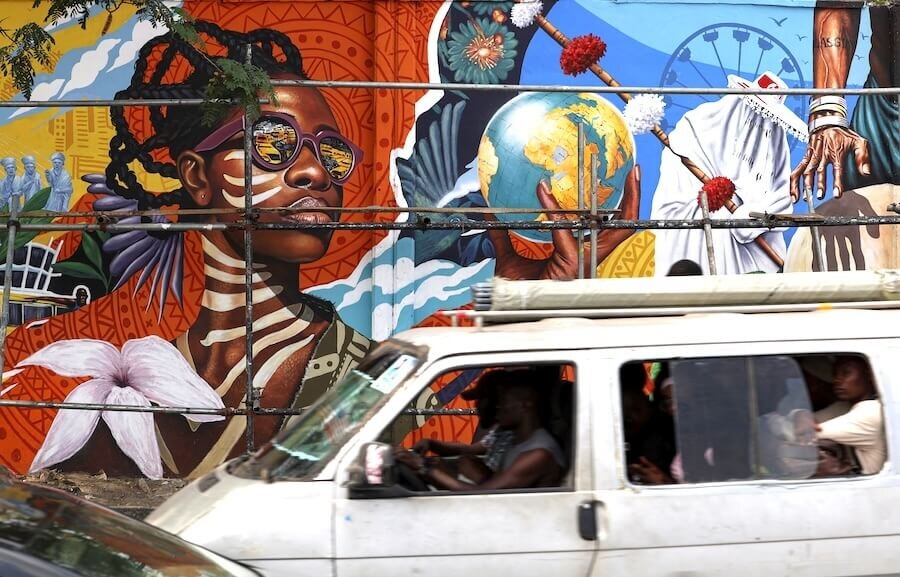
Amid weaving vehicles and the fumes and clamor of traffic, residents in Lagos, Nigeria, one of Africa’s largest cities, are discovering something new – a vibrant, visual feast of large-scale public art.
Nigeria has long been a dynamic art hub, teeming with musicians, writers, visual artists, and filmmakers who have achieved international renown. But, when it comes to street art, it has lagged behind the long tradition of such work in other African nations.
The city has just hosted its first Street Art Festival – Legendary Lagos: City of Dreams. The event features 12 artists – nine with Nigerian roots, and three international – who have transformed pollution-blackened walls into concrete canvases.
“We believe art shouldn’t be confined to galleries and museums,” mural painter and festival co-organizer Osa Okunkpulo (who goes by the name Osa Seven) told Reuters. “Public art allows people to interact with creativity in their everyday environment. It’s about giving hope and showing what art can do to shape society.”
This festival comes just one month after the city’s annual Art X fair, an event that has gained prominence among art professionals and the public in the decade since its launch. The Dakar Biennale in Senegal is, similarly, a major cultural touchstone in the region.
Art “feeds our imagination … makes us dream and think; it teaches and educates,” Senegal’s President Bassirou Diomaye Faye said at the biennale’s 2024 opening. As Africa’s youngest elected leader, he is popular among youth, and has urged them to explore artistic and cultural traditions. Art, he noted, imbues an “extra soul” into citizens’ hopes, “so that they adhere ever better to what we are and aspire to become as a people.”
Across the continent, street art is feeding political and social awareness as well as local pride. “We are beginning to understand the impact of social murals and their influence on our social life and our environment in general,” Lagos muralist Ernest Ibe told a French news agency.
In Kenya, for example, street artists have taken inspiration from young protesters over the past year – and have championed the demands they’ve voiced for greater freedom and better governance. In Conakry, Guinea, muralists’ work is reviving residents’ pride in their history. It’s “good for Africa, it’s good for this country. … I like it, and it changed the face of our city,” one young Guinean told The Associated Press in October.
And that’s largely what the Lagos festival is aiming to do – to democratize art and reflect citizens’ joy and exuberance, even amid current-day challenges.