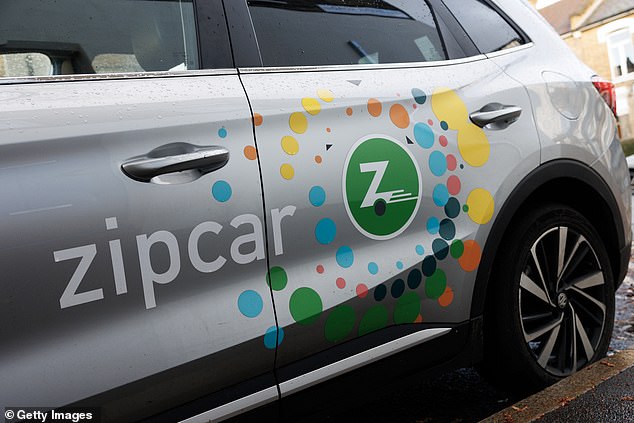
Car sharing firm Zipcar has suspended its UK operations as it consults with its employees over whether to bow out of the UK altogether.
The car club, owned by hire giant Avis Budget, said last month that it would halt rentals after December 31 2025 as it reconsiders its position.
Bosses had warned the firm could leave if Sadiq Khan pressed ahead with abolishing the Congestion Charge exemption for electric vehicles: the new charging regime came into effect today.
As of New Year’s Day, the threat has come to pass. Opening the Zipcar app in a UK location now displays the message: ‘No cars available nearby.’ Bosses are consulting with the 71 employees on their future – but the outcome looks bleak.
Car clubs offer easy short–term access to those who don’t own a vehicle of their own. Zipcar was the biggest in the capital, with rentals lasting for as little as an hour at a time with fuel and charging included.
It ran 90 per cent of the city’s short–term rental motors, parking them on the streets, and has 650,000 members, 550,000 of whom are in London and used its cars for tip runs, IKEA shopping runs and days out.
But it has faced rising operating costs and falling revenues seemingly too challenging to counter – leaving hundreds of thousands of people stranded.
Almost half of Londoners do not own a car, but the implications of Zipcar’s departure go further than private use.
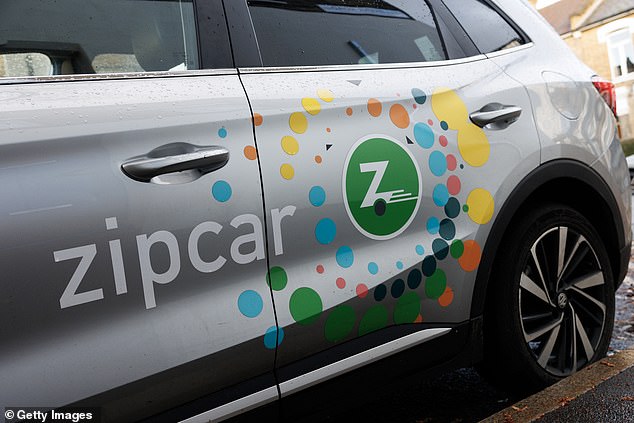
Car sharing firm Zipcar has suspended its UK operations pending a consultation with its employees over whether to quit Britain altogether (pictured: a Zipcar parked in London)
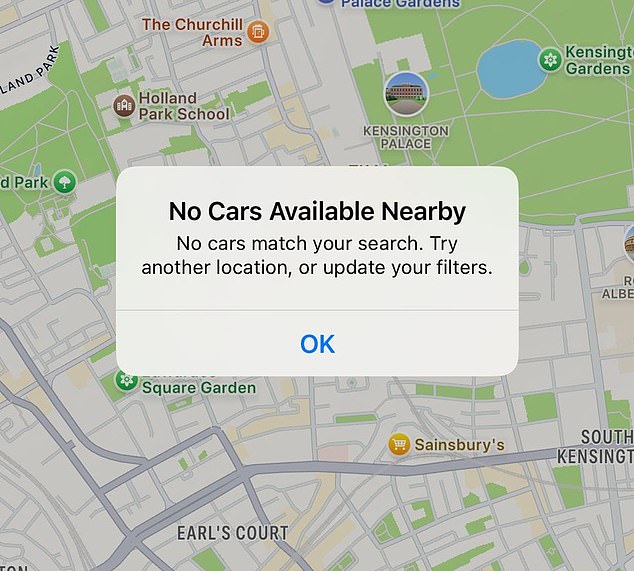
British Zipcar users who open the car–sharing app today are greeted with the message that there are no cars available

Mayor of London Sadiq Khan (pictured) was warned by the London Assembly to do more to support car clubs in April
Food banks relied on Zipcars to distribute meals, while Croydon Council had a contract with Zipcar to provide its fleet of staff cars; exactly where this leaves the local authority is as yet unclear.
Experts are unsurprised by the firm’s decision amid rising costs, a drop in demand fuelled by conveniences such as Uber and 24–hour Ikea home delivery, and an increasingly hostile climate towards cars in Khan’s London.
Richard Dilks, chief executive of campaign group CoMoUK, told an emergency London Assembly meeting last month: ‘The impact is profound, but we do not yet understand it fully. We have not experienced it yet.
‘My suspicion is that if we do not all come together and put our shoulders to the wheel on this, and even if we do, through 2026 we will see the true horror revealing itself of just how much this mattered.’
Mr Dilks, who was unsurprised by Zipcar’s departure, warned of car sharing in London: ‘If we do not secure some changes off the back of this crisis, I do not see a very bright future for it.’
He accused Transport for London (TfL) of showing a ‘lack of interest, lack of engagement, or even suspicion’ of car clubs; it has previously expressed concern that people would actually use cars more if they were members of a car share scheme.
Some 80 per cent of those who had been using Zipcar would now either consider buying or will definitely buy a private car, according to a survey of members CoMoUK conducted in the wake of the company’s announcement.
That flies in the face of Sadiq Khan’s flagship transport policy, which aims to take private cars off the road in favour of using public transport, walking, cycling – and sharing cars for journeys where only a vehicle will do.
Despite assurances from Mr Khan that he ‘wants to see car clubs thrive’, the London Assembly’s transport committee is convinced that a failure by City Hall to properly back car clubs played a role in its demise.
Mr Khan did not act on a report the committee published in April calling for a city-wide that could have helped the firm expand across the capital.
Such a strategy could have eased the administrative nightmare of negotiating parking rates individually with each of its 32 boroughs, some of whom tried to offer free parking to make Zipcar stay.
Seb Dance, London’s deputy mayor for transport, said it was not in TfL’s gift to pursue such a plan because it does not have authority over parking in each borough.
‘I think it is only right and proper that we ask the parent company to reconsider a decision that will clearly have an impact not just on the users of the service, but the direct employees of Zipcar as well,’ he told last months’ meeting.
Those parking costs are part of the reason Zipcar is considering pulling down the shutters.
Accounts for the year ending December 2024 show Zipcar spent some £35.8m on day–to–day expenses like fuel, parking permits, insurance and congestion charges, and £15.8m on administrative costs.
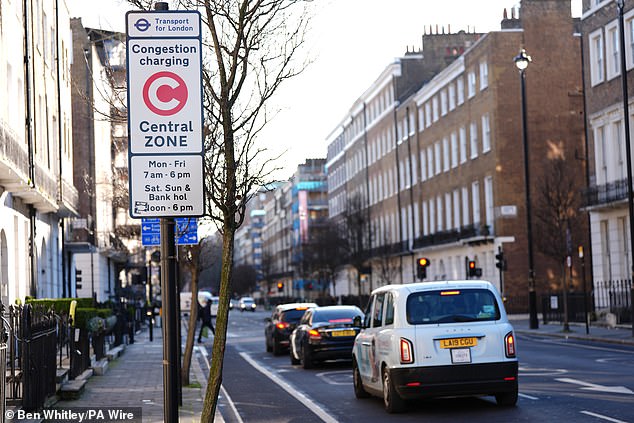
It is thought that the removal of the 100 per cent discount on the Congestion Charge for electric vehicles played a role in Zipcar’s decision to suspend rentals (pictured: a Charge zone sign)
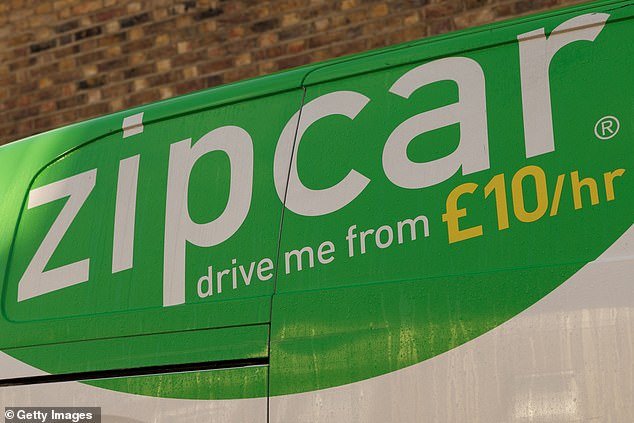
Zipcar offered members both cars and vans for rent for as little as an hour at a time, ideal for those who do not own cars
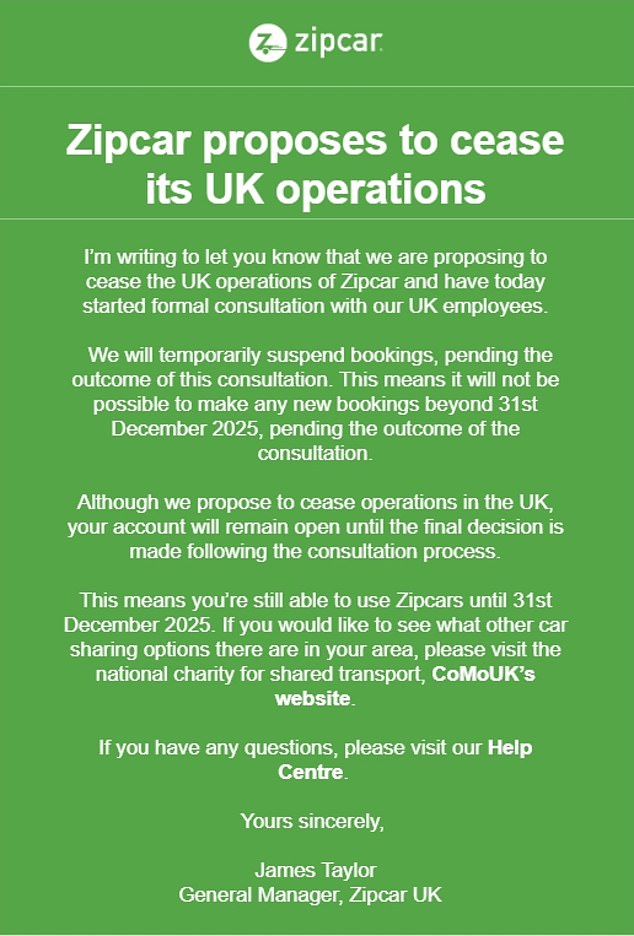
How Zipcar told its members that it was suspending operations in the UK last month
But revenue dropped from £51million in 2023 to £47m last year, and a £303,000 operating profit became a £4m operating loss.
Zipcar UK boss James Taylor pleaded for a Congestion Charge discount, lest the firm become ‘commercially unviable’ to operate in the capital. Mr Khan gave the discount to vehicles inside the Charging zone – unhelpful to those driving in from further out.
People were also only using the service occasionally, according to Mark Walker, who served as general manager for Zipcar UK from 2010 until 2016.
He told Bloomberg: ‘Hundreds of thousands of members only used the service once or twice a year. For the city that is fantastic. For the business, it’s terrible.’
The chickens, then, have come home to roost, a fact apparent to transport committee chair Elly Baker.
She said in a letter to the Mayor sent last week: ‘TfL should have taken action earlier this year to set a clear policy direction for car clubs in London and used its convening power to bring boroughs, operators and CoMoUK together to resolve some of the issues facing the sector. Instead, TfL is now left playing catch up after failing to engage with the sector.’
A spokesperson for the Mayor of London said: ‘The Mayor supports the provision of car clubs and is clear that they play an important role in reducing the need for private car ownership in London, while supporting less congested streets and cleaner air.
‘TfL and Mayor are engaging with stakeholders to understand these changes and will be working with boroughs who manage the provision of car clubs in their local areas to help ensure that car clubs can remain an option for Londoners.’
Zipcar’s woes are hardly its first: it pulled out of Oxford, Cambridge and Bristol to focus on the capital in 2024. Nor is it the first car club to run into bother: BMW’s ShareNow bowed out in 2019, and others have pulled out in European cities.
The Mail has contacted Zipcar for comment on its future.
Should it decide to leave, there may be hope on the horizon: rival operators like Co Wheels and Enterprise are circling, assessing whether they can swoop in and take over some of the hundreds of spaces now lying empty.
For now, for the hundreds of thousands of people who had depended on Zipcar for tip runs, days out and trips to the shops, the wheels have well and truly come off.