
THERE really is always room for dessert – as scientists reveal our brains are hard-wired to love snacks even when we’re full.
Tests showed that people react with the same desire or craving when they see delicious food after eating as when they are hungry.

It could be the reason why so many of us struggle to lose weight.
Study author Dr Thomas Sambrook, from the University of East Anglia, said: “No amount of fullness could switch off the brain’s response to delicious looking food.”
He conducted real-time brain scans on 76 volunteers as they played games that showed them foods like chocolate, popcorn, crisps and sweets.
Halfway through the study, published in the journal Appetite, they ate a meal until they were stuffed and could not eat any more.

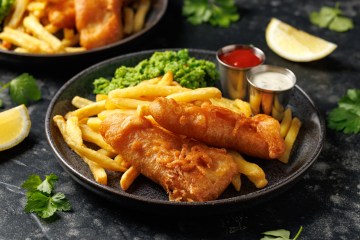
They then resumed the game and Dr Sambrook found their brains continued to react the same way as before they had eaten whenever they saw a treat.
Participants said they did not want to eat more but their brain was firing with electrical signals craving the delicious snacks.
Dr Sambrook said: “What we saw is that the brain simply refuses to downgrade how rewarding a food looks, no matter how full you are.
“If you’re struggling with late‑night snacking or can’t say no to treats even when you’re full, the problem may not be your discipline, it may be your brain’s built‑in wiring.
“It’s really no wonder that resisting a doughnut can feel impossible.
“Rising obesity isn’t simply about willpower.”
YouGov polls suggest McVitie’s biscuits are Brits’ favourite snacks, ahead of KitKat chocolate, Magnum ice creams and Walker’s crisps.
Dr Sambrook said the balance of human hormones suggests we actually evolved to stop eating when we are full.
But we still have an animal impulse telling us tasty food will feel good, and modern advertising hijacks this by showing us our guilty pleasures even when we don’t need them.
The psychology lecturer added: “I’d say the answer is to control your environment as far as you can, so you are not exposed to food cues.
“For example, once given the chance by supermarkets, parents were very keen to check out at tills that had no sweets on display since they knew their kids were less likely to suddenly want to eat such things.
“Adults can do the same things for themselves.
“One study found that at all-you-can-eat Chinese buffets, patrons with lower body mass index were ones who sat with their sides or backs to the buffet.”
How to lose weight safely
Losing weight should be a long-term commitment to healthier living, rather than any drastic measures.
The NHS tips – which can be adopted slowly – include:
- Get active for 150 minutes a week – you can break this up into shorter sessions
- Aim to get your 5 A Day – 80g of fresh, canned or frozen fruit or vegetables count as 1 portion
- Aim to lose 1 to 2lbs, or 0.5 to 1kg, a week
- Read food labels – products with more green colour coding than amber and red are often a healthier option
- Swap sugary drinks for water – if you do not like the taste, add slices of lemon or lime for flavour
- Cut down on food that’s high in sugar and fat – start by swapping sugary cereal for wholegrain alternatives
- Share your weight loss plan with someone you trust – they can help motivate you when you have a bad day
Read about: