A cancer-stricken pensioner with Parkinson’s disease spent three months in prison after his carer falsely accused him of making threats to rape and kill her.
Lauren Kinrade, from Sittingbourne, Kent, made 20 false reports to police over a six-month period, claiming pensioner John Andrews had sent her malicious and threatening emails.
Kinrade sent fake emails to a solicitor, posing as Mr Andrews and making threats against herself.
Prosecutor Daniel Cohen told a court how Kinrade had been trusted to deal with medical appointments and bills on Mr Andrews’ behalf and set up an email address in his name while she was his carer in August 2022.
Mr Andrews, 71, who has bladder cancer, mobility issues and Parkinson’s disease, was arrested on three occasions and spent just over three months on remand at HMP Elmley.
By the time he was released, he had lost two stone in weight and he was too unwell to attend the sentencing in person because he had had a further cancer diagnosis.
Mr Cohen said the allegations, arrests and stay in custody had caused him ‘serious distress’ as he lost access to his phone and laptop, and friends shunned him.
Kinrade pleaded guilty to perverting the course of justice when she appeared at Maidstone Crown Court for a plea and trial preparation hearing on December 22.
She admitted making a number of false allegations of rape, violence and threats to kill during a six-month period between August 2023 and February 2024.
As he jailed Kinrade for four years, Judge Gareth Branston described her offending as ‘sophisticated and premeditated and relentless’.
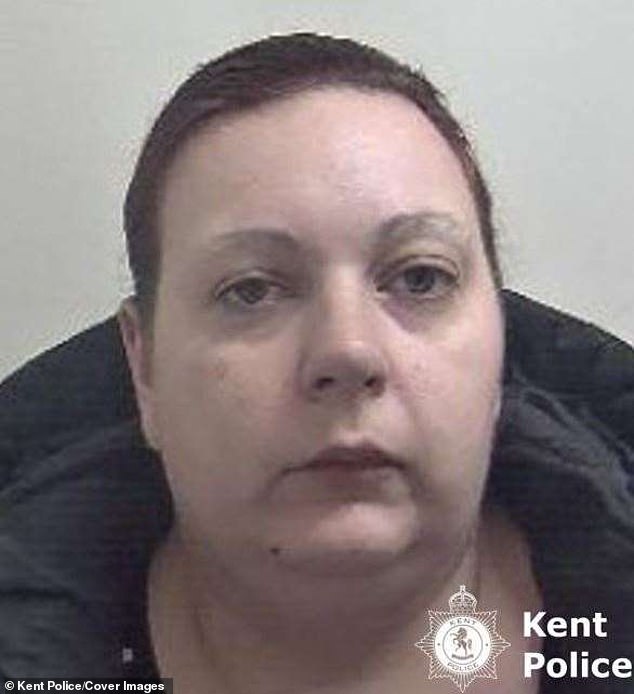
Lauren Kinrade, 35, has been jailed for four years after making 20 false accusations that a cancer patient with Parkinson’s made threats to rape and kill her
The prosecution said Kinrade eventually became a romantic partner, but this relationship ended in November 2022.
In June 2023 Kinrade had sought a non-molestation order against Mr Andrews at family court – but had sent five fake emails to the solicitor responding as if she was Mr Andrews and making threats against herself.
A final non-molestation order was confirmed in August, in Mr Andrews’ absence.
During the next six months, Kinrade made 13 calls to the police alleging Mr Andrews was making malicious and threatening emails, and made seven separate witness statements to police where she signed a declaration that the statement was true.
After the seventh witness statement on February 13, 2024, Mr Andrews was charged with six offences of breaching the non-molestation order and malicious communications and was remanded in custody.
When she made the allegations, Kinrade had criticised the police for a lack of action on her allegations and said she ‘could be dead by Monday’.
But during the police investigation it was discovered she was writing the emails to herself before falsely reporting the offences, and she was arrested in May 2024.
Her lies were revealed after officers found the IP address from which the threats were sent was linked to Kinrade’s home address, and her telephone number was used as the recovery phone number for the account.
The probe revealed she had made internet searches including: ‘Can the police track an IP address from an email?’

A doctor thought the 35-year-old might meet the criteria of a personality disorder, the court heard
In his victim impact statement, Mr Andrews detailed how Kinrade’s actions had impacted his finances, health, his accommodation and his attendance of medical appointments.
He had lost access to his phone and laptop, which took nearly a year to be returned, and his reputation and confidence around his friends had also been affected.
He said: ‘I used to be a very trusting person and I’d want to help people. I think the way I was treated was absolutely criminal.
‘It was a horrific experience for me to go through, and I’ve never experienced anything like it before, and that has had quite an effect on me.’
The court heard he sometimes dreams he is still inside the cells and feels scared he could end up in prison and that ‘Lauren might come after me again’.
In mitigation, Charlotte Surley, defending, read a short apology letter written by Kinrade to her victim, where she expressed remorse and said she was ‘committed to learning from this’.
‘Nothing like this will ever happen again, I am sincerely sorry, Lauren,’ it read.
The court heard that Kinrade had not provided her medical records to the doctor as part of the pre-sentencing report, but the doctor thought she might meet the criteria of a personality disorder.
Despite this, in his sentencing remarks the judge said: ‘I am not persuaded that any personality disorder, if it exists, had any marked impact on your culpability in this case.
The judge also questioned the lack of insight from the defendant on why she had done what she did, and her defence barrister explained that ‘she has been unable to articulate it’.
Judge Branston said: ‘It seems that you being offered support and attention from various outlets may have contributed to your offending behaviour.’
He remarked that the defendant’s actions had resulted in an ‘utter waste of police resources, court resources, and prison resources’.
The judge added: ‘Your actions represent an appalling abuse of trust. False allegations were also made in the family court so you have had an impact on the course of justice in two jurisdictions.’
The judge remarked that Kinrade’s behaviour was ‘sophisticated and premeditated and relentless’ and said it undermines every single victim of domestic abuse that makes a true report of a crime.
The 35-year-old was handed a four-year prison sentence, but will serve no more than half in custody before being subjected to licence conditions.
In addition, a ten-year restraining order was imposed, and Kinrade will have to pay £1,000 in court costs and an automatic surcharge.