Britain finds itself in an increasingly uncomfortable position. Everyone claims to support free speech, yet few agree on what it allows. Recent clashes between protesters, street preachers and the police have exposed a deeper uncertainty about the limits of expression in public life. What can we say, and what can’t we? Where, and when, can we say it?
The confusion is not simply a sign of hostility to freedom of speech but of growing anxiety about how to exercise it responsibly. Freedom of expression lies at the heart of our democracy, yet it has always depended on civic restraint. Today that balance is unsteady, leaving citizens and police unsure of their rights and obligations. Uncertainty affects not only those speaking in public, but those tasked with maintaining order.
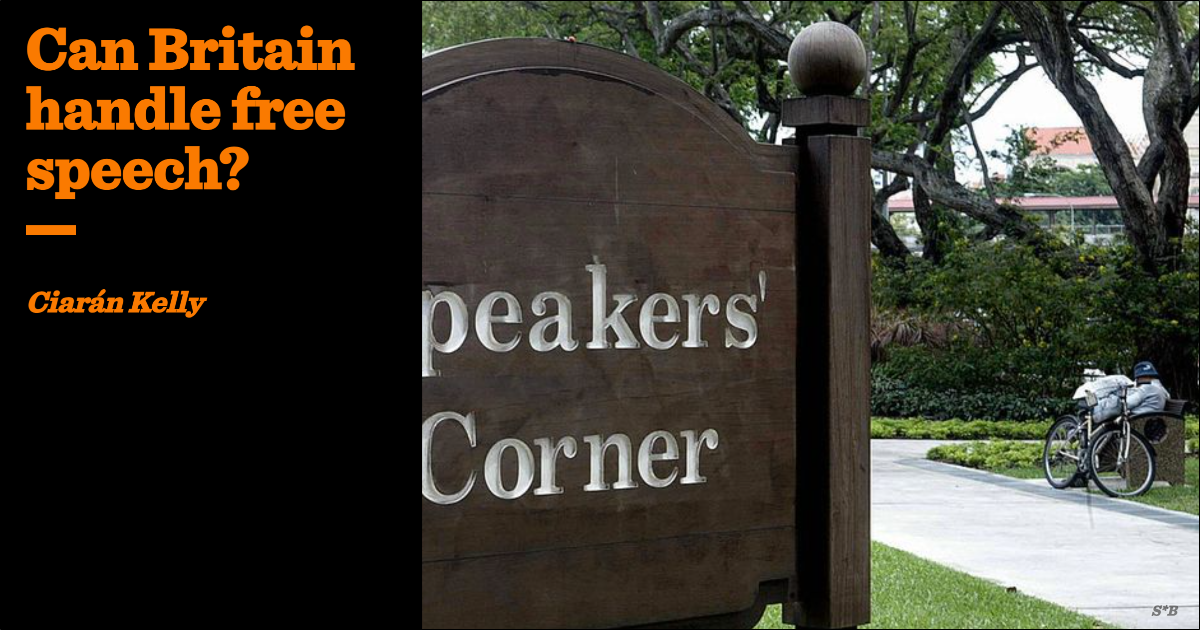
Britain’s approach to free speech has never been about unlimited freedom but about a long tradition of open debate shaped by social norms. From seventeenth-century pamphleteers to Speakers’ Corner, our streets have long been open for religious, political and social argument. This tradition helped forge the social and political foundations of Britain and the values we claim to cherish.
Just as those early pamphleteers risked imprisonment for challenging authority, today’s street preachers and activists navigate a complex legal and social landscape. Their messages may provoke discomfort, but their presence reminds us that the public square is meant to be contested. Free speech must include ideas we would rather avoid.
Contemporary examples reveal how fragile the freedom can be. Christian preacher Hatun Tash regularly debates at Speakers’ Corner, facing harassment and efforts by police and bystanders to shut her down. She has even been the victim of a knife attack by those who disagreed with her. Her experience is a stark reminder of the risks of exercising free speech in a climate where offence is increasingly treated as unacceptable.
As Lord Macdonald, the former Director of Public Prosecutions, has observed, “…the emergence of free speech in our society was partly forged amid the legal persecution of Christian open-air preachers.” Today, he notes, our common laws protect those of all faiths and none. Street preaching enriches our public life when competing ideas are tolerated and expressed responsibly.
Yet our shared sense of civility has eroded, leaving free speech more vulnerable to conflict than ever. Britain’s laws on expression remain broad, but the boundaries around harassment and public order are often poorly understood – by those expressing themselves and those policing them.
We all need to take responsibility. Protesters and street preachers must exercise their freedoms responsibly, with regard for those around them. The public must understand the law, moderate their own behaviour and defend the rights of others to speak, even when they disagree. Institutions must interpret and apply the law consistently. The health of Britain’s public sphere depends on this.
Free speech is not a licence to provoke or impose a single viewpoint. It is a duty to keep the public realm open for reasonable debate. When we forget this, hostility grows – and with it comes calls for stricter controls that diminish everyone’s freedoms. The future of Britain’s public square depends on how we exercise our liberties with knowledge, restraint, and respect for the rights of others.