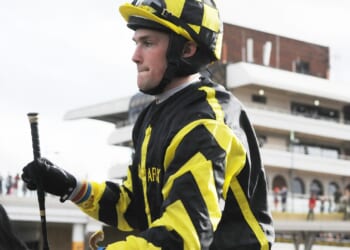
A British wildlife expert and a World War Two Hurricane display pilot have died in a plane crash in Namibia while searching for wildlife.
Professor Alan Wilson, 62, and former airline pilot Neil Oakman, 63, nose-dived into the Namib Desert in a light aircraft shortly after take-off and died instantly.
The pair had been researching Namibia’s national animal, the Oryx antelope, and had spent more than a week at the remote Gobabeb Research Station in the Namib-Naukluft National Park, along with fellow British researcher John Lowe.
Mr Oakman, who is an experienced pilot, flew the Groppo-Trail light aircraft which crashed on Wednesday, according to senior air accident investigator Judith Shomongula.
The aircraft, belonging to Mr Wilson, stalled or lost power while in the air and dived nose-first into the desert, research suggested.
Mr Lowe became concerned after the pair did not return to camp after two hours and, deciding to search for them, found the wrecked plane at the end of the Gobabeb airstrip, which is 75 miles from town of Walvis Bay.
The flight is believed to have been the last as part of a study.
Ms Shomongula said: ‘Three British nationals, John Lowe, Alan Martin Wilson, 62, and Neil Thomas Oakman, 63, came to Namibia on February 25 2026 for research.
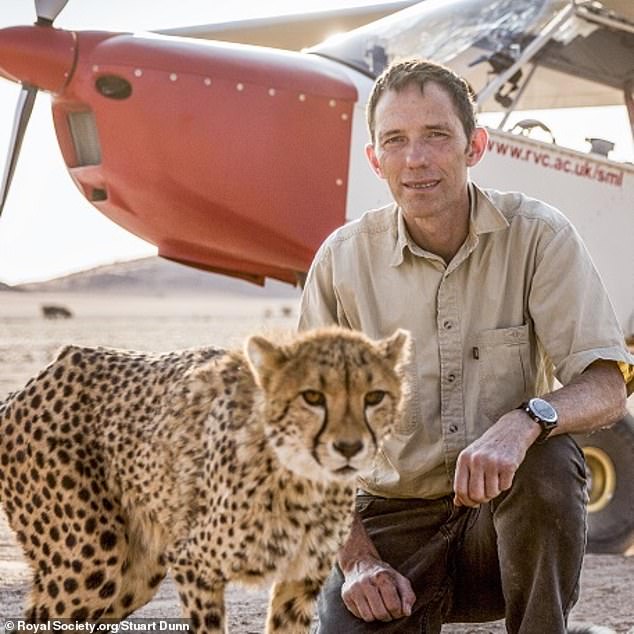
Professor Alan Wilson died in the crash and was leading a project for the Royal Veterinary College tracking and studying Oryx antelopes
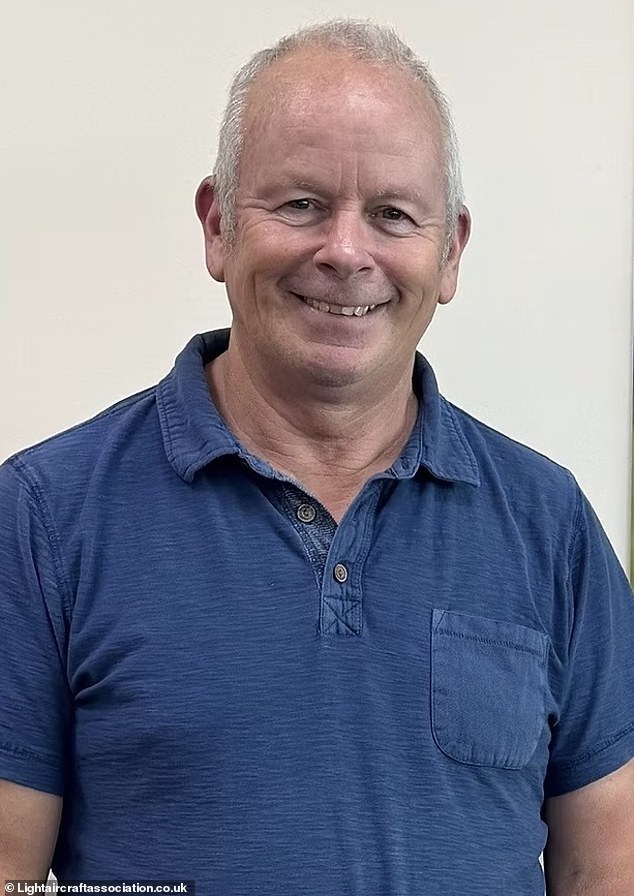
Former airline pilot Neil Oakman was driving the plane when it either stalled or lost power after take-off
‘On Wednesday March 4 2026 at about 17.00 we have been told Alan Wilson and Neil Oakman took off to look for collared antelope in the dunes of the Namib.
‘At about 19.00 researcher John Lowe started getting worried about his colleagues who were late getting back to the research centre and search of the area was started.
‘They later discovered a crashed aircraft at the end of the Gobabeb airstrip. Police were informed and the bodies transported to the Walvis Bay police mortuary.
‘We all extend heartfelt condolences to the bereaved families.’
Professor Wilson and Mr Lowe had worked together for more than a decade developing state-of-the-art tracking and motion collars for predators and antelopes.
They were leading a project for the Royal Veterinary College tracking and studying Oryx antelopes in the Namib desert.
Mr Oakman trained commercial pilots for Ryanair and was a Hurricane display pilot operating out of the former RAF Duxford, Cambridgeshire.
He was the chief pilot of the former Battle of Britain Hurricane VZ497.
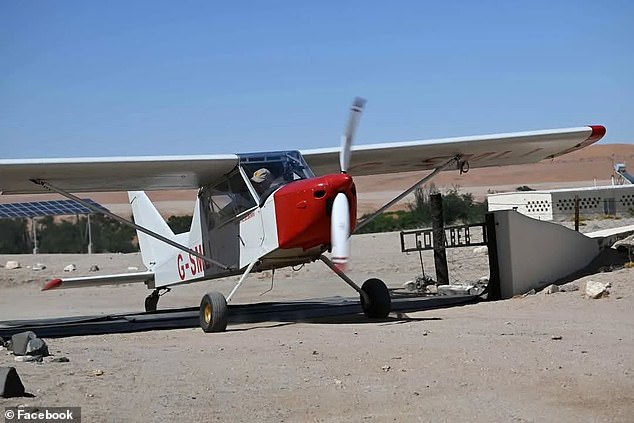
Professor Wilson and Mr Lowe designed both GPS collars and cameras to track them – which were fitted to the aircraft – with the footage being impossible to film by hand held cameras.
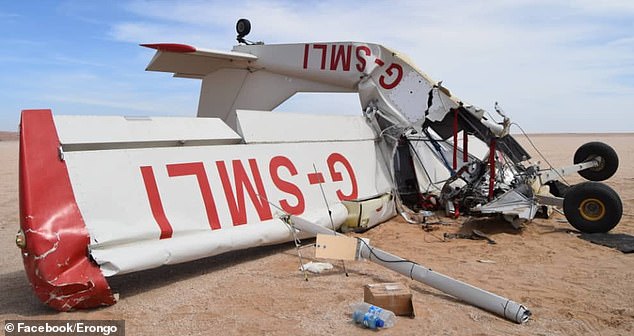
The flight crashed at the end of the remote runway, which killed Mr Oakman and Professor Wilson instantly
A ‘close friend’ of the Mr Oakman Kathy Burnhill said he ‘was really enjoying his work’ in Namibia, adding: ‘He will be missed by all who had the privilege of knowing him.’
Another friend Ken Dirsch described the pilot as an ‘extremely competent pilot’ and called his loss ‘tragic’.
Professor Wilson featured in many BBC documentaries including Cat Watch: 2014 and The Secret Life of the Cat, and was global expert in carnivores and their antelope prey.
He headed the LOCATE project in Africa which focused on studying how predators and their prey achieve their speed and manouevring for both the kill and for their escape.
Professor Wilson and Mr Lowe designed both GPS collars and cameras to track them – which were fitted to the aircraft – with the footage being impossible to film by hand held cameras.
A spokesman of Professor Wilson’s alumnus, the University of Glasgow School of Biodiversity, One Health & Veterinary Medicine, said: ‘[Professor Wilson] pioneered novel GPS and motion tracking technologies for studying wild animals in their natural environment and he featured in a number of BBC wildlife documentaries.
‘Our thoughts are with Anna and the rest of Alan’s family as well as his colleagues and friends.
‘He was truly a world expert in his field and will be dearly missed by so many.’
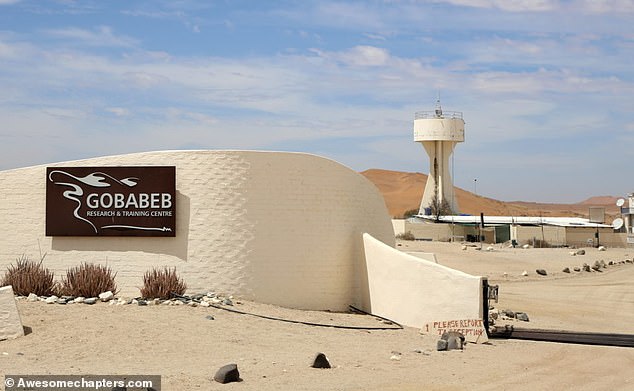
The pair had spent more than a week at the remote Gobabeb Research Station in the Namib-Naukluft National Park, along with fellow British researcher John Lowe
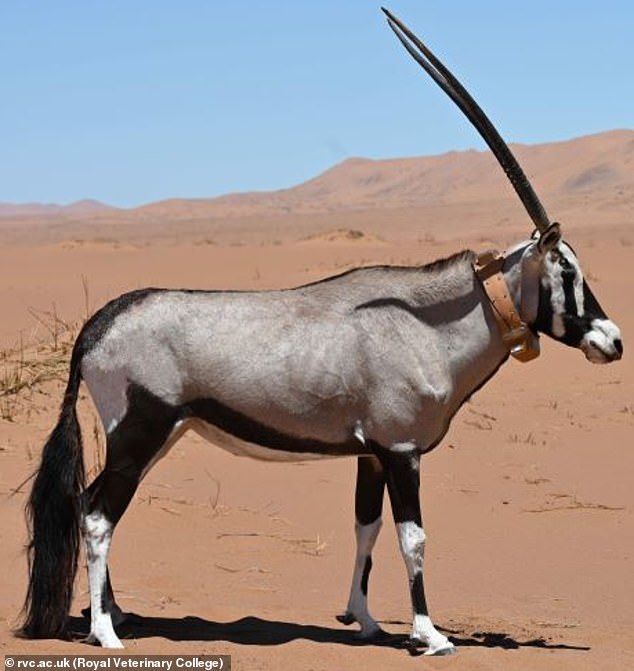
The pair were studying the Oryx, which is a large antelope found throughout Africa and Arabia that stands 1.2m high and has long straight horns and distinctive black markings to its face and leg
Professor Wilson had been Professor of Locomotor Biomechanics at the university and was head of the Structure and Motion Laboratory.
A spokesman for the Gobabeb Training & Research Centre said: ‘We are deeply shocked and saddened by this tragic accident which has hit everyone at the facility extremely hard.
‘We send our sincere condolences to the families, friends and colleagues of those who lost their lives and request privacy for the relatives during this traumatic time.’
The Oryx is a large antelope found throughout Africa and Arabia that stands 1.2m high and has long straight horns and distinctive black markings to its face and legs.
They can live in the desert finding moisture from plants and in Namibia there are some 373,000 which need their speed and agility to avoid lions, leopards and cheetahs.