This article is taken from the October 2025 issue of The Critic. To get the full magazine why not subscribe? Get five issues for just £25.
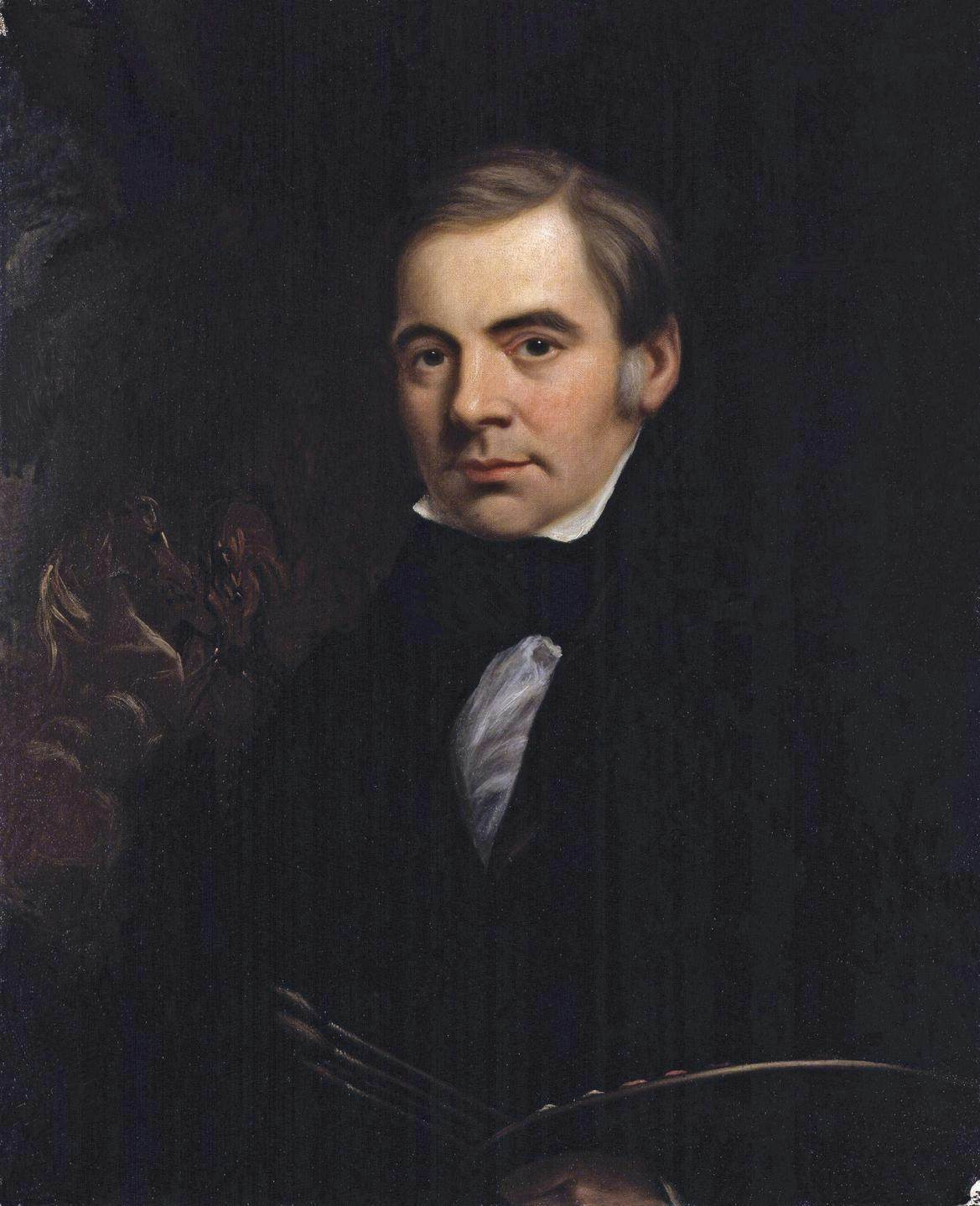
These pictures, some hundred years apart, capture the thrill and excitement of fox hunting in England during its golden age. Both John Ferneley Sr (1782-1860) and Gilbert Holiday (1879-1937) were avid men of the chase, and their passion for the sport and ability to depict its intricacies made them popular amongst patrons in the hunting set.
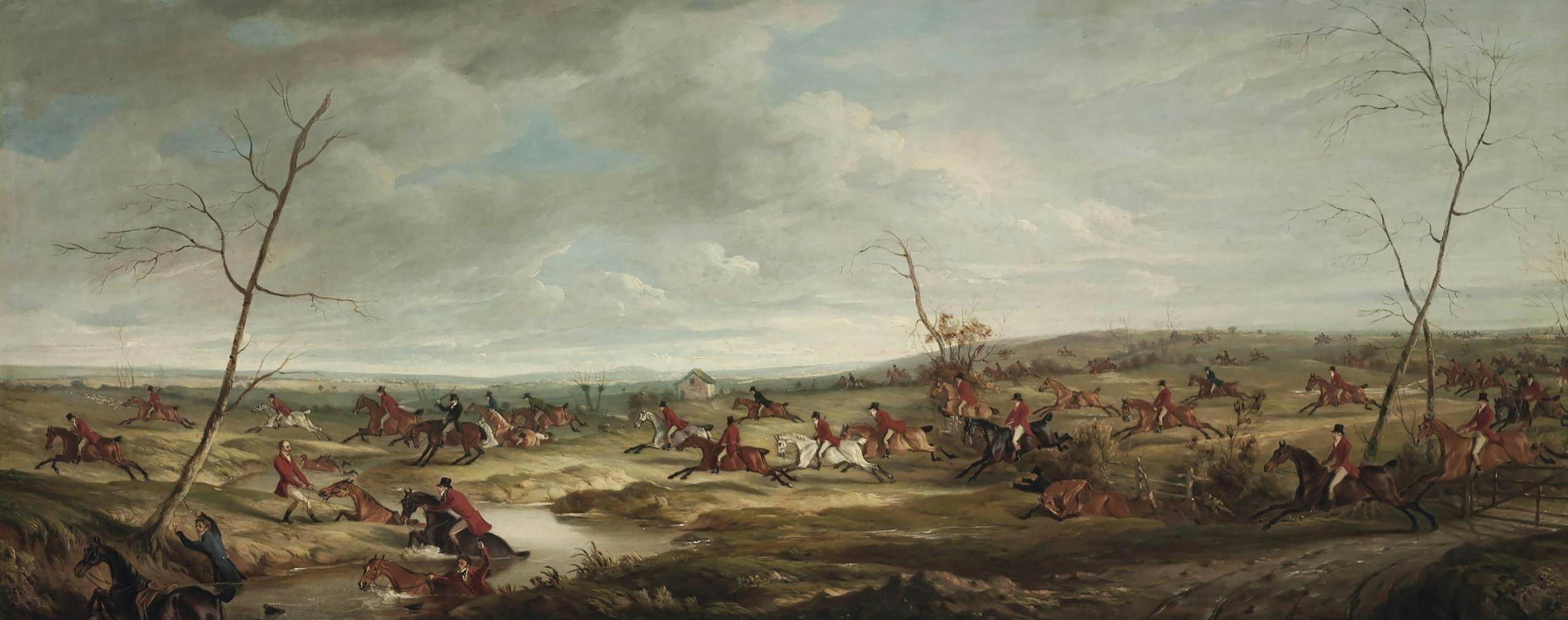
The chaos of A Run at Melton Mowbray (1824) foreshadows the humorous hunting catastrophes depicted by the author R.S. Surtees. More than one horse has fallen foul at a brook; the riders struggle, trying not to drown, weighed down by boots and thick woollen hunt coats.
Winston Churchill recognised that, “young men have often been ruined through owning horses or through backing horses but never through riding them; unless, of course, they break their necks, which, taken at a gallop, is a very good death to die”. This is something a number of these young men look set on doing.
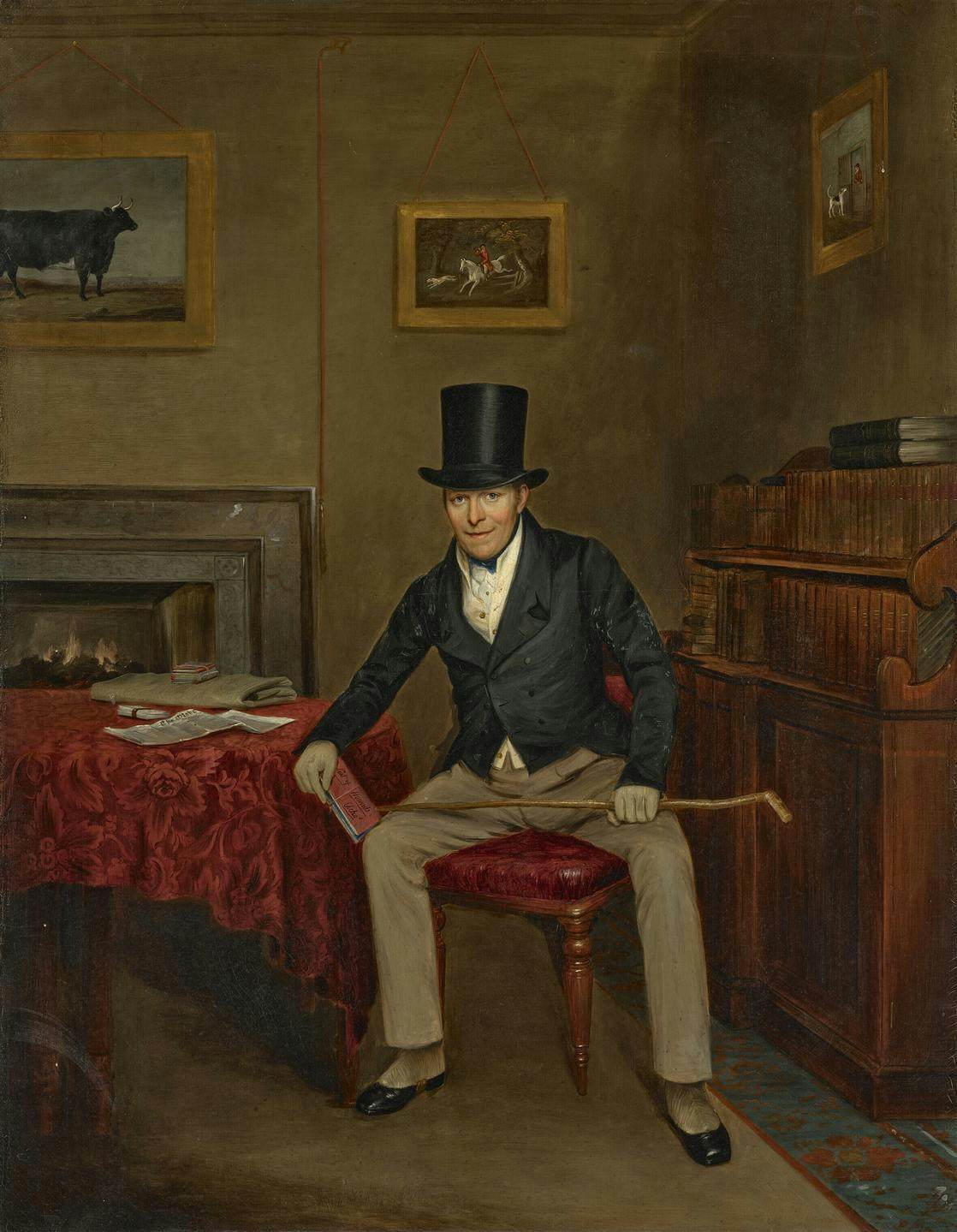
Ferneley is a great joy for art historians because he kept extensive records and intricate accounts throughout his career. By consulting these we know that this picture was commissioned by Anthony Keith-Falconer, 7th Earl of Kintore (1794-1844). Lord Kintore kept hounds at Keith Hall, the family seat in Aberdeenshire, and was master of the Old Berkshire Hunt from 1826 to 1830. He was known as “a rider bold to rashness, greedy for fences; and he was celebrated as a boon table companion”.
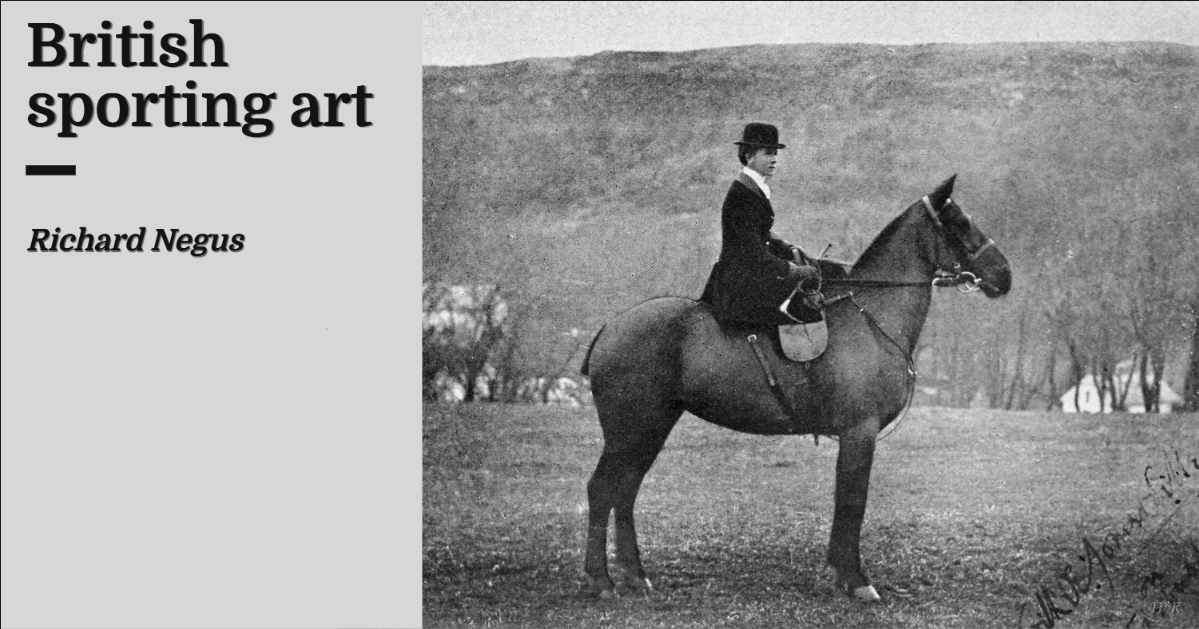
By contrast, Gilbert Holiday’s 1930 work, Full Cry, captures the power, speed and thrill of jumping hedges. Landing on the other side of a vast hedge, we see, at the head of a mainly male field, a lady riding side-saddle. She has kept her seat and is helping her horse recover balance, indicative of great skill.
Fox hunting, by this time, had become a sport where men and women rode alongside each other as equals, poignant perhaps that this was painted a mere two years after full suffrage. The novelist Edith Somerville, an accomplished horsewoman herself, concluded: “The playing-fields of Eton did not as surely win Waterloo as the hunting-field won the vote for women.”
Exceptional horsewomen demonstrated courage and bravery in the field, aided by technical advancements in the design of the side-saddle and a new style of safety skirt that prevented them from being dragged if they fell. Though the identity of our equestrienne is unknown, these “Dianas of the Chase” were particularly glamorous and popular subjects for sporting artists. This mystery lady is surely more glamorous and accomplished than most.
Katherine Field, Packard Curator for the British Sporting Art Trust
In Kazuo Ishiguro’s novel The Remains of the Day, Mr Stevens, the ever loyal butler of Darlington Hall, said of the English countryside, “It is as though the land knows of its own beauty, of its own greatness, and feels no need to shout it.”
I fear Stevens was wrong. The English countryside was never wholly beautiful or permanent. The real countryside has always been a working place, a food factory. Even today, 72 per cent of England’s landmass remains as farmland. Beauty is here, but it is a happenstance: not nature’s design.
Nor is rural England set in aspic; it is a shifting entity, reflecting the agricultural requirements of the day. Changes in farming practice are caused by factors far beyond the influence of the farmer. Wars, trade deals or global booms and busts cause agricultural revolutions, and these inevitably transform the landscape too. Sporting art provides the clearest view of this historical truth.
John Ferneley reveals our chameleon countryside in his A Run at Melton Mowbray. We see the “Meltonians”, a venery-obsessed sect of the early Victorian London elite, riding pell-mell to hounds. Clad in scarlet and black, the riders and their horses are splendid indeed, but not so the Leicestershire countryside they gallop over. This place is gripped by agricultural depression and turmoil.
The struggle to transition from grain farming to permanent pasture and livestock-earing is obvious. Fences are failing, hedges non-existent and the sickly ash trees pollarded for firewood. Livestock required less manpower than arable; farm labourers were being laid off in their thousands. This drear view of rural England in the 1820s is one we should accept as a faithful representation. Ferneley’s Meltonian patrons permitted him artistic licence regarding their own style and derring-do but demanded that he accurately depict the land they rode over. These were, after all, little more than expensive postcards.
Full Cry by Gilbert Holiday reveals another seismic shift in the English countryside. Ignore the hunters jumping a hedge in fine style and concentrate instead on the worker in the foreground. He is dressed, as all hedgelayers are, in tattered garb. His silver whiskers and bent back indicate great age. He is unaccompanied; his more able-bodied peers have already turned their back on the land, seeking opportunities in the towns and cities.
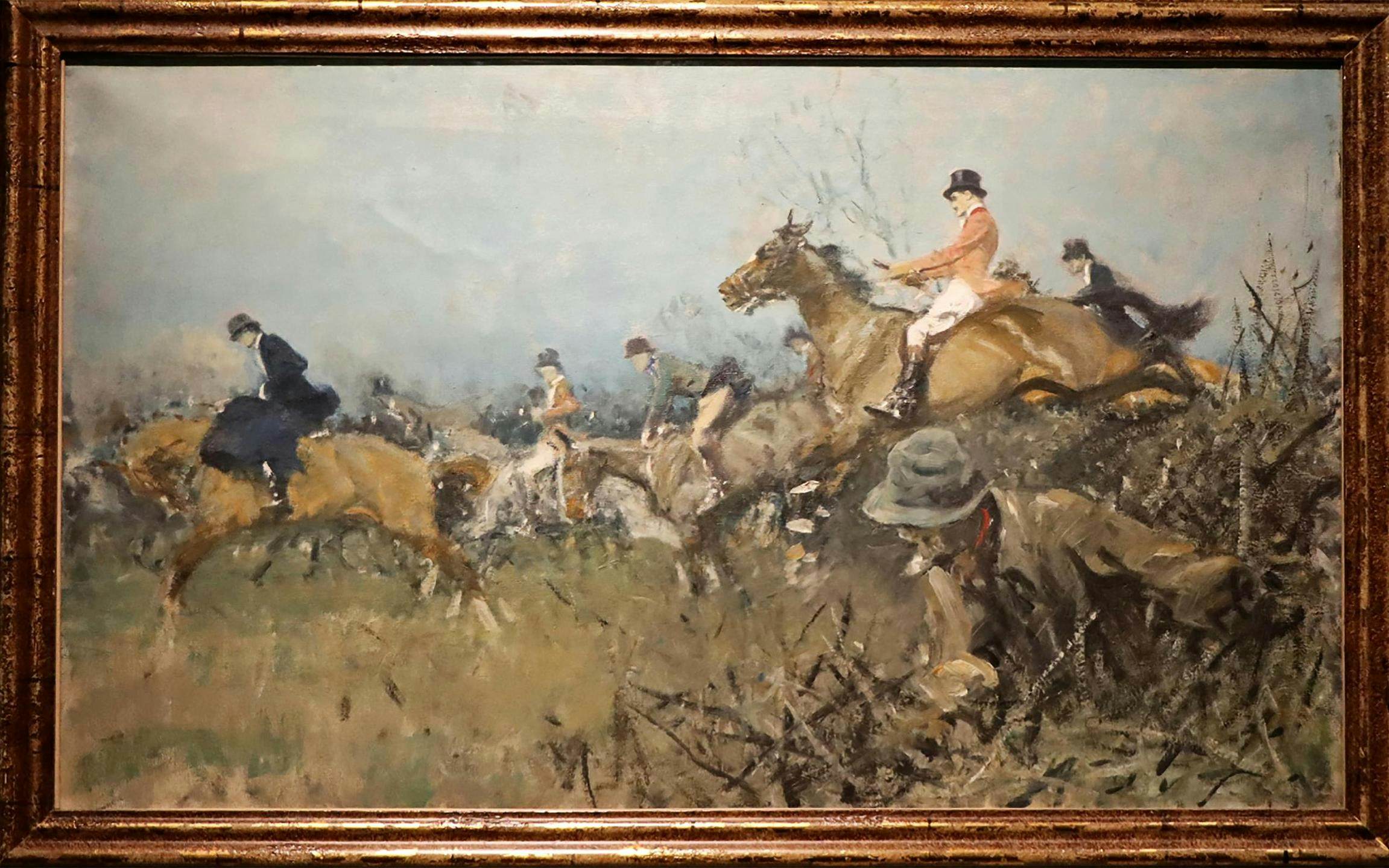
The English countryside of the 1930s saw a great exodus of young people to urban areas. This rural depopulation necessitated a more mechanised and industrialised form of agriculture to evolve, which in turn heralded the decline of mixed farms, which brought about biodiversity decline. In Full Cry, Holiday reveals what has now become the standard for the English countryside. The majority take their leisure here; all too few work in it.
Look beyond Ferneley and Holiday’s hounds, horses and swallow-tail coats and you will see what truly makes the English countryside a “land of greatness”. The beauty of rural England is not its own; it is maintained by people. When people of that land leave it due to economic depression, its beauty dies with them.
The British Sporting Art Trust’s collection is open to the public at Palace House, Charles II’s sporting palace, at the National Horseracing Museum in Newmarket, Suffolk. www.nhrm.co.uk