British Airways has cancelled all flights into Dubai until summer – blaming the ‘continued uncertainty’ and ‘airspace instability’.
The airline announced it would also suspend travel to Amman, Bahrain and Tel Aviv until after May 31.
Meanwhile, trips to Doha in Qatar are on hold until the end of April – while flights to Abu Dhabi have been called off until later this year.
The decision marks the longest major airline cancellation announced so far during the US-Israel war on Iran, which has now entered its third week.
It comes just hours after an Iranian drone hit a fuel tank near Dubai Airport, sparking a massive fire.
Flights were diverted and roads to the airport were closed as a pall of black smoke could be seen from several miles away.
The airline Emirates was forced to divert flights mid-air – with services from Heathrow, Edinburgh, Manchester and Dublin among those returned to their original departure point.
Since the strike, no major airline has resumed flights to Dubai.
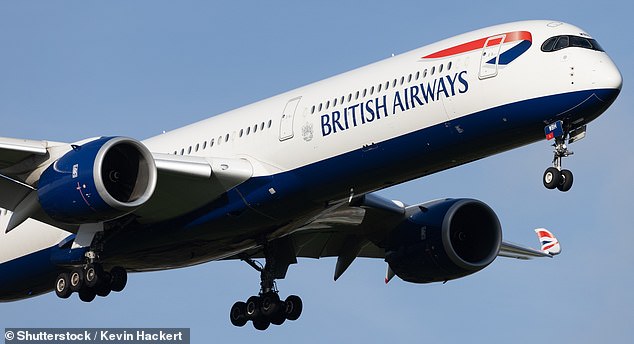
British Airways has cancelled all flights into Dubai until summer – blaming the ‘continued uncertainty’ and ‘airspace instability’ (file image)
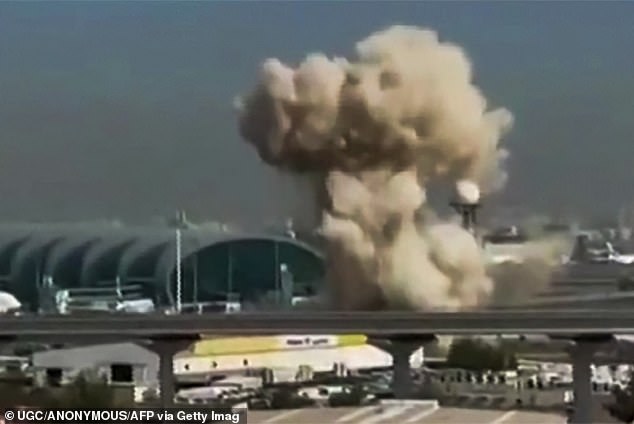
Dubai’s international airport has been attacked on multiple occasions. Footage from March 7 shows smoke rising from Dubai International Airport
British Airways said yesterday it had extended its flight cancellations – initially in place until later this month – due to ‘the continuing uncertainty of the situation in the Middle East and airspace instability’, the Financial Times reports.
The airline will continue to serve Riyadh and Jeddah in Saudi Arabia, which have been less affected by the airspace closures.
After the fire on Monday, authorities quickly took to social media to reassure the public the attack caused ‘minimal damage’ and no injuries – referring to it as a ‘drone-related incident’.
The airport has been targeted several times before in the barrage of missiles and drones from Iran, but this incident is the first time the Dubai government admitted a drone had caused the damage, rather than debris from an interception.
Iranian drone attacks have decreased in frequency in recent days, though strategically important targets such as airports, buildings and ports in Dubai’s financial centre have been struck.
More than 63,000 Britons have returned home from the United Arab Emirates since the start of the conflict in the Middle East, according to Government figures.
Over the last couple of weeks, Dubai has been attacked on several occasions, including its airports and the city’s financial centre, with videos showing plumes of smoke billowing into the sky.
Tens of thousands of passengers have been left stranded in Dubai since the outbreak of war, though airlines in the city have been increasing their capacity in an attempt to return them home.
Data from Flightrader24 showed Emirates reached its highest number of services on Sunday since conflict began, with 369 flights – around 70 per cent of its pre-conflict levels.
Join the debate
How should governments and airlines balance safety with the huge impact on travelers during conflicts?
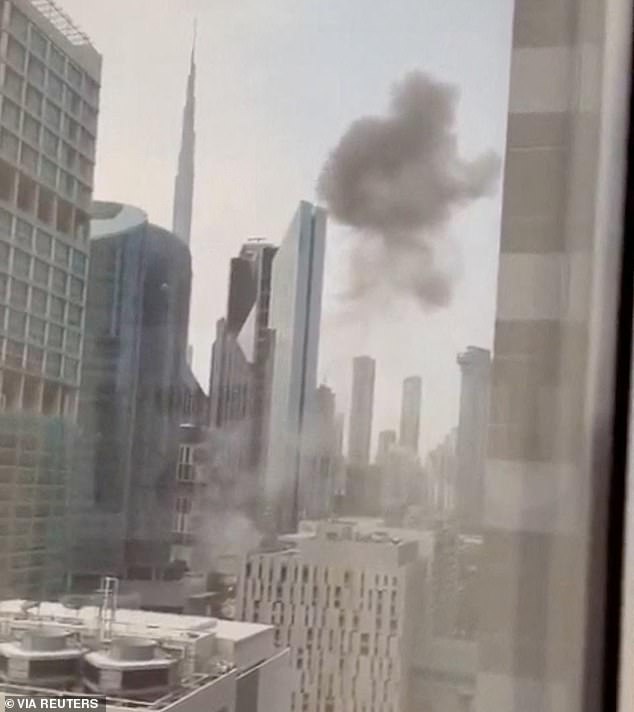
Smoke billowed from a building in Dubai’s International Financial Centre on March 13
Qatar airways said it would increase its number of flights from Wednesday.
A spokesman added: ‘The number of flights that can operate each day is extremely limited under the current operational conditions.
‘Each flight requires careful planning and remains subject to regulatory approvals and airspace conditions.’
Yesterday, Donald Trump gave another timing update on the US-Iran war, as oil tanker traffic in the Strait of Hormuz came to a standstill.
Speaking to PBS News on Monday, the President called the inflated gas prices ‘a very small price to pay’ and insisted ‘the oil prices will drop like a rock as soon as it’s over.’
‘I don’t believe it will be long,’ he said when asked about how much longer the war will drag on.
But three sources familiar with the matter told Axios the Middle East conflict could bleed into September, a much longer timeline than Mr Trump has ever discussed publicly.
Mr Trump first told the Daily Mail in a phone interview that the war could last up to four weeks. Later, he indicated it could last up to five.
Since then, the President has been cagey on the exact timing of the conflict, not wanting to show his hand to the media ahead of any actions regarding Iran.
He has also said the war will last as long as ‘necessary,’ without giving further explanation.