One thing that constantly surprises visitors to the UK is how cheek by jowl prosperity and poverty can be. In London, even single streets can include both deprivation and extreme affluence and, in rural areas, a single village will usually contain both social housing and gabled mansions.
Recent Office for National Statistics, crimerate.co.uk and local police figures illustrate that crime is heavily skewed to certain localities – driven by either nightlife, tourism footfall or, sadly, long-term social decline. The result is that seaside resorts, London boroughs and a clutch of northern post-industrial towns top the league tables for offences per 1,000 residents.
So, as much as the Eston Hills near Middlesbrough, the beaches of Sussex and the allure of the bright lights of London’s West End all have considerable charm, visiting, or indeed living, in these regions means taking caution of varying kinds is advisable.
Ultimately, it’s all about common sense: all the places below should be visited.
Enjoy the architecture, the chips or the Yorkshire hospitality. But read the map and deploy some sensible precautions if you’re planning to visit, or even to up sticks and move, to the following destinations.
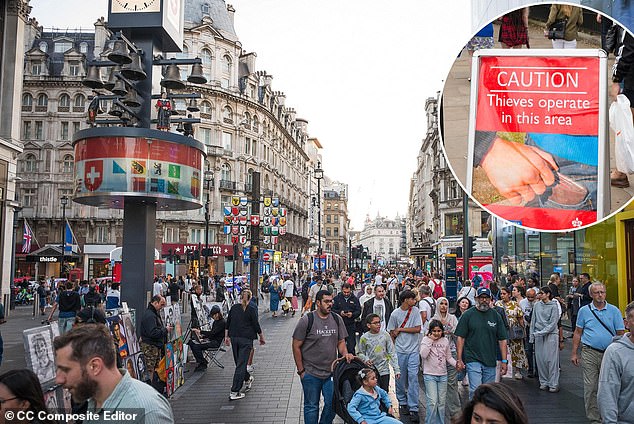
Westminster has developed a well-deserved reputation as a pickpockets’ playground
Westminster, central London
It may contain a slew of the capital’s most popular attractions, but Westminster has also developed a well-deserved reputation as an open-air pickpockets’ playground. Millions of visitors shuffle through Piccadilly Circus, Leicester Square and Oxford Street every day of the year, which, unfortunately, means that the area has long been catnip to thieves – who have no scruples about rifling through your rucksack if given a chance.
This is, by many measures, the UK’s most crime-ridden borough, with a whopping 146 crimes per 1,000 residents recorded in 2025, according to stats compiled by crimerate.co.uk and the Met. For the safest experience as a visitor, leave your valuables at the hotel, restrict your sightseeing to the daytime, use a money-belt, and treat Westminster as you would Naples or Venice: beautiful, busy but not without risks.
Camden, north London
Primarily it’s the thriving nightlife and the immensely popular market that turn the crime numbers ugly here. Camden’s grit and bustle is a major part of its charm, but the high footfall and late-night drinking have pushed up the theft, drug offences, shoplifting and violence figures to a worrying total of 156 crimes per 1,000 residents in 2025 according to crimerate.co.uk and Met Police dashboards. If you’re after Camden’s music history and market stalls, go in daylight, avoid crowds around the canal late at night, and don’t carry your valuables in open bags.
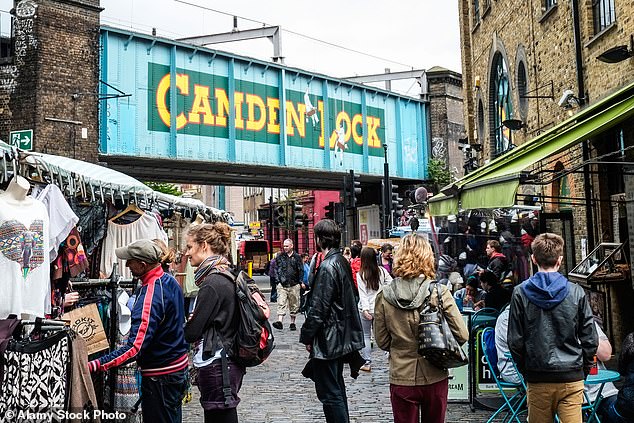
Camden’s grit and bustle is a major part of its charm… but it comes with a high crime rate
Middlesbrough, Teesside
It may have the world-famous Transporter Bridge, the nearby beauty of the Eston Hills, a thriving university, and one of the best Pop Art public sculptures in the UK (the wonderful Bottle of Notes by Claes Oldenburg), but Middlesbrough is a town with hugely outsized violent-crime figures.
Once industrial, now unevenly regenerated, the ‘Boro recorded some of the highest rates outside London for violent and theft offences per head, a shocking 131 crimes per 1,000 last year according to Cleveland Police and ONS figures; a grim reflection of neighbourhood decline (particularly in the TS1 postcode around the Linthorpe Road area), strained services and a knife-crime problem that local councils and police do repeatedly warn about.
There’s more reasons to visit the town these days than at any point since it was a venue for the 1966 World Cup, but that shouldn’t blind anyone to the fact that deep seated social problems remain.

Middlesbrough’s Transporter Bridge is one of the town’s more recognisable landmarks
Blackpool, Lancashire
Trams, funfairs, piers, candy floss and a surprisingly high crime rate are the opposing characteristics of Britain’s party town. The arcades, stag dos and cheap hotels are ingredients that fuel high theft, drunken disorder and sexual-offence statistics. Stats from last year state there were 138 crimes per 1,000 residents according to crimerate.co.uk, Lancashire Constabulary and ONS figures, making Blackpool one of the worst areas for crime in the whole of England.
In practical terms, the promenade and Tower are safe enough by day; the dodgier moments come late, where alcohol and the night economy collide. As with many seaside hotspots, the statistics make it look worse per resident because so many visitors pass through for a night or two.
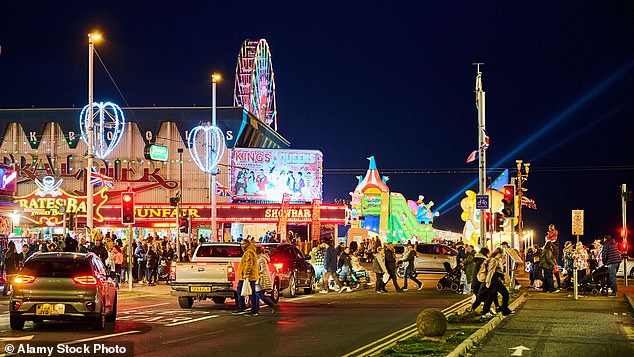
Blackpool’s arcades, stag dos and cheap hotels are ingredients that fuel high theft, drunken disorder and sexual-offence statistics in the town
Hartlepool, County Durham
It was once the butt of numerous music-hall era jokes, but Hartlepool, even with its marina, cleaned-up nearby beaches and location as the home of the National Museum of the Royal Navy, is still a small town with big problems – especially after dark.
The town consistently appears high up on both local and national rankings for recorded offences per 1,000 residents (a disturbing 183 per 1,000 were recorded last year according to Cleveland Police, crimerate.co.uk and ONS figures) with alcohol-related violence and antisocial behaviour around the town centre and seafront accounting for much of it.
It’s a surprise for many outsiders to see just how rich the town’s cultural attractions are (and how cheap property prices are), but you should be cautious in the early hours, and pick pubs with good reputations rather than the cheapest pint; the Rat Race Ale House by the railway station is a superb micropub with outstanding (and obscure) real ales.
Rhyl, North Wales
This struggling seaside town is in something of a regenerational tug-of-war at the moment. With 154 crimes per 1000 residents in 2024 (nearly double the Welsh average) according to North Wales Police date and figures from crimerate.co.uk, Rhyl has seen some of the highest offence rates in Wales, driven by long-term decline, antisocial behaviour and concentrated deprivation, particularly in the wards around the Marina Quay and the High Street.
The town is slowly starting to benefit from large investment projects that are trying to turn the tide, and visitors will definitely see the first fruits of the money spent in the forms of the totally transformed Queen’s Market and a cleaned up seaside promenade.
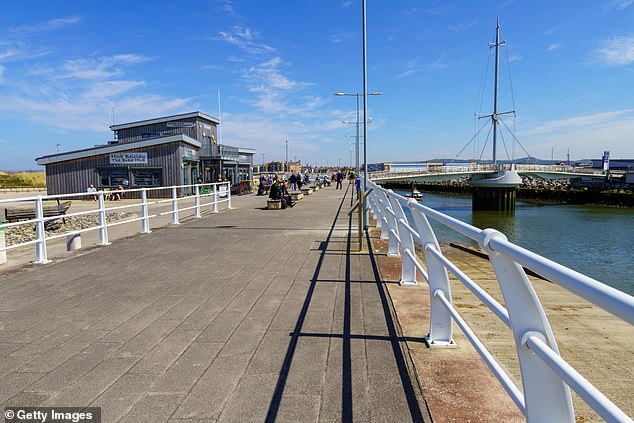
Attempts have been made to spruce up Rhyl’s waterfront areas
However, local stats show there are pockets where disorder and theft are much more common than you’d expect for a place of its size. By all means visit, but for now, it’s safest to stick to the refurbished, well-lit areas.
Stockton-on-Tees, Teesside
With the majesty of Preston Park, the Tees Barrage International White Water Centre and the World Of Butterfly’s park, there are many chinks of light when it comes to the renewal of the long-depressed, post-industrial towns of Thornaby and neighbouring Stockton-on-Tees.
However, 118 crimes per 1,000 residents this year so far, according to Stockton Council and crimerate.co.uk, is still well above the regional average, counteracting the assumption that small always equals safe. Avoid lone walks after the pubs close, exercise basic precautions, and there’s no reason why you shouldn’t embrace this much-overlooked region, – which is a real bargain for home ownership too.
Kensington & Chelsea, west London
One of the capital’s wealthiest areas is a lesson in how money brings its own danger. Famous for grand houses and expensive shops, the other side of the coin is high levels of theft and fraud – to the tune of 121 crimes per 1,000 residents so far this year so far according to Met Police dashboards and crimerate.co.uk. While the Kings Road and surrounding streets are generally not violent in the same way as you might find elsewhere, the hit to visitors is often economic in the form of bag-snatches and pick-pocketing. Tourists and shoppers should be vigilant and, if you have the cash to move here permanently, insurers will tell you that even the most demure of streets are definitely not free of potential crime.
Manchester
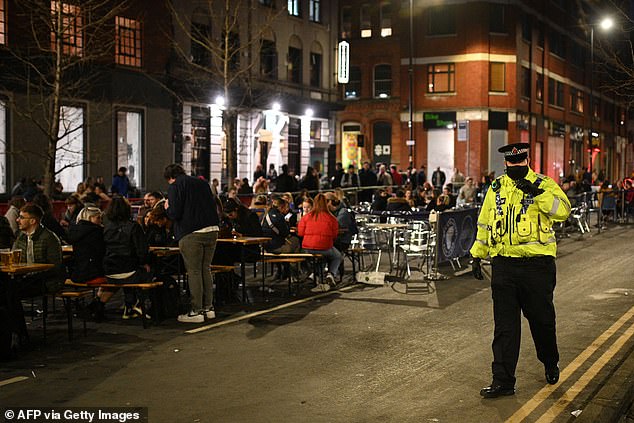
Manchester’s mix of music, football and nightlife creates a cocktail that inevitably inflates theft, disorder and assault statistics
A truly great city with some rough edges, Manchester’s cultural pull of music, football and nightlife creates a classic urban cocktail. The combination of high footfall, transport hubs and late trading hours inevitably inflates theft, disorder and assault statistics (there were 164 crimes per 1,000 residents in 2024 according to figures sourced from crimerate.co.uk). Problems are particularly acute in neighbourhoods on the city’s outskirts such as Gorton and Fairfield – but these are not areas you’re likely to be exploring on a weekend visit.
The city centre and the Northern Quarter are generally safe, but you should take sensible precautions after dark and be aware that anti-social groups can occasionally concentrate around certain hotspots. Be particularly wary on weekends too, when either of the city’s two football teams are playing rivals such as Leeds, Liverpool, or each other.
Liverpool

Liverpool’s waterfront make it a top draw for weekend breaks, but there are 98 crimes per 1,000 residents
Liverpool’s waterfront, museums, fervent music and football attractions make it one of the nation’s top draws for a weekend away – and an increasingly popular city in which to live. But 98 crimes per 1,000 residents (the numbers recorded this year so far according to Merseyside Police, the ONS and crimerate.co.uk stats) is high, and this includes vehicle crime, burglary and shoplifting, particularly in more deprived areas such as Toxteth, Bootle, Vauxhall and Kirkdale. The good news is that there are are few reasons to visit these particular areas, as most of the city’s most revered attractions are in the centre. Just like any great urban hub with a proud working-class history, a little local knowledge goes a long way.