Britain is set to become the world’s fifth biggest economy by 2040, experts have predicted.
New research published by the Centre for Economics and Business Research (CEBR) predicts the UK’s total GDP will rise from just under $4trillion in 2025 to $6.8trillion over the next 15 years.
France and Germany by comparison face weak growth prospects, resulting in the likelihood of the UK climbing the ranks ahead of them.
India is also fast moving towards becoming the world’s largest economy by the end of the century – and the third-largest by 2040.
The United States is predicted to stay on top by the end of the next decade, but China will close the gap between the two nations, with a GDP of just under $48trillion, compared to America’s $53trillion, The Times reported.
On purchasing power however China has already overtaken the US. China is also looking to overtake its rival on current price measures by 2045, with economists attributing this to the impact of tariffs on the economy.
Germany will remain the fourth largest economy, while Japan will drop behind the UK as the sixth, CEBR estimates.
Other nations to watch include Indonesia, which is currently ranked 17th but is predicted to get into the top ten by the start of 2030.
Nina Skero, chief executive of CEBR, told The Times: ‘These trends underscore a world economy in which resilience varies significantly across regions and where long-term shifts in economic influence are gaining momentum, setting the stage for a more dispersed and dynamic global order.’
It’s not all good news however for the UK – growth is expected to slow globally by 2.5 per cent due to the ‘highest US tariff rates in a century’.
And living standards in the UK – based on GDP per capita – are predicted to fall, putting Britain two places down from 19th to 21st in the rankings.
The top five countries for living standards this year are Luxembourg, Ireland, Switzerland, Singapore and the US.
According to the CEBR, the Government’s tax hikes have contributed to the fall in living standards.
‘Having been elected on a platform to boost growth, only very limited success has been achieved,’ the new report states, pointing the finger of blame at the Government’s tax and spend policies.
While the state’s spending splurge has provided a boost to growth, this ‘has needed to be financed, with the Government implementing a range of tax rises since coming to office’.
The report adds: ‘There is evidence of this crowding out the private sector in the near term, both by exacerbating uncertainty and adding to costs.’
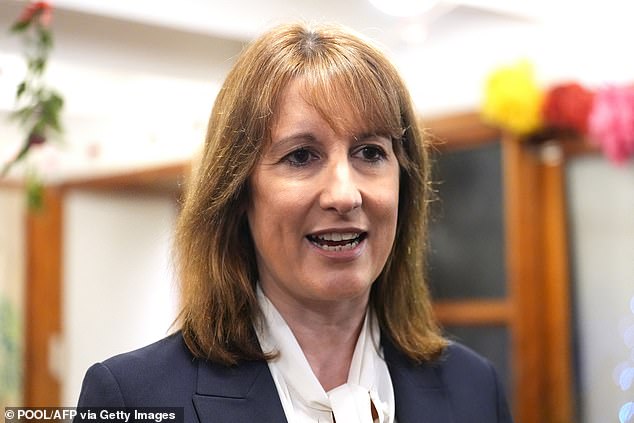
Chancellor Rachel Reeves was recently under pressure to resign after being accused of inventing a £30billion ‘black hole’ to justify big tax rises. A CEBR report attributes the tax rises to falling living standards in the UK
The forecast comes as business grapples with a series of anti-growth measures, including hikes in employer National Insurance and the minimum wage, as well as botched business rates reform.
At the same time, firms are having to deal with a raft of new workers’ rights coming into force. As a result, growth has stagnated and unemployment has risen.
Unemployment of 4.8 per cent on average for 2025 will be the highest since 2016, further highlighting Britain’s ‘poor economic conditions’, the report finds.
The Budget has barely helped, it adds, doing ‘little to support the near-term growth outlook’.
Official figures earlier this month showed unemployment had risen up to 5.1 per cent in the three months to October, from five per cent in the three months to September. Outside of Covid, that is the highest level in nine years.