Britain is set to be poorer than Hong Kong and Finland as Labour’s tax hikes hold the economy back.
The UK will slip from 19th to 21st in a league table of gross domestic product (GDP) per head in 2026.
At the end of Labour’s first full year in office, the Centre for Economics and Business Research (CEBR) said: ‘Having been elected on a platform to boost growth, only very limited success has been achieved.’
The UK remains the world’s sixth biggest economy in the rankings.
But when measuring GDP per person, it is already below the likes of Iceland, the Netherlands and Israel and will drop further in 2026.
Luxembourg tops the table while the US is in seventh and Australia is in 13th. Even crisis-ridden Germany is ahead of Britain in 18th. France, however, is in 26th place.
The report points the finger of blame at the Government’s tax and spend policies.
While the state’s spending splurge has provided a boost to growth, this ‘has needed to be financed, with the Government implementing a range of tax rises since coming to office’.
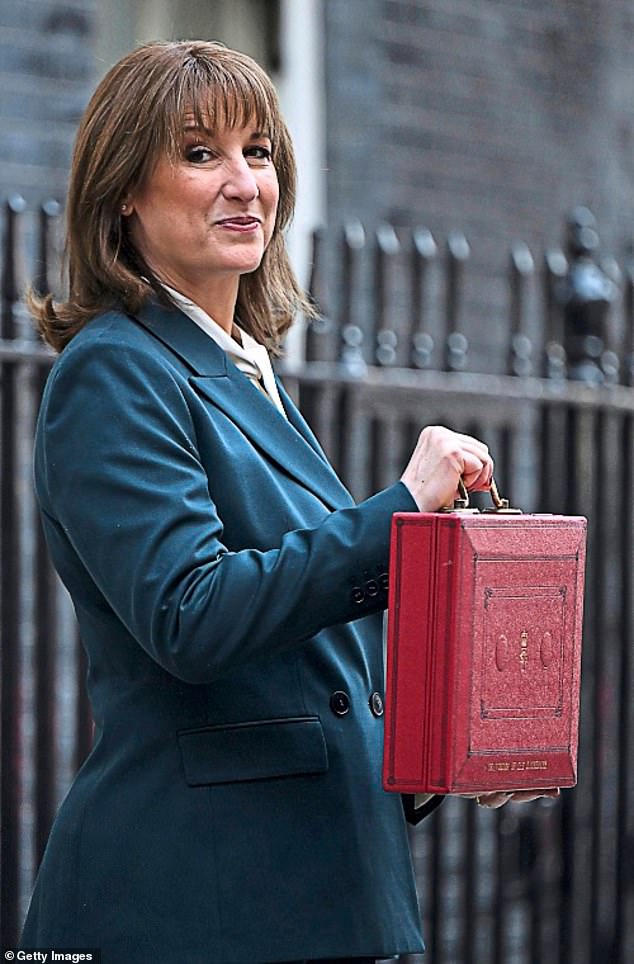
Chancellor Rachel Reeves bears the brunt of responsibility as UK will slip from 19th to 21st in a league table of gross domestic product (GDP) per head in 2026
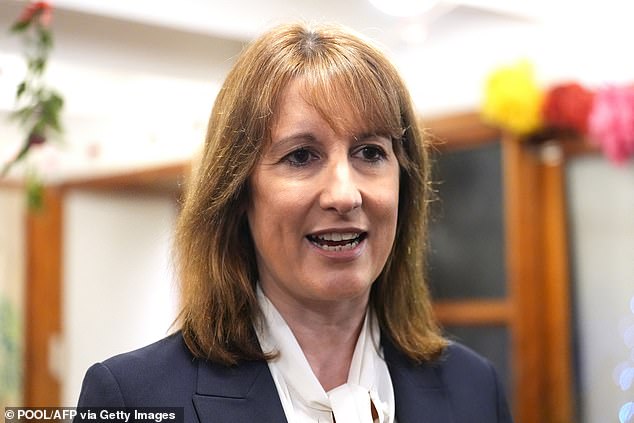
She was recently under pressure to resign after being accused of inventing a £30bn ‘black hole’ to justify big tax rises. Pictured: The Chancellor earlier this week
The report adds: ‘There is evidence of this crowding out the private sector in the near term, both by exacerbating uncertainty and adding to costs.’
The forecast comes as business grapples with a series of anti-growth measures, including hikes in employer National Insurance and the minimum wage, as well as botched business rates reform.
At the same time, firms are having to deal with a raft of new workers’ rights coming into force. As a result, growth has stagnated and unemployment has risen.
Unemployment of 4.8 per cent on average for 2025 will be the highest since 2016, further highlighting Britain’s ‘poor economic conditions’, the report finds.
The Budget has barely helped, it adds, doing ‘little to support the near-term growth outlook’.
Official figures earlier this month showed unemployment had risen up to 5.1 per cent in the three months to October, from five per cent in the three months to September. Outside of Covid, that is the highest level in nine years.
But the public sector has continued to grow. Numbers on the state’s books hit 6.18million in September, a 62,000 increase in a year.
CEBR forecasts growth of 1.4 per cent for the UK in 2026 – ahead of other members of the G7 group of advanced economies but ‘far short of historical trends’.
It also says the UK has ‘one of the highest inflation rates amongst developed markets in 2025’.
And high inflation has been ‘eating into spending power in real terms’ helping to hold back consumer activity.
CEBR’s report concludes: ‘Over the next five years, the annual rate of GDP growth is set to remain subpar, at an annual average of 1.5 per cent.’