“Happy Birthday to me, we’re all the poorer since my founding.” An unusual way for an incredibly influential organisation to celebrate its 20th anniversary.
But the Resolution Foundation is no usual organisation. It describes itself as an “institution”. And few can quibble about the outsized influence this institution has had over public policy since its founding in 2005.
Chancellor after Chancellor has quaked before the verdict of the Resolution Foundation. And budget after budget has bent to its will.
So how did this most revered organisation mark two decades at the forefront of policy formation? With a spectacularly un-self aware tweet:
A typical family today would be £20,000 richer had incomes continued at the rate of growth trending in 2005, when the Foundation was founded.
Yes, since the Resolution Foundation was itself founded, Britain has failed to grow. Productivity has been on the floor. We’re all poorer to the tune of £20,000 per family.
While it would of course be wrong to put all of this disaster at the feet of the Resolution Foundation, it does deserve its own share of the blame.
Why? Enter “distributional analysis” — a method of assessing the impact of any policy change, stratified by income decile. Crudely, if, for example, a tax cut is proposed, a distributional analysis chart would show benefits to higher income deciles, with nothing for lower deciles.
The Resolution Foundation has consistently hectored governments into retreating from any pro-growth reform that might look bad on one of these charts.
In simple terms, these analyses make it look bad if more benefits of a policy change are accrued by higher income deciles.
But here’s the uncomfortable truth: many pro-growth reforms are likely to by definition benefit higher income deciles more than they do lower ones. All levels of income may well rise but the Resolution Foundation has made ministers feel guilty if those on low incomes get smaller rises than those on higher incomes.
This has forced policy to disproportionately punish the most economically productive.
Over the last twenty years, taxes at the top of the income distribution have ballooned, penalising by ever greater degrees those who are by definition more productive. It doesn’t take a genius to work out the consequences this can have on productivity.
Had Britain been quite so obsessed with viewing policy through the lens of “distributional analysis”, rather than growth, in the 1980s, it’s hard to see how this country would have been able to escape the doom loop. In her first budget Margaret Thatcher cut the basic rate of income tax from 33 per cent to 30 per cent, and the top rate from 83 per cent to 60 per cent. This would have looked terrible on a Resolution Foundation chart.
And yet, today, this intrinsically anti-growth way of looking at the world has been catapulted to the forefront of public policy making, in no small part thanks to the Resolution Foundation.
Indeed, Ruth Curtice, the new Foundation’s new Chief Executive, was previously at the heart of government, where she was busy “leading the Treasury’s distributional analysis” under Prime Ministers of red and blue hue.
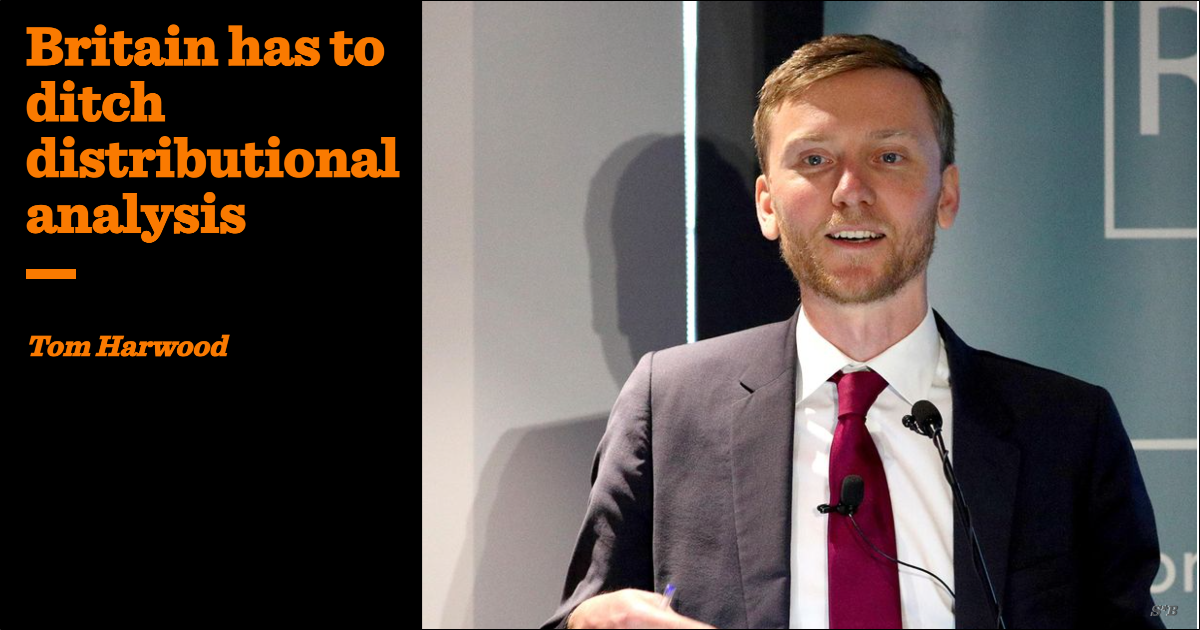
Labour’s now-Treasury Minister Torsten Bell, who led the Resolution Foundation for nine years (after a stint as Ed Miliband‘s policy director), was paraded through television studios as if he were an independent expert.
The likes of the BBC would ask Chancellors how their budgets stacked up against a distributional analysis without critiquing that very premise — that if everyone is getting richer, why should it matter if more benefits of a policy change go to those on higher incomes?
If Britain’s economy is to escape its sclerotic state, it could do a lot worse than caring a lot less about how much money the people at the top of Torsten Bell’s charts are allowed to make.