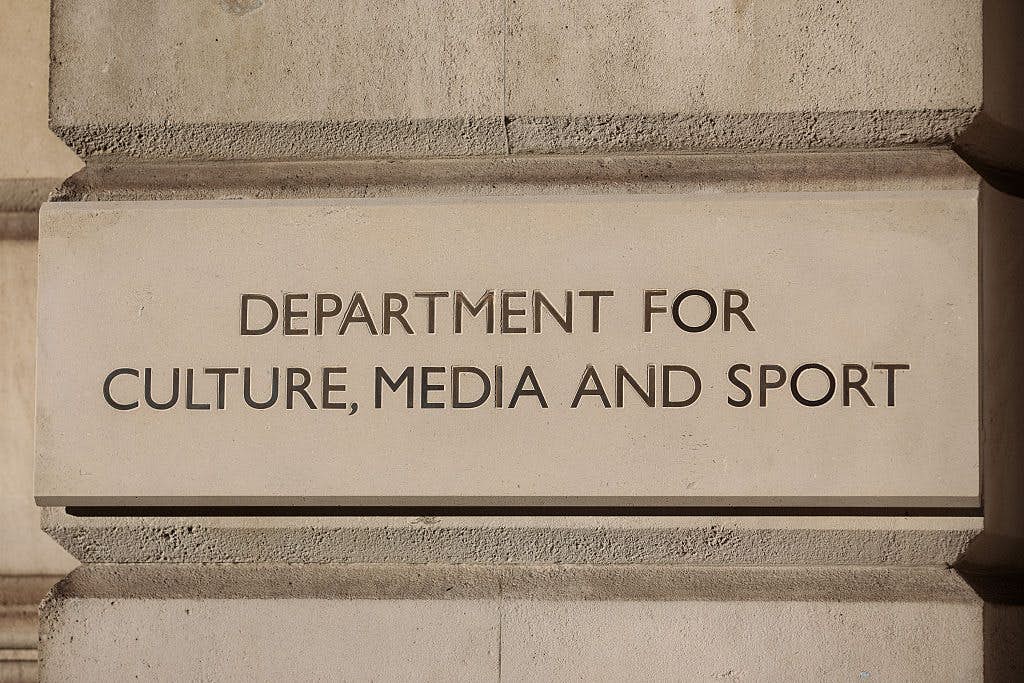
We are now a year and a half into Keir Starmer’s government. The Prime Minister said on Tuesday that 2026 would be the year voters would start to see results. But one thing is already clear: his decision to shut down the Department for Culture, Media and Sport was a mistake.
There were arguments for it, of course, that appeal to anyone of a Conservative mindset: Britain’s creative sector should be treated like any other area of business. Likewise the decision to close media regulator Ofcom: in an internet age, what was the point of attempting to regulate broadcasters? It was easy to see why the Prime Minister decided to adopt a hands-off approach.
In practice, though, the experiment has not been a success
In practice, though, the experiment has not been a success. Take copyright. The government’s pursuit of economic growth is laudable, even if the chosen route, of piling taxes and regulation onto businesses, is eccentric. In that context, what could be more natural than to open the door of Number 10 to every Silicon Valley huckster who came knocking?
Unfortunately, it turns out that writers and musicians weren’t fully persuaded that giving up all their present and future income is a good idea, even after it was explained to them that this was the only way Sam Altman would be able to afford a new lair under a volcano. Last month a consultation on the government’s proposals to give very rich Americans everything they want found they were supported by just three percent of people who wrote in. If the Department for Culture had still existed, someone there would have been able to save time by warning ministers that creative people – many of them instinctive Labour Party supporters – need money to buy food, just like other humans.
There’s broadcasting. The BBC is in a state of perma-crisis. Meanwhile British broadcasters, despite having some of the richest content libraries in the world, are somehow unable to find ways to band together to make money from the new markets that streaming has opened up. Here is a perfect example of an area where a Department of Culture, if only Britain had one, could have brought companies together to find a way forward.
Then there are new channels like GB News. While BBC producers sit with stopwatches ensuring that political parties all get a fair say, GB News can do what it likes, thanks to the government’s decision to shut down broadcast regulator Ofcom. That has allowed the channel to act as a daily booster for one political party. It is impossible to imagine that, had the Department of Culture and Ofcom not shut their doors in 2024, a “news” channel would have been allowed to have a political party leader as a regular host (indeed, had Labour not also abolished the Electoral Commission, it might have been interested in how a channel whose last set of accounts show it losing £33 million can afford to pay Farage more than £400,000 in less than two years).
British journalism meanwhile is in crisis, with local newsrooms hollowed-out, and traditional revenue streams disappearing. Democracies need reliable and accurate news coverage, but the government, lacking as it does any minister responsible for the media, has no views on how to sustain this.
Or there’s X, the website formerly known as Twitter. Its owner is committed to removing the government, and seems keen to encourage violence on Britain’s streets. Now its 2026 update lets users create what are politely called “sexualised images” of anyone, including children. A Secretary of State for Culture, if Britain had one, could take a view on whether this was a welcome development. They could, if they had been appointed and went into work every day, offer Starmer advice on whether X should be one of the government’s main channels of communication, effectively supporting a site that produces on-demand pornography of real people including, let’s say it again, children.
This is why I am launching a campaign to bring back the Department of Culture. Britain’s creative industries are worth nurturing. Our broadcast environment is worth protecting. The internet is too important to be left unregulated.
The question of who should lead this revived government department is of course up to the Prime Minister. Some would point to Lisa Nandy, currently Minister Without Any Discernible Portfolio, though there’s no evidence that she would be interested. But this role would be a great opportunity for someone who cared to do some real good.