I am a pretty hopeless churchgoer but whenever I have attended a service in our village I have found myself talking to a nice old boy who has always gone out of his way to make me feel welcome and involved.
He is a former businessman, well-travelled and with a wide understanding of the world.
He is also, I would say, pretty devoted to his faith – at least by comparison with me. He is an all-round good egg.
The other day I bumped into him in the street and was surprised to hear that he was in sudden financial difficulties. With evident embarrassment, he asked me whether I could help tide him over.
The position sounded grim. I really didn’t see how I could say no. After all, we had both prayed together in the same church. If there is one message I take from the New Testament, it is that – where possible – you should jolly well help your neighbour.
A few weeks later we were chatting again, and he mentioned that things were no better. In fact, he wondered whether I could help him out, you know, some more.
At this stage I plucked up my courage, and asked him what had gone wrong. You may or may not be surprised to learn that he was an investor in Bitcoin.
It all began when he had met a chap in the pub. He was another sound sort of fellow from a neighbouring village. According to this other man, my friend just had to give him £500 – and, hey presto, he would double his money.
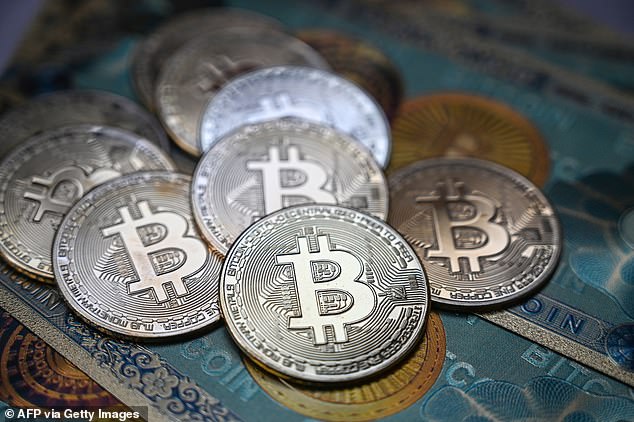
Well, things hadn’t worked like that at all. After three and a half years of muddle, in which he had paid all sorts of fees to retrieve his cash from wherever it had vanished in the bowels of the internet, he was down £20,000.
He was struggling to pay his bills. He wasn’t the only one, said my friend. Other people in the neighbourhood were going through the same nightmare, he said.
Look, I said: you have got to stop paying money to any of these people. You are the victim of some kind of scam, I told him.
He told me that he completely agreed with me. But I could tell, perhaps by a wistfulness in his voice, that he was still tempted. He still thought that with just a little more cash he could redeem the position and whoosh – his bank account would be flooded with tens of thousands of crypto-doubloons that he could turn into real, negotiable cash.
Perhaps he is right, but I have my doubts. I remember ten years ago or more when people started raving about crypto, and the genius of this mysterious Japanese coder, Satoshi Nakamoto – the one who allegedly invented Bitcoin and then disappeared. It’s foolproof, they said. There will only ever be 21 million Bitcoins. They are bound to go up in value.
Really? I said, and I wondered why. I can see the intrinsic value of gold, which has entranced the human race since the dawn of time. I can even understand why Pokemon cards have kept their value. These curious little Japanese cartoon beasties seem to exercise the same fascination over the five-year-old mind as they did 30 years ago. The kids drool over them. They boast and squabble about them – sometimes with such obsessiveness that the school has lately had to ban them.
The fascination seems absurd, but you can at least see what it’s about. Even if you remain pretty impervious to the charm of Pikachu, you can just about see why a decades-old Pikachu card is still a tradeable asset.

I can see the intrinsic value of gold, which has entranced the human race since the dawn of time, writes Boris. I can even understand why Pokemon cards have kept their value

The man believed to be Satoshi Nakamoto, the Japanese genius who allegedly invented Bitcoin and then disappeared
But Bitcoin? What is it? It’s just a string of numbers stored in a series of computers. Who controls it? Who is in charge?
Hopeless Christian though I am, I remember the great moment when Jesus holds up a Roman coin and asks his disciples ‘Whose image and superscription hath it?’ Caesar’s, they say; and though Christ was making a point about the division between spiritual and worldly power, he was also making an important point about money.
There was a long period in which the early Roman Empire had very low inflation and that was partly because people absolutely believed in the authority that appeared on that coin.
In fact, they were positively terrified of that authority. Tiberius Caesar had such colossal military power at his disposal that he was able to raise the taxes to back his spending. That meant his credit was good.
That meant that the Roman denarius retained its value because it carried Caesar’s image and superscription; and that is more or less the same trick that all currencies have tried ever since.
Today’s fiat currencies are not backed by gold – not since 1973 – but by governments; which is why currencies tend over time to depreciate, since governments always end up living beyond their means.
That is more or less what has happened to every currency since the later Roman Empire; and that is exactly why the crypto enthusiasts are so excited about Bitcoin and other such innovations.
The whole point, they say, is that it is decentralised. That means politicians can’t control it. It can’t be debauched by government profligacy, for instance.
Maybe they are right, but it is also true, if no one is in charge, that there is no one to complain to if it loses value. There is no central banker to sack, no government to vote out of office. There is no one to hold to account if the whole thing is suddenly hacked.
Who do we talk to if they decrypt the crypto? There’s no one except this Nakamoto, who may be no more real than Pikachu or Charmander themselves.
The whole thing depends completely on the collective belief – or suspension of disbelief – of the Bitcoin holders. What happens when that belief melts away?
The more elderly people get ripped off – in the name of Bitcoin – the faster that disillusion will set in. I have always suspected from the outset that all cryptocurrencies were basically a Ponzi scheme, with very few good-use cases.
Like all such schemes, they depend on a constant supply of new and credulous investors. It looks to me as if the eternal Ponzi scheme trawl for the greater fool is starting to reach good, kind and well-meaning people – with modest incomes and assets – in the villages of Oxfordshire.
That makes me very angry with the rip-off artists. It also tells me that the canary is no longer tweeting in the mineshaft, and that the toxic and explosive gases are building up. Sooner or later, on this evidence, the jig will be up for the crypto industry, and I can’t say I will be sorry.
Perhaps I am wrong. Perhaps these computer-generated currencies will keep going up and up in value. But that depends entirely on confidence – and I am starting to hear so many tales of shattered confidence that I reckon in ten years’ time an investment in Pokemon cards will look like a much better long-term bet.
Whatever else you say about old Pikachu and his cards, they all have an image and superscription that any five-year-old can recognise. That’s real value.