FOR years, scientists have warned that bird flu could one day spill over from birds to humans, triggering a global health crisis.
Now, a grim study shows it could take just two days for avian influenza – known as H5N1 – to tip into a pandemic.
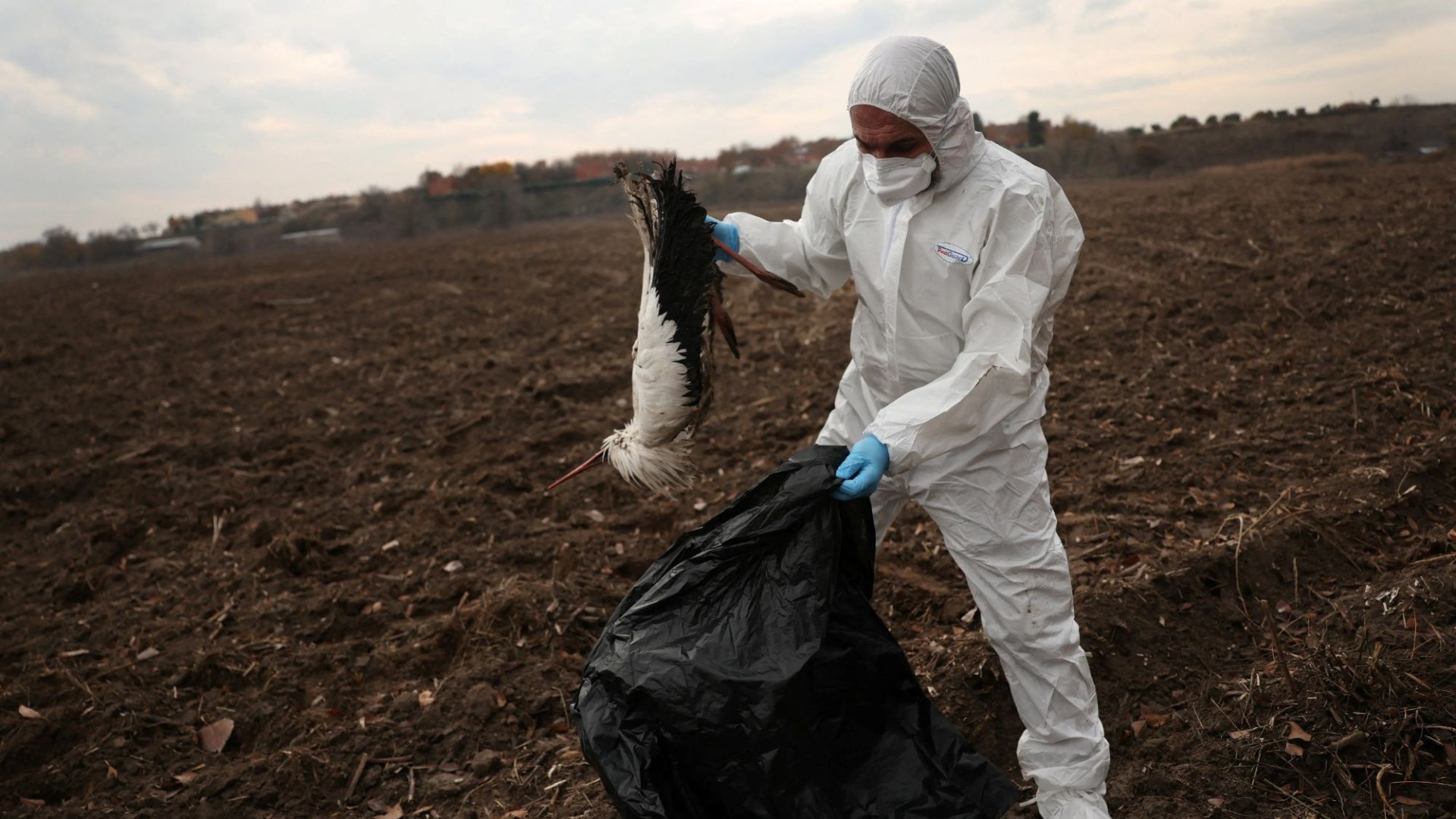
The warning comes as Europe finds itself in the wake of an unprecedented spread of the virus, with hundreds of millions of farmed birds needing to be culled to stop further outbreaks.
H5N1 has also been spotted in wild birds too. Nearly 1,500 infected wild birds were found across 26 European countries between September and November this year.
This is four times the amount detected the year before.
Bird flu outbreaks have been detected in UK farms.

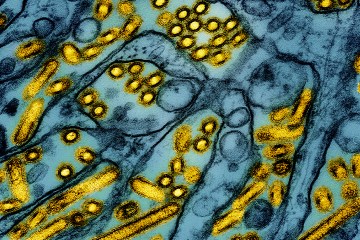
And in the US, the H5N1 strain has already spread from birds to mammals, like cows – a pathway which led it to jump to farm workers.
Human cases are much rarer. From 2003 to August 2025, the World Health Organization (WHO) reported 990 human H5N1 cases across 25 countries and 475 deaths – meaning the virus has an almost 50 per cent fatality rate.
In February, the US reported its first human death from H5N1 this year, a Louisiana man in his mid-60s.
When it does strike people, symptoms of bird flu mimic those of a severe flu infection: high fever, a cough and sore throat, muscle aches and, at times, conjunctivitis.
The risk to humans remains low, but scientists fear that mutations to the bird flu virus could make it spread like wildfire, potentially causing a future pandemic.
This prompted researchers from Ashoka University in India to develop a computer simulation to assess how an H5N1 outbreak might unfold after spilling over from birds to humans and how to stop it before it spreads.
A bird flu pandemic, researchers said, would begin quietly with a single infected bird passing the virus to a human – most likely a farmer, market worker or someone handling poultry.
From there, everything hinges on whether the virus continues to pass on from person to person.
Prof Gautam Menon told the BBC.”The threat of an H5N1 pandemic in humans is a genuine one, but we can hope to forestall it through better surveillance and a more nimble public-health response.”
Researchers used a computer model called BharatSim, which simulates how people interact with each other in households, workplaces and markets, to help map how a virus could spread in real life.
They modelled the interactions of nearly 10,000 people in south India’s Namakkal district, a major poultry hub housing over 1,600 poultry farms and a likely location for bird flu to spill over to humans.
In the simulation, the virus first jumps from birds to people who work in a farm or wet market.
These primary contacts infect their family members – secondary contacts – who may then spread it to tertiary contacts, and so on.
Researchers also simulated different ways of curbing the spread of the virus, such as culling of birds, quarantining infected people and giving targeted people vaccines.
Quarantining was found to be the most effective step for controlling spread between humans in the simulation.
But it had to be done when the number of infected people was as low as two.
Assuming that people move between their homes and workplaces or schools every 12 hours, researchers predict the virus can start spreading to tertiary contacts after only two days.
If households quarantined when just two cases are detected, the outbreak can almost certainly be contained, the research found.
But by the time 10 cases are identified, it’s likely that the infection has already spread into the wider population.
“It is in the very early stages of an outbreak that control measures make the most difference,” researchers wrote.
“Once community transmission takes over, cruder public health measures, such as lockdowns, compulsory masking, and large-scale vaccination drives are the only options left.”
Bird flu: Could it be the next human pandemic?
By Isabel Shaw, Health Reporter
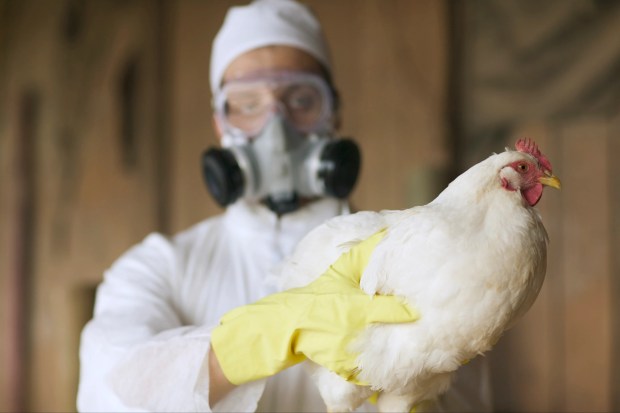
The H5N1 bird flu is running rampant in wildlife around the world and is now spreading in cows.
In recent months, it infected people in Canada and the US leaving several severely unwell and one dead.
This increase in transmission has given the virus lots of opportunities to mutate – a process where a pathogen changes and can become more dangerous.
Scientists fear it’s only a matter of time before one of these mutations makes it better at spreading among mammals – and potentially humans.
Experts recently discovered H5N1 is already just one mutation away from developing the ability to transmit person-to-person.
Some experts believe the virus could already be spreading among some animal species.
So far, there is no evidence that H5N1 can spread between humans.
But in the hundreds of cases where humans have been infected through contact with animals over the past 20 years, the mortality rate is high.
From 2003 to 2024, 950 cases and over 400 deaths caused by H5N1 have been reported worldwide from 23 countries, according to the World Health Organisation.
Post-mortems found victims suffered from multiple organ failure, bleeding in the lungs, brain swelling, and sepsis.
This puts the case fatality rate at 52 per cent.
Leading scientists have already warned an influenza is the pathogen most likely to trigger a new pandemic in the near future.
The prospect of a flu pandemic is alarming.
However scientists have pointed out that vaccines against many strains, including H5N1, have already been developed, others are still in the pipeline.
The simulation showed that culling birds could cut transmission of the virus – but only if done within 10 days of an outbreak being detected and before the virus infects a human
Delayed culling would dramatically increase the risk of human infections, researchers found.
“The earlier birds are culled, the larger the probability a spillover can be prevented,” they said.
Targeted vaccination did halt spread slightly, but didn’t do much to change someone’s immediate risk from the virus within households.
Researchers hope to fine-tune the computer model as more information is collected about the virus and its spread.
“Our simulations can be run in real time, responding to initial reports of cases,” they wrote.
It’s worth noting that simulation model researchers used relied on one village, with fixed household sizes, workplaces and daily movement patterns.
It didn’t account for multiple simultaneous outbreaks or for behavioural changes like mask-wearing.
Seema Lakdawala, a virologist at Emory University, also told the BBC the simulation model “assumes a very efficient transmission of influenza viruses”.
“Transmission is complex and not every strain will have the same efficiency as another,” she said, adding that scientists are also now starting to understand that not all people infected with seasonal flu spread the virus equally.