British households are facing the most sustained rise in living costs since the aftermath of Russia’s invasion of Ukraine – with fears mounting of worse to come in the Budget.
In a bleak report today, the Office for National Statistics said inflation remained stuck at 3.8 per cent in September, the third month in a row.
While this was lower than the 4 per cent feared by analysts, UK inflation is the highest in the G7 and nearly twice the 2 per cent target.
Inflation has not been so high for so long since early 2024 when the surge in energy and food prices following Russia’s action was still being felt.
And with the economy flatlining over the summer – when growth of 0.1 per cent in August merely offset a decline of 0.1 per cent in July – Britain faces a painful bout of ‘stagflation’.
That is when low or no growth combines with sharply rising prices to leave families worse off.
The latest squeeze comes as households and businesses brace for another punishing round of tax hikes in next month’s Budget.
The Chancellor has warned that those with the ‘broadest shoulders’ will bear the brunt – fuelling fears of raids on pensions, savings and homes.
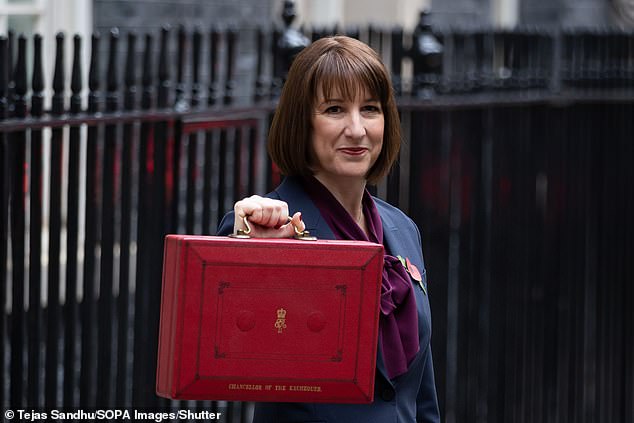
The latest squeeze comes as households and businesses brace for another punishing round of tax hikes in next month’s Budget. The Chancellor has warned that those with the ‘broadest shoulders’ will bear the brunt – fuelling fears of raids on pensions, savings and homes
Tory business spokesman Andrew Griffith said: ‘We’re all poorer today, with anaemic growth yet high inflation eroding Britain’s standard of living.’
In a sign of mounting concerns among employers, the boss of JCB, Graeme Macdonald, yesterday warned the Chancellor: ‘You can’t tax your way to growth.’
And with the economy floundering but prices surging, fears are mounting that the Bank of England will be forced to delay further cuts to interest rates.
Some analysts even believe the next move in rates will be up rather than down in a hammer blow to borrowers.
George Brown, senior economist at Schroders, said: ‘High inflation is at risk of becoming entrenched in the UK, due to a combination of disappointing productivity and sticky wage growth.
We expect the Bank of England will keep interest rates on hold until the end of 2026 and we wouldn’t rule out its next rate move being upward.’
However Martin Beck, chief economist at WPI Strategy, said this ‘probably marks the peak of the recent inflation upswing’.
He added that while a rate cut as soon as next month ‘looks off the table’ the next reduction could come ‘sooner rather than later’.
Inflation has fallen from a peak of 11.1 per cent in October 2022 when the lifting of Covid-19 lockdown restrictions and the Ukraine war sent prices soaring.
But having fallen as low as 1.7 per cent before Ms Reeves’ first Budget last October, it has once again surged, with critics blaming her policies such as the £25billion national insurance tax raid on employers and hike in the minimum wage.
Responding to the ONS figures, Ms Reeves said: ‘I am not satisfied with these numbers. For too long, our economy has felt stuck, with people feeling like they are putting in more and getting less out. All of us in government are responsible for supporting the Bank of England in bringing inflation down.’
Ms Reeves is also facing a £10billion hike in the benefits bill due to inflation and pressure from Labour MPs to scrap the two-child benefit cap.