Childhood was ‘brought to a halt’ by draconian Covid lockdowns, the damning official inquiry found on Thursday.
Young lives were blighted even though the ‘vast majority’ of children were immune to the deadly virus, it added. Their education and wellbeing were sacrificed to save their elders.
In her highly critical report, Baroness Hallett, chairman of the Covid-19 Inquiry, said closing schools and nurseries in early 2020 ‘were steps taken to protect the adult population – they brought ordinary childhood to a halt’.
She added: ‘For most children, the closure of schools, the inability to see friends and the requirement to stay at home, were of profound consequence.’
Teachers and parents are now struggling with children who are slow to pass key milestones, due to the huge impacts of the unprecedented 2020 shutdown. In a landmark report into the devastating effects of the pandemic, Lady Hallett concluded:
- Tens of thousands who died from Covid could have been saved if the lockdown had been imposed seven days earlier;
- The lockdowns of 2020 and 2021 could have been avoided altogether;
- Scientists, civil servants, ministers and the devolved governments all failed to react fast enough;
- Britain could have escaped the Covid devastation, but ministers did ‘too little, too late’;
- No 10 adviser Dominic Cummings was a ‘toxic’ and ‘destabilising influence’ as Downing Street grappled with the crisis;
- Boris Johnson ‘should have appreciated sooner that this was an emergency that required prime ministerial leadership’.
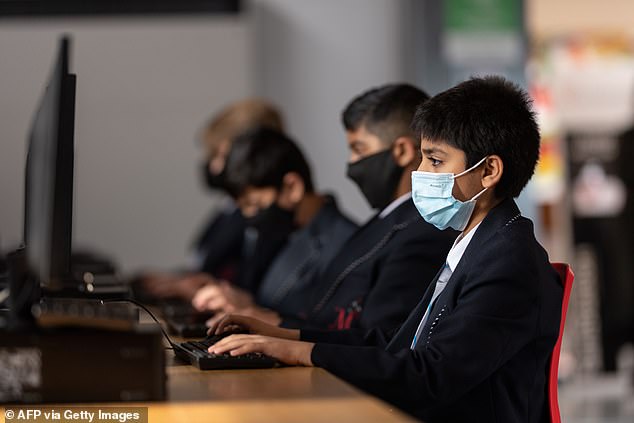
Children, pictured in 2020, will feel the lasting effects of lockdowns, the Covid inquiry has found
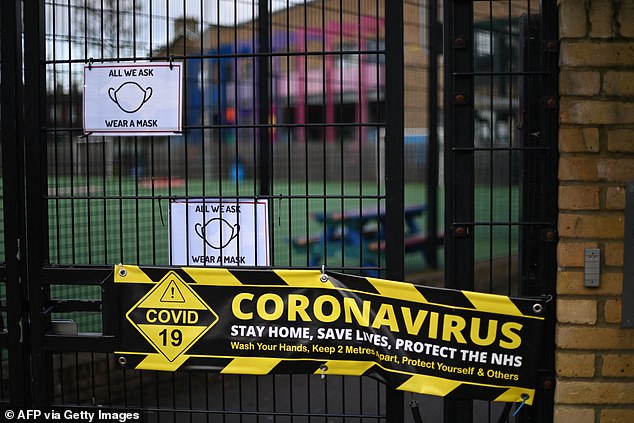
Youngsters’ ‘childhood ground to a halt’ (Pictured: A London primary school in January 2021)
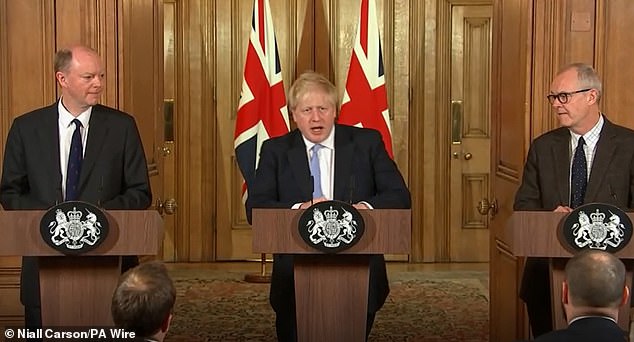
Then Prime Minister Boris Johnson, pictured, centre, with Mr Whitty, left, and Chief Scientific Adviser Sir Patrick Vallance, right, speaking during a press conference in March 2020
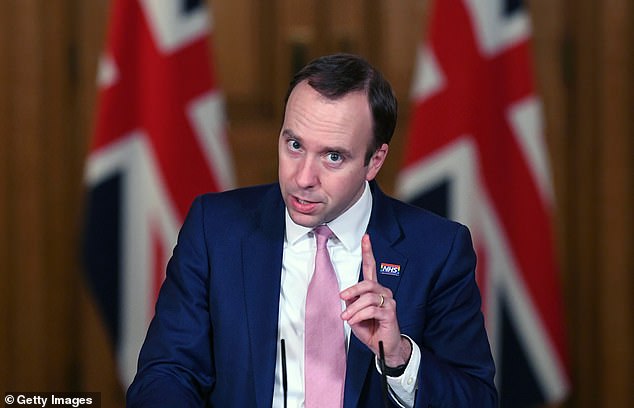
Matt Hancock, the then-Health and Social Care Secretary, in November 2020
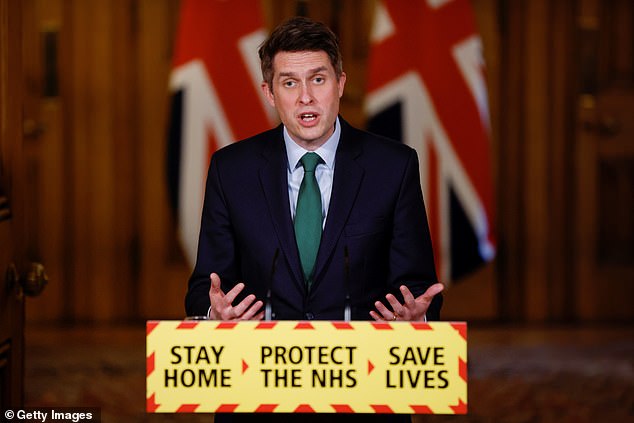
Then-Education Secretary Gavin Williamson pictured in February 2021
On Thursday night Jacob Rees-Mogg, who served in the Cabinet throughout the pandemic, said the inquiry was right to conclude that children had been let down.
He told the Daily Mail: ‘My view was that once we knew that children were at no risk from Covid we had no right to stop them socialising.
‘It would have been much more sensible to allow the vulnerable to shield themselves and allow children to lead normal lives.’
Speaking to reporters on the plane to the G20 in South Africa last night, Sir Keir Starmer said: ‘We are taking measures to make sure that, not just the NHS but the Government as a whole, is prepared for any number of eventualities because we have to learn the lessons of Covid and that’s why we’re looking very carefully at the report.’
On March 18, 2020, the Government closed schools to most pupils, as part of nationwide lockdown measures.
Lady Hallett, a former Appeal Court judge, who has interviewed scores of ministers and civil service mandarins over two years, concluded in a 760-page report: ‘The vast majority of children were not at risk of serious harm from Covid-19.
‘The decisions to close schools, and early-years provision, to most children, and to implement a lockdown, were steps taken to protect the adult population.
‘They brought ordinary childhood to a halt. For most children, the closure of schools, the inability to see friends and the requirement to stay at home were of profound consequence.’
The decision to close schools in 2020 – leaving huge numbers of working parents to school their children at home while holding down their own jobs – served to reduce Covid cases by as little as 10 per cent, according to Professor Patrick Vallance, the chief scientific adviser.
Professor Sally Holland, former Children’s Commissioner for Wales, said that ‘if the opportunity to develop early skills is lost, it may be difficult to recover’.
Lady Hallett said: ‘No government in the UK was adequately prepared for the sudden and enormous task of educating most children in their homes or for meeting the challenges and risks [lockdown] presented.
‘None had envisaged or prepared for the potential, complex ramifications of school closures on children’s lives.’
The ‘drastic interference’ put ‘children at risk of harm’, she added.
Covid was the most momentous event in UK history since the Second World War, with millions ordered to stay at home during the series of lockdowns.
Lady Hallett said: ‘Had the UK been better prepared, fewer lives would have been lost, the socio-economic costs would have been substantially reduced and some of the decisions politicians had to take would have been far more straightforward.
‘While the nationwide lockdowns of 2020 and 2021 undoubtedly saved lives, they also left lasting scars on society and the economy, brought ordinary childhood to a halt, delayed the diagnosis and treatment of other health issues and exacerbated societal inequalities.’
The inquiry chairman blasted officials and politicians for their glacial reactions as the deadly disease spread from China in January 2020.
She described February that year as ‘a lost month’ in which the UK could have made preparations that would have saved tens of thousands of lives.