
I’ve written a lot about the rap subgenre “UK drill”, and readers of The Critic might be forgiven for wondering what kind of morbid bastard would be interested in young men boasting about stabbing one another.
Well, for one thing, I am a morbid bastard. For another, I really am interested in the complex interplay between crime, entertainment and social media. For another, it presents a fascinating case of the smug ignorance of educated people.
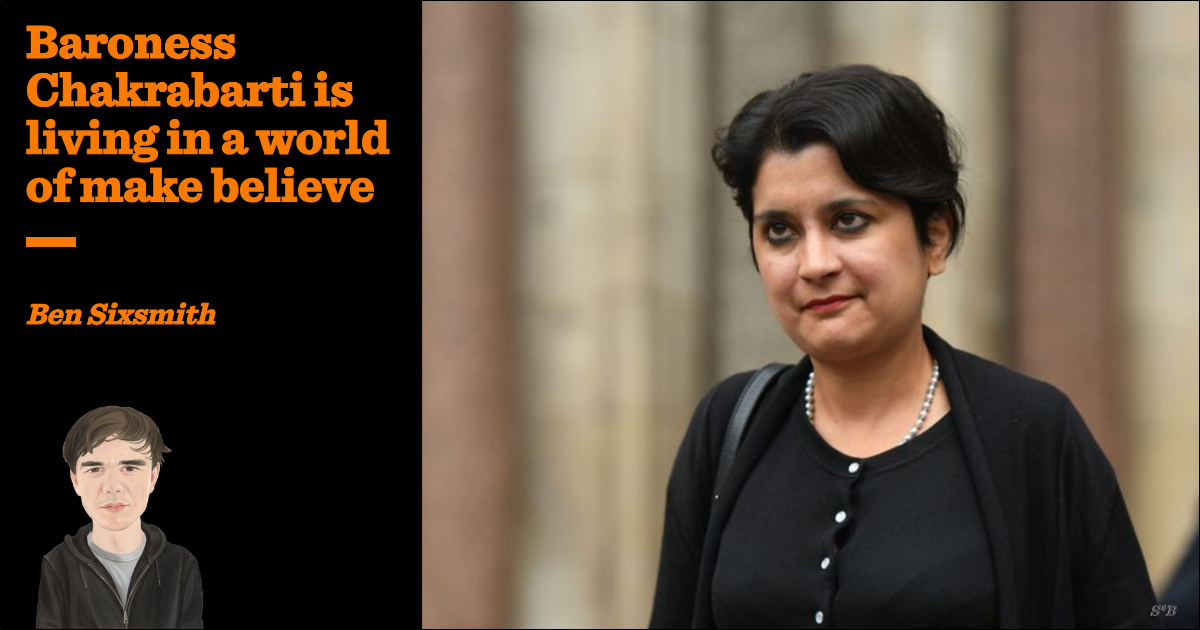
Baroness Chakrabarti, writing in the Guardian, compares conflating drill music with gang violence to conflating The Godfather with mafia killings. This is not just wrong. It is completely absurd.
Al Pacino is not a member of the mafia. Digga D was caught with dangerous weapons. Marlon Brando was not a member of the mafia. MizOrMac was caught with a gun after a shooting. James Caan was not a member of the mafia. CB was caught with a gun and later convicted of a separate murder. Just last month, the popular drill rapper DigDat was convicted of attempted murder. One suspects that Robert Duvall will face no such legal problems.
I find that left-leaning people instinctively assume that anything which sounds like something a Daily Mail columnist might say is necessarily untrue. (Yes, I’m sure right-leaning people have the same problem with anything that sounds like something Guardian columnists might say.)
“Drill is made by criminals” sounds too broad and too judgemental a sentiment to be correct. Well, I’m sure there have been a select few rappers who have been successful enough to transcend a life of crime. But the fact remains that drill, in essence, is the propaganda of violent gangs, and it developed as a means of threatening, and boasting about, violence. Its popularity is more because of than despite that.
The organisers of the campaign group “Art Not Evidence” disagree. Yes, some drill music is about real crime, they grant. But aggressive lyricism:
… could reflect the artist’s surroundings or experiences, it could be for shock and entertainment value and to provoke discussion, or it could be driven by financial incentives — violence sells!
True. I’m not denying that some artists could exaggerate or invent criminal “achievements” in the name of marketing. But rappers would not succeed without some association with criminal gangs or they would be dismissed as “cappers” (liars) by the fans. “There are countless examples of lyrics and imagery that are violent in other music genres and other art forms,” Art Not Evidence claim, “Think of Tom Jones’ ‘Delilah’, Foster the People’s ‘Pumped Up Kicks’, Nirvana’s ‘Polly’, and enough Country, Metal and Opera examples to last a lifetime.” Okay, but “Where the Wild Roses Grow”, say, was presented as fictional. Drill is presented as fact. Jimi Hendrix did not actually kill his old lady. SJ really did take part in the murder of K1.
“We see drill as an art,” Art Not Evidence say, “Which has intrinsic meaning and value, which cannot be measured in decibels or tonality, but in affect and impact.” I would not deny that drill rappers can be skilled performers who care about the quality of their music. That it has its roots in crime and dysfunction does not mean that rappers have not used it as a way of escaping crime and dysfunction (even if, alas, most have failed). It is about crime but it is not only about crime. Still, if we’re going to talk about the impact of drill, we should talk about the family members of the murder victims who have been mocked in popular songs. What impact would it have on you if a loved one was killed and then people were making fun of him in front of millions of listeners? “Delilah” is an odd song but it is not about a real person who was called. Zone 2’s “No Censor” named real young men who had been murdered on London’s streets.
Where Art Not Evidence have a better case is when it comes to lyrics being used in court. Yes, drill lyrics are about real crimes, but there are of course exaggerations and inventions. Lyrics should not be treated as confessional without corroborating evidence.
Yet what is understated is that there are valid uses of lyrics as well. The rapper Kay-O, for example, revealed an independently verifiable fact about a murder in his lyrics that had not been in the public domain. Baroness Chakrabarti frets that in cases where music has been used in trials “two-thirds of the defendants … were black” and “82% were under 25 years old”. This is a case of unequal outcomes being implied to be unjust by the fact of their existence. Do old white criminals tend to sing about their crimes?
Baroness Chakrabarti does raise a troubling case of a music video being misused, and I am not suggesting that there are no questions to be asked of the justice system. Yet Chakrabarti and friends do their case no favours by so blatantly and bizarrely misrepresenting the nature of the genre. No drill fans would make the claims that they are making here. Instead, it seems like they want to sound streetwise and cosmopolitan by defending drill yet end up displaying their cosy ignorance instead.
I think that some left-leaning cultural and political institutions have to rethink their approach towards fiction and non-fiction. Last year, Adolescence was presented as having titanic sociological significance despite being a drama. Here, largely non-fictional accounts of criminal life are being presented as imaginary.