UK borrowers face a painful interest rate hike after the latest escalation of war in the Middle East fuelled ‘Trumpflation’ fears on both sides of the Atlantic.
Hopes that the Bank of England might cut rates today have evaporated since the US-Israel attack on Iran.
And now traders are betting rates will instead have to go up later this year – with financial markets indicating a 60 per cent chance the increase will come in June.
That would spell misery for millions of borrowers hoping for cheaper mortgages.
And analysts warned higher rates would weaken an already floundering economy with official figures today showing unemployment already at a five-year high of 5.2 per cent and youth unemployment of 14.5 per cent – a level not seen since early 2015.
Joe Nellis, an economic adviser at accountancy firm MHA, said: ‘Interest rates are unlikely to fall anytime soon and could even rise again.
‘The Bank has a tough balancing act on its hands, knowing that raising rates could hinder economic growth. But its main priority will always be stabilising prices. Policymakers will not be afraid to hike interest rates if necessary to prevent spiralling inflation.’
The crisis is a major headache for Bank of England governor Andrew Bailey as he battles to keep inflation under control without tipping the economy into recession.
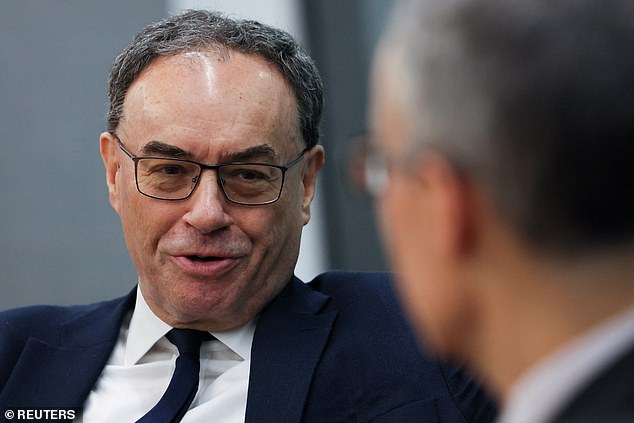
Headache: Bank of England governor Andrew Bailey
Nellis said: ‘The rapidly escalating crisis in the Middle East has introduced a new and potentially powerful inflationary risk.
‘Oil and natural gas prices have risen significantly in global trading markets, reflecting concerns about possible disruptions to supply and key shipping routes. If these increases are sustained, the impact could quickly feed through into higher transport costs, rising manufacturing expenses and more expensive household energy bills.
‘The Bank will be keen to be on the front-foot in their fight against inflation. Policymakers at the Bank, along with those at central banks across the globe, were criticised for being too slow to act when global inflation began to rise in 2021-22.’
The threat of higher borrowing costs in the UK came as the US Federal Reserve yesterday left rates on hold and said the impact of the war on the economy remained ‘uncertain’.
The central bank still, however, projects one rate cut this year. Fed chief Jerome Powell said: ‘In the near term, higher energy prices will push up overall inflation but it is too soon to know the scope and duration of the potential effects on the economy.’
The Fed’s announcement is likely to have infuriated US President Donald Trump, who has demanded rate cuts.
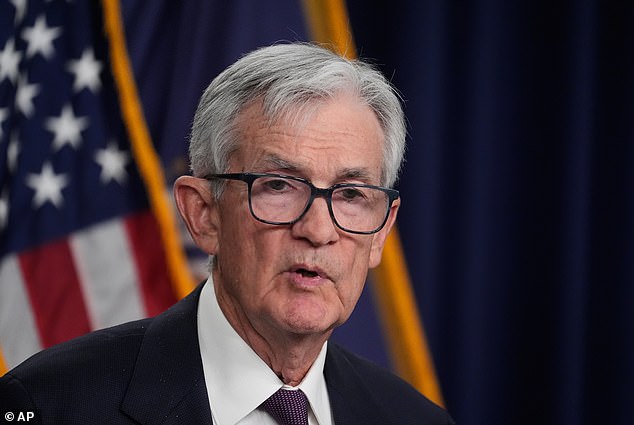
Slamming on the brakes: In a move likely to have infuriated US president Donald Trump, the US Federal Reserve, led by Jerome Powell, pictured, left rates on hold
Trump’s choice of successor to lead the Fed – Kevin Warsh – will face the tricky task of responding to inflation fears brought about by the war as the President presses for cuts.
Expectations about the path of interest rates have come under scrutiny since the start of the conflict because the closure of the Strait of Hormuz has choked off oil and gas supplies and sent their prices soaring.
That will translate to higher fuel and energy bills and rising inflation, damaging the prospect of rate cuts.
It is already hitting UK homebuyers as mortgage lenders stop offering their best deals.
And interest rate fears only deepened yesterday as Iran vowed revenge for a US attack on a key gas field – the first of the war so far on Iran’s energy infrastructure – pushing oil and gas prices even higher.
Markets now see a 60per cent chance of a Bank of England rate hike from 3.75 per cent to 4 per cent in June. And chances of any cuts over the coming year have collapsed to almost zero.
Today’s meeting of the Bank’s Monetary Policy Committee (MPC) is all but certain to see rates left on hold. Before the war, the MPC was expected to cut rates.
The minutes will be pored over to determine what the impact of the conflict on the future path of rates will be.
Figures from Moneyfacts show the average two-year fixed mortgage deal stands at 5.3 per cent, the highest since February last year.
The annual cost of a typical two-year fix is now £788 higher than two weeks ago for a £250,000 loan over 25 years. The average five-year fix, at 5.35 per cent, is the highest since August 2024.
Almost all of the 500 sub-4 per cent deals available last week have been pulled, Moneyfacts said.
Adam French, its head of consumer finance, said: ‘The financial effects of ‘Trumpflation’ are hitting home as conflict in Iran is driving inflation concerns.
That has forced markets to rethink the outlook for cuts, pushing borrowing costs higher and prompting lenders to pull and reprice deals.
‘The window for ultra-competitive sub-4 per cent rates has been slammed shut.’
Join the debate
Do YOU think rising interest rates will push more households to breaking point?
DIY INVESTING PLATFORMS
AJ Bell
AJ Bell
Easy investing and ready-made portfolios

Hargreaves Lansdown
Hargreaves Lansdown
Free fund dealing and investment ideas

interactive investor
interactive investor
Flat-fee investing from £4.99 per month

Freetrade
Freetrade
Investing Isa now free on basic plan

Trading 212
Trading 212
Free share dealing and no account fee
Affiliate links: If you take out a product This is Money may earn a commission. These deals are chosen by our editorial team, as we think they are worth highlighting. This does not affect our editorial independence.