Despite being one of Hollywood’s most legendary beauties, screen icon Audrey Hepburn never believed she was attractive enough to marry, as the first extract from her son’s captivating memoir revealed on Saturday.
But here, he describes how her burning desire to perform was fostered amid starvation and hardship in the Nazi-occupied Netherlands, as the star relentlessly pursued her love of dance through the misery of wartime…
Famed for her graceful poise, my mother Audrey Hepburn always held her head and neck in a certain way – not just in her movies but even on long car journeys. She never told me why – and, like most people, I assumed it was because she’d been trained as a dancer.
In fact, it was a grim legacy of the Second World War.
Towards the end of the war, she’d ventured out into the garden of her home near Arnhem in the Netherlands, desperate to soak up some sun. She was pale as a ghost from malnutrition and months trapped indoors.
She’d almost dropped off to sleep when the ground shuddered beneath her as a shell landed nearby. Expecting to be ‘blown to oblivion,’ she dug frantically into the earth as gravel peppered her skin like buckshot and fragments of metal whizzed past.
What she never told anyone until a few years before her death was that a small piece of shrapnel embedded itself in her neck. ‘It left me so I can’t bend my neck in the ways other people can,’ she confided to a friend. ‘Promise not to tell anyone as long as I’m alive!’
This was typical of my mother, who never wanted anyone to feel sorry for her. It was also typical that she chose never to reveal the full horror of what she’d been through during the Nazi occupation of Holland.
The Audrey Hepburn most people know is an ethereal creature with a luminous smile, the star of films like Breakfast At Tiffany’s, My Fair Lady, and Roman Holiday. Few ever knew the real Audrey – the one forged by her early years of hardship and heartbreak.
By the time Holland was liberated, she had seen men executed before her eyes. She had risked her life over and over again by working for the Resistance.
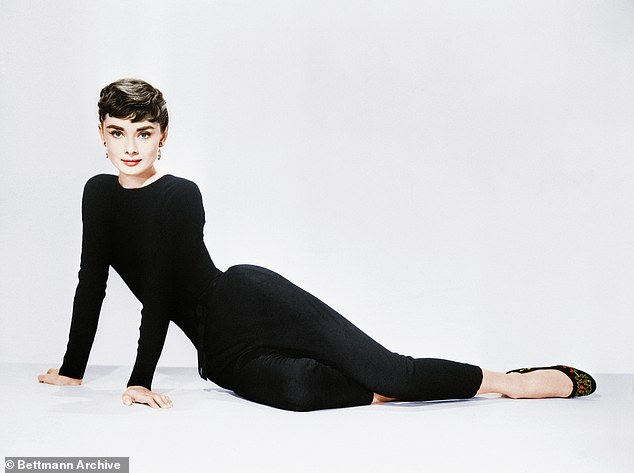
Audrey Hepburn, pictured for the film Sabrina, had legendary poise, revealed by her son to be the result of a blast that almost killed her as a teenage volunteer in the wartime Resistance
And she was in such poor health that doctors said she was just weeks from dying. As it was, her immune system would be compromised for life.
By an extraordinary irony, both Audrey’s parents were dedicated fascists. In the 1930s, her Dutch mother, Baroness Ella van Heemstra, and British father Joseph Ruston had become members of the British Union of Fascists, led by Sir Oswald Mosley.
They not only befriended Hitler’s aristocratic English girlfriend, Unity Mitford, but travelled with her to Germany to meet the Fuhrer and have their photograph taken with him.
To the end of Audrey’s days, her parents’ pre-war allegiance to fascism would be a source of shame and embarrassment to her.
At the outbreak of the war, my mother was a schoolgirl living in the village of Elham in Kent.
Her parents had split up when she was six and sent Audrey to a small private boarding school while her mother lived in Belgium, seeing her only rarely. Her father stopped visiting her altogether.
The highlight of little Audrey’s life was the weekly dance lessons given by a young ballerina at the village hall, which gave her a ‘fanatical’ ambition to become a dancer.
When Britain declared war on Germany, however, Ella panicked and arranged to have Audrey and her two half-brothers, Alex and Ian, taken to Arnhem in the Netherlands, a country many expected to remain neutral. Aged ten, she was taken to the airport by her father – the last encounter she’d have with him for decades.
Soon afterwards, Joseph Ruston was arrested and interned in Britain as a Nazi sympathizer, first in London and then in a detention camp on the Isle of Man.
For eight months, Holland was largely unaffected by war. One of Audrey’s most precious memories from that time was being chosen to present a bouquet to Ninette de Valois, founder of the Royal Ballet, after a performance by dancers from Sadler’s Wells.
On May 11, 1940, the day after that magical evening, my mother was woken by the throbbing of approaching aircraft rattling her windowpanes. ‘Get up. War has begun!’ cried Ella.
The Dutch surrendered days later. This placed Audrey, who hadn’t yet mastered Dutch, in grave danger. From then on, her mother told her to answer only to the name Edda and never speak English if she could be overheard.
Soon, rationing and a curfew were imposed.
As in England, ballet became Audrey’s salvation. She choreographed all her own performances, dancing tirelessly to the music of an old gramophone.
In 1941, once the Nazis had invaded Russia on the Eastern Front, they began to bleed Holland dry of its provisions, crops and livestock to feed German soldiers or send home to German families. In Arnhem, it became hard to get even the most basic foodstuffs.
Real hunger began to bite. Ella had been forced to hand over her cash and valuables to the Germans, so she was unable to buy food on the exorbitant black market.
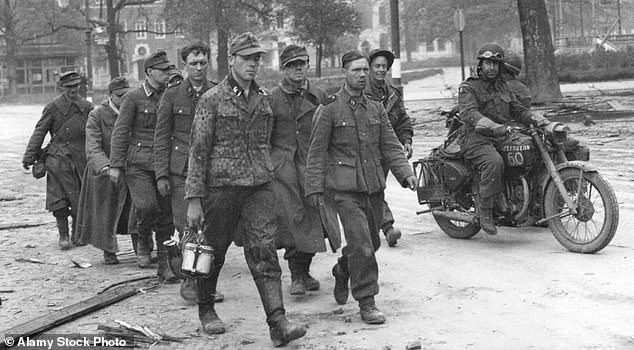
German troops being marched out of Arnhem after liberation by the Allied forces
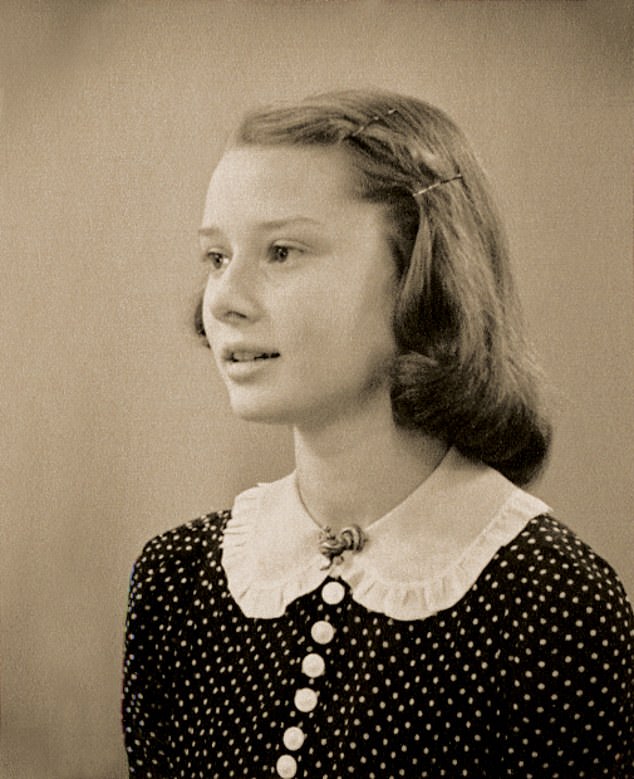
Audrey Hepburn pictured in 1943, around the time she started working for the wartime Resistance
One day, searching with Ella for whatever food they could find, Audrey heard bloodcurdling screams coming from the upper floors of a former bank that had been taken over by the Gestapo. When she asked her mother about those terrible sounds, she was told that the place was a prison where people were tortured.
Another time, she was in town when German soldiers suddenly closed the street, pushed her and other passers-by to one side, and made them watch as they shoved several young men up against a wall and shoot them dead.
My mother had a photographic memory, and these images haunted her for life.
The way she coped was to keep dancing. She danced so obsessively that she wore out her precious ballet shoes. Sometimes she was so hungry that she barely had the energy to dance, but did it anyway.
The family moved to a villa in Velp, an Eastern suburb, but found themselves in more danger than ever when the Germans set up a radio monitoring station in the attic With soldiers passing through daily, Audrey hardly dared open her mouth.
Meanwhile, Allied planes flew over frequently, accidentally bombing several of their neighbours. One day in 1943, my mother looked on in horror as the Germans came for her half-brother Ian and marched him away. Along with hundreds of other teenage boys, he was sent to work as a slave labourer in Berlin.
Skin and bone as she underwent a growth spurt, Audrey was forced to give up her dance training for a while and rest. When she was on her feet again, she started giving ballet lessons in Velp.
She soon learned that the building she was using for lessons was the secret headquarters of the Resistance and a refuge for hidden Jews. She volunteered to dance at invitation-only soirees held to lift morale and raise money for those in hiding.
Known as ‘zwarte avonden’, or black evenings, these risky musical events were held in the homes of sympathetic locals who posted guards, closed windows and drew their blackout curtains. No one was allowed to applaud for fear of drawing the attention of German soldiers. Instead of clapping, the audience just smiled in the dark.
‘The best audiences I ever had never even made a single sound at the end of my performance,’ Audrey said, adding that her ‘humble’ and ‘amateurish attempts’ at dancing were her way of making a contribution to those living under oppression.
Pretending to be Margot Fonteyn or one of her other heroines, she’d pirouette around the room in her homemade tutu and try to forget the misery of occupation.
Once she’d proved her loyalty to the Resistance, its leaders asked her to distribute a pamphlet listing secret events and to pass messages to those in hiding. The hope was that a pretty young girl on foot or on a bicycle was unlikely to be stopped and searched.
Initially, Audrey was told that the messages she’d be delivering were billets-doux to loved ones. Caught up in the romance of that, she took them gladly, placing the folded letters under the insoles of her shoes before setting off.
It occurred to her only after the war that, had the Germans seen the content of those messages, she might well have been tortured and executed.
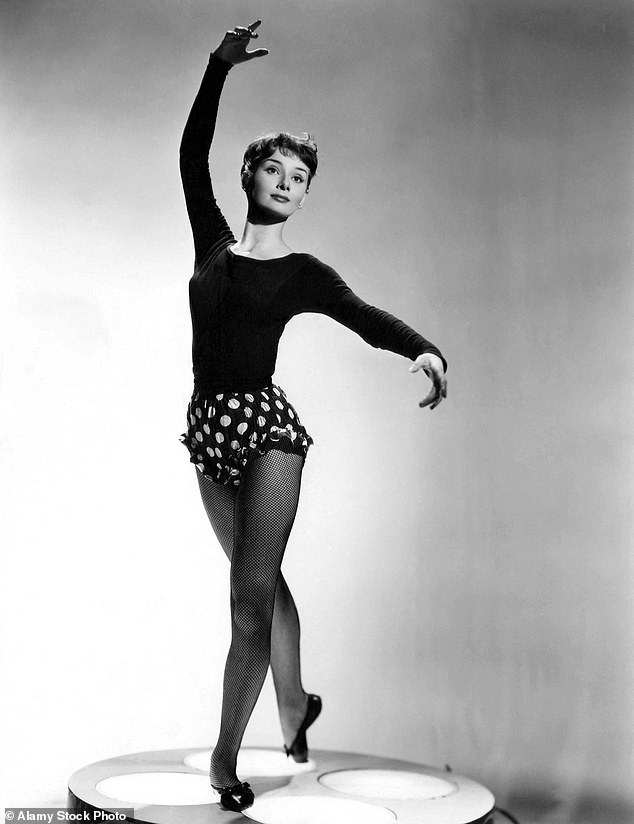
Hepburn showing a ballet dancer’s elegance during a photoshoot in 1952
Once, after she’d just delivered a message to a downed British airman hiding in a forest on the outskirts of town, she spotted two members of the Nazis’ so-called Green Police approaching.
With an outward calm that belied her fear, she stooped to pick a bunch of wildflowers.
When the officers gruffly demanded her ID papers, she presented them with her posy as gracefully as she’d presented a bouquet to Royal Ballet’s Ninette de Valois. This unexpected gesture won the soldiers over, and they waved her on.
She put herself in danger yet again when another British plane was shot down on its way to a bombing raid.
Max Court, a 22-year-old wireless operator from Kent, managed to parachute into the grounds of a large property. Once he was discovered by the owner, who had a policy of handing over any captured Allied airmen to the Germans, my 14-year-old mother was fetched because of her perfect English.
When she explained to Max that he’d be taken as a prisoner of war, he handed her his gold signet ring, which he feared would be confiscated by the Germans.
‘I promise to give it back to you after the war,’ Audrey told him solemnly – and for the next four years she dutifully wore it on a chain around her neck.
In the summer of 1944, the family heard some thrilling news – Allied soldiers had landed in Normandy. My jubilant mother imagined imminent liberation, but restrictions on food and fuel only tightened. Audrey and her family now lived on boiled vegetables, wild mushrooms, and crackers, until they ran out.
With so many German soldiers battling the Allies, the Nazis were now desperate for manpower, so more and more people were being snatched. One day it was almost my mother’s turn.
As she rounded a corner in Arnhem after another futile search for food, she was apprehended by a German officer who already had a group of teenage girls lined up against a wall. Mum said she knew that at any moment a truck would arrive to take them away to work – or worse.
So when the soldier was momentarily distracted, she made a run for it. Fleeing into a warren of streets and alleyways, the terrified teenager hid in the basement of a bombed-out building, her heart pounding as her ears strained for sounds of her pursuers.
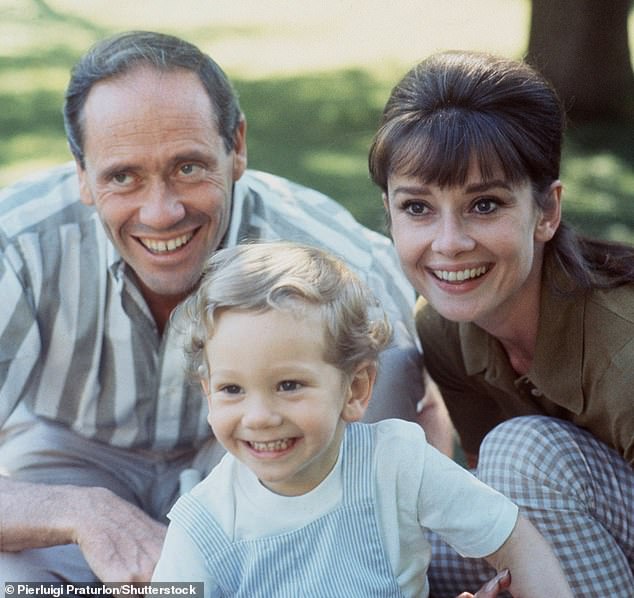
Audrey Hepburn with her husband Mel Ferrer and son Sean, who has penned a captivating new memoir
She later recalled: ‘The only thing I remember for certain is that, over and over and over, I kept saying to myself in Dutch, ‘Our Father who art in heaven…’ Too scared to move, she didn’t creep home until hours later.
After that, she didn’t venture out for weeks, and – while trapped in dark, airless rooms – developed jaundice, anaemia and a form of rheumatism. Worse was to come when, in September 1944, the Allies launched a massive offensive, with Arnhem targeted as a major hub of the retreating Wehrmacht.
Seeing the unprecedented mass of 3,000 aircraft headed their way, Audrey and her family huddled in the basement. Night and day, they felt the bone-rattling crump of exploding shells and listened to the constant rat-tat-tat of anti-aircraft fire.
‘I knew the cold clutch of human terror all through my teens,’ Audrey recalled. ‘I saw it, felt it, heard it – and it never goes away. You see, it wasn’t just a nightmare: I was there, and it all happened.’
When the battle for Arnhem finally ended in a bitter Allied defeat in September 1944, the Germans punished the entire country with a brutal blockade that prevented vital transports of food getting through.
Many of Arnhem’s citizens were forcibly evacuated, which led thousands of homeless people to take to the streets – many of them traipsing through Velp.
‘I feel sick when I remember the scenes,’ my mother said. ‘It was human misery at its starkest – masses of refugees on the move, some carrying their dead, babies born on the roadside, hundreds collapsing of hunger.’
Several evacuees were sheltered in the Van Heemstra villa, where they slept on the floor or in chairs until the Germans ordered them all out.
What the Nazis didn’t know was that the family was also sheltering an escaped British Army major right under their noses – in the basement. He was a decorated officer named Tony Deane-Drummond, famous for two previous daring wartime escapes.
The Resistance finally arranged for his evacuation, and Deane-Drummond made it back to Britain to become one of the chief architects of the modern Special Air Service (SAS). He never forgot the family’s kindness – and courage.
Winter returned, and people began to starve. Audrey’s family had no heat and no electricity and their daily rations amounted to fewer than 500 calories.
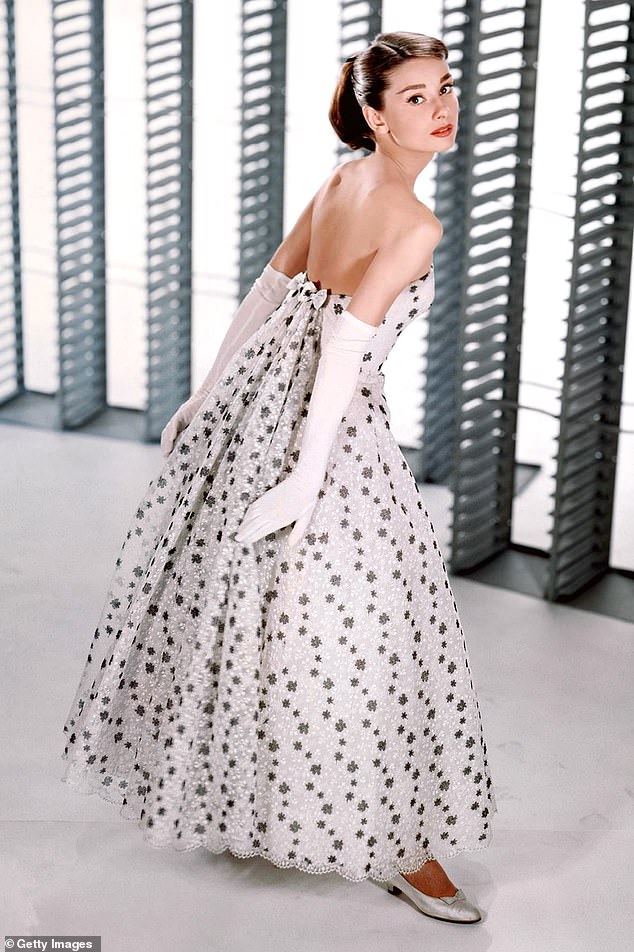
Audrey Hepburn poses for the film ‘Funny Face’ in Los Angeles in 1957
The famine of the 1944-45 winter killed at least 20,000 people in Holland and left thousands close to death. My mother became gravely anaemic and suffered from asthma, painful joints and swollen legs – all side-effects of long-term malnutrition.
She found out later that she could have died had the swelling travelled up from her legs and reached her heart.
Although she was often too weak to enjoy the solace of dance, she continued delivering vital drugs and the Resistance bulletin to those still sheltering in Velp.
The family was now living on stored turnips and a kind of bread made from tulip bulb flour.
Most of their pets had been killed and eaten, so they also ate leftover dog biscuits. The longest the family went without food was over Christmas 1944. Aged 15, Audrey took to her bed to conserve energy.
‘I’d heard one could sleep and forget hunger,’ she later said. ‘So perhaps I could sleep all through Christmas. I’d try.’
By the third day, no food remained, so her aunt instructed her to remain in bed and sleep. ‘I was very sick but didn’t realise it,’ said Audrey. All she could do was pray – and to her astonishment, her prayers were answered. ‘That very night, a member of the underground brought us food.’ There was flour, jam, oatmeal, and cans of butter. ‘And potatoes – the most wonderful and beautiful thing I ever saw.’
Mum always said that ‘occupation’ was too small a word to describe life under Nazi control. ‘Don’t discount anything awful you hear or read about the Nazis. It’s worse than you could ever imagine,’ she’d say. Her family, she said, had got through the war only by imagining that it would be over any day – ‘next week, six months, next year’.
‘Had we known that we were going to be occupied for five years, we might have all shot ourselves.’
In April 1945, the explosions and shelling stopped abruptly. As my 15-year-old mother and her family crept cautiously out of their basement, they were amazed to hear English voices and distant singing.
Instead of the familiar smell of cordite, Audrey caught a whiff of cigarettes, which she described as the most wonderful scent in the world. It was certainly quite distinct from the dried leaves the Dutch had been rolling up instead.
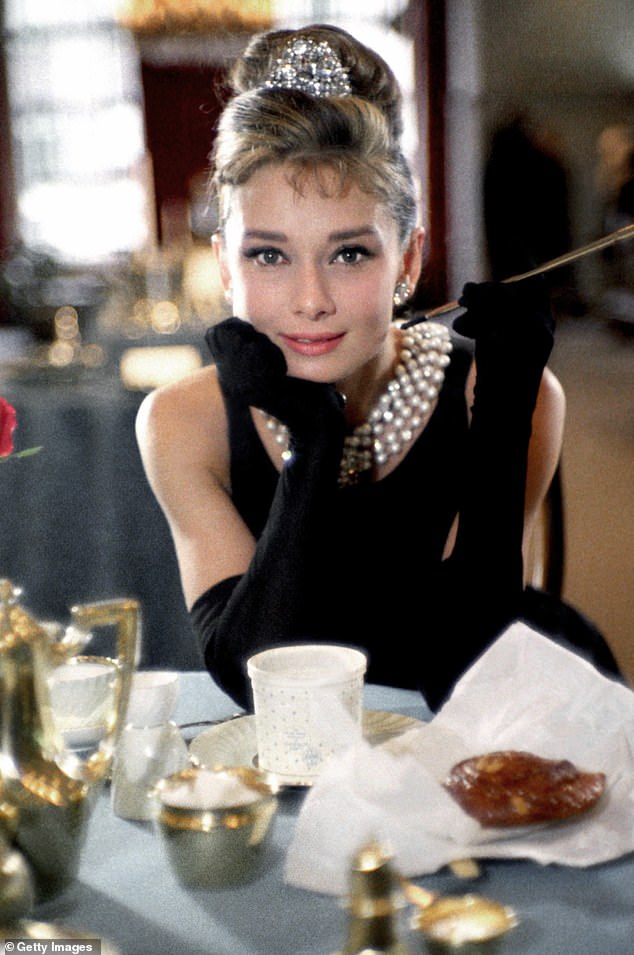
Hepburn promoting Breakfast at Tiffany’s in New York in 1961
‘That was the day I learned that freedom has a bouquet, a perfume all its own – the smell of English tobacco and petrol,’ she said. When the family peered cautiously out, they found themselves surrounded by soldiers aiming their weapons at them.
One, who had orders to investigate the German radio station in their attic, politely apologised for disturbing them.
My mother laughed and ‘screamed with happiness’ before telling him in English: ‘You can go right on disturbing us.’ The soldiers gave a cheer for liberating ‘the only English girl for miles’.
Three days before Audrey’s 16th birthday, peace was formally declared. As she later put it, ‘Life began again.’ Both her half-brothers survived the war.
To Audrey’s great disappointment, she never did become a ballerina: although she won a scholarship to study with the Ballet Rambert in London, she was told she’d never make it to the top because of all those years of malnutrition. Instead, she began looking for another way into the spotlight – which eventually led her to Hollywood.
Before leaving England, however, she and her mother returned to Kent to visit old friends. But Audrey had another goal: she wanted to find Max Court, the downed British airman who’d entrusted her with his signet ring.
After two years at a PoW camp, he was living in Tonbridge. Needless to say, he was astonished when she tracked him down and returned the ring. Delighted to be reunited with it – and his young saviour –he took her to a New Year’s Eve dance with his girlfriend.
The story made the local newspaper. When asked why she was there, Audrey replied simply: ‘Why, I promised to give Max back his ring!’
How Audrey’s girl in the red coat inspired Spielberg 50 years later
When the Germans started deporting the 100,000 or so Jews in Arnhem to unknown destinations, Audrey witnessed dozens of people being roughly loaded on to trains. She later recalled: ‘It was the worst kind of horror. I saw families with little children, with babies, herded into meat wagons – trains of big wooden vans with just a little slit open at the top and all those faces peering out at you.
‘And on the platform were soldiers herding more Jewish families with their poor little bundles and small children.’
She was particularly struck by a little girl in a bright-red coat, amid all the greyness, stepping on to a train with her parents. Although Audrey didn’t know the family were probably being sent to their deaths, the sight of that child’s pale, terrified face never left her.
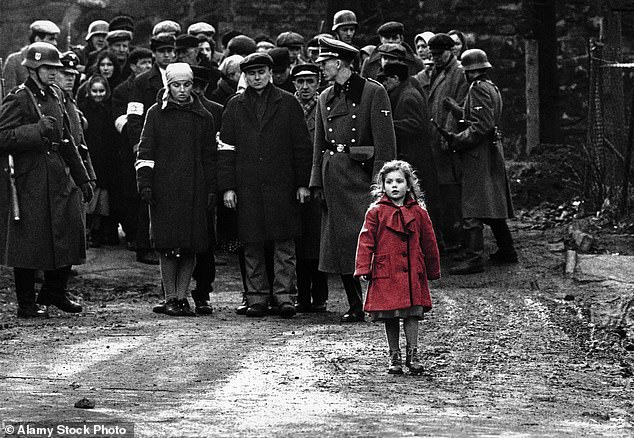
The haunting imagery in Steven Spielberg’s film Schindler’s List drew on Audrey Hepburn’s vivid memories of the horrors
Much later, while working with Steven Spielberg on her final film, Always, she told him about that moment. Nine months after my mother’s death in 1993, when Spielberg’s film Schindler’s List was released, there was a near-identical scene – with only the bright red coat of a little girl in the crowd breaking the bleak black-and-white imagery of Nazi officers rounding up Jewish people from the Krakow ghetto.
The powerful image was a tribute to what Mum witnessed and a way of memorialising all those children who died.
© Sean Hepburn Ferrer, 2026
Adapted from Intimate Audrey by Sean Hepburn Ferrer & Wendy Holden, to be published by HarperCollins on April 9, priced £25.
To order a copy for £22.50 (offer valid to April 11; UK p&p free on orders over £25) go to www.mailshop.co.uk/books or call 020 3176 2937.