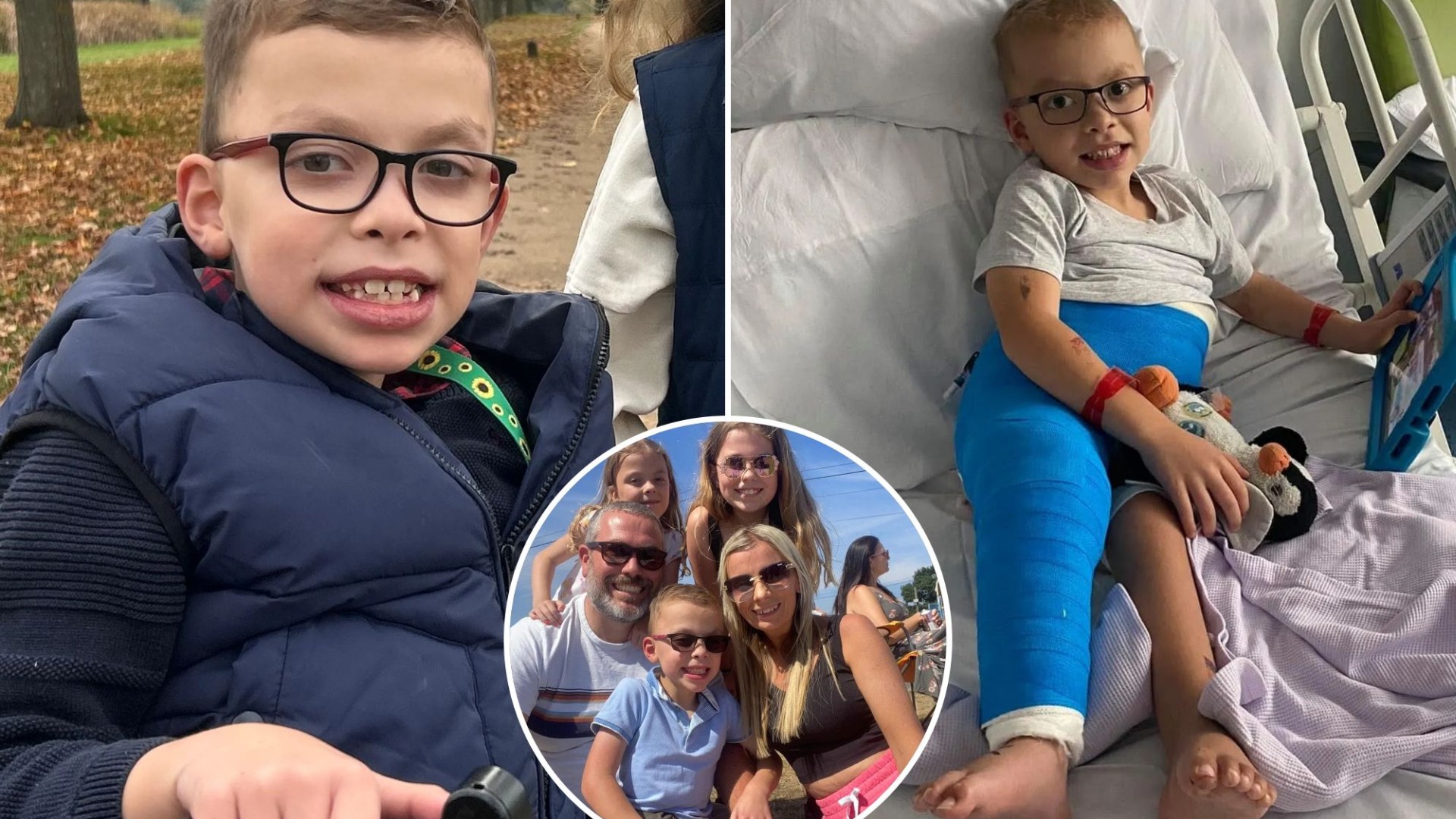
CHARLIE Fielding has faced more in his first ten years than most people do in a lifetime.
His devastated parents wonder: “How unlucky could one child be?” after he was left paralysed from the waist down – only to be struck with cancer when life started to look normal again.
Born prematurely at 30 weeks, Charlie was just 18 months old when a rare “tangle” of blood vessels, called AVM, ruptured.
It damaged his spinal cord, leaving the toddler paralysed.
After 18 months of stability, and just as life began to settle, disaster struck again.
“In early 2019, Charlie was getting recurring illnesses and high temperatures and doctors checked his bloods to see if there was anything wrong,” says dad Jamie Fielding, 45.
Read more on child cancer
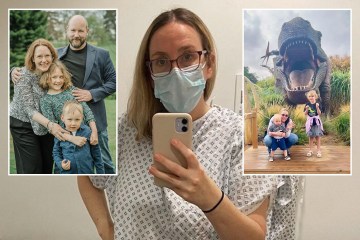
“We were told he had acute lymphoblastic leukaemia.”
ALL, as it is also called, is the fastest-growing cancer among children, with around 400 kids diagnosed in the UK each year.
It is a type of blood and bone marrow cancer caused by the body producing too many immature white blood cells.
Jamie, a manager with the Environment Agency and amateur photographer, says: “This second blow was even harder to take. How unlucky could one child be?
“To have two life-changing medical episodes before the age of four seemed so cruel.
“It felt like we’d been struck down by lightning twice by two incredibly rare conditions.”
But after battling cancer throughout the pandemic and ringing the bell in 2022, the West Sussex youngster is now a viral sensation.
The football-mad 10-year-old is chasing his dream of becoming a ‘top bins’ star.
In spite of everything, Charlie faces life with a big smile and sheer determination.
His social media challenge #TopBinsSmallWins has become a nationwide fundraising appeal.
It urges people to film their own ‘top bins’ trick shots and donate to help fund spinal injury rehabilitation so others can access the same life-changing therapy.
Charlie attends Neurokinex, a specialist physiotherapy centre.
What is arteriovenous malformation (AVM)
AN arteriovenous malformation (AVM) is a rare tangle of blood vessels.
It causes arteries and veins to connect in the wrong way, disrupting normal blood flow.
This means nearby tissue may not get enough oxygen.
AVMs can occur anywhere in the body, including the brain or spine.
Because the blood vessels are tangled and fragile, they can weaken and burst.
If this happens in the brain, it can cause bleeding — known as a haemorrhage — which may lead to a stroke or brain damage.
Symptoms often appear after bleeding happens, but can include:
- Severe headaches
- Seizures
- Weakness in the arms or legs
- Paralysis
- Vision problems
- Dizziness
- Trouble speaking or understanding words
- Memory problems or confusion
In children, AVMs can sometimes cause learning or behaviour difficulties.
Source: Mayo Clinic
Jamie says: “Charlie’s favourite thing during physio sessions is target practice – he loves to throw things at targets just like a footballer!
“We call them his cheeky ‘top bins’ trick shots and this is the inspiration behind the #TopBinsSmallWins challenge.”
Football clubs are already on board with the fundraiser. Worthing FC kicked things off with a half-time fundraiser ‘bin shoot out’ on January 31 2026.
The club, near to where Charlie lives, is owned by George Dowell who was paralysed from the chest down in a car crash when he was 17 and is a Neurokinex ambassador.
As a toddler, Charlie became paralysed from the waist down after an arteriovenous malformation (AVM) on his spine ruptured.
He was born with the condition that gave no warning until it was almost fatal.
He and his twin, Poppy, were born prematurely at 30 weeks, when mum Becky, 45, experienced a false labor at 26 weeks.
“We were advised that it would be best to deliver the twins early,” says Jamie.
“They were small and spent the first eight weeks of their lives in Worthing Hospital’s special care baby unit.
“Charlie didn’t thrive quite as well as Poppy and spent another two weeks in the unit.”
It was a “tough start” for the twins, but Charlie’s early life, particularly, was punctuated by hospital stays and health scares.
For the first 18 months of his life, Charlie was in and out of hospital with respiratory infections and bronchiolitis.
He was yet to walk like his sister.
“Then, at 18-months-old, just as we thought we were turning a corner, Charlie woke up one morning in distress and couldn’t move his legs,” says Jamie.
“Normally he would crawl around but he was floppy and limp when we put him on the floor. He wasn’t willing to bear weight on his legs.
“It was like he couldn’t do it rather than he didn’t want to.
“We had no idea what we were dealing with at this point, and hoped he would get better. We never imagined this would be our story – that we’d have a disabled child.”
Charlie was admitted to Worthing Hospital and over the next three days, his condition deteriorated.
“We were terrified,” says Jamie. “He was hardly moving. He’d lost sensation from the waist down and his legs were not weight bearing.”
Scans revealed he had an AVM on his spine since birth.
“Over time this high-pressure blood flow can lead to a swelling and eventually a rupture of the blood vessels,” says Jamie.
“This is what happened to Charlie, resulting in damage to his spinal cord.
“We were told that his condition was life-threatening.
“We were devastated. Our world collapsed.
“At home, we hadn’t seen any signs that there was anything wrong and Charlie had no outward symptoms of having one growing up.
“Doctors commented they had only seen about ten cases like Charlie’s in ten years.
“It was incredibly rare in that sense.”
Though Charlie was given specialist treatment, damage to the spine was already done and Charlie was left paralysed from the waist down.
“An AVM like Charlie’s could have been potentially fatal, so we were hugely grateful to GOSH for their amazing care and treatment of Charlie,” says Jamie.
“We were told that if the blood vessels had kept swelling and burst, he may have had a catastrophic bleed that couldn’t have been stopped.
“It was so hard to take in. Although we were warned he may never regain function below the injury, we were relieved when doctors started to talk about rehabilitation.”
After four weeks, Charlie began NHS-funded rehabilitation before Jamie came across Neurokinex.
Charlie was one of Neurokinex’s first paediatric clients and made great progress with its trailblazing therapy, including stepping and locomotor treadmill walking.
Despite Charlie’s prognosis of never regaining function below his injury, Neurokinex kept him fit, supported his rapid growth as a child and built his strength.
Trainers use pioneering techniques to replicate standing and walking — something he cannot do on his own.
Charlie, who also has ADHD and autism, never accepted limits.
But then came another battle – one which would take three years to overcome.
When Charlie was diagnosed with cancer, he was put on numerous chemotherapy drugs.
They made him feel too weak and, coupled with the Covid lockdown, his physio rehab took a back seat.
In August 2021, Charlie broke his right femur, which again disrupted his progress.
“Another blow – it felt like we’d been hit by an anvil,” says Jamie.
“We think he broke his leg after falling off the sofa one day.
“Charlie wondered what the fuss was about! He had to be fitted with a full leg cast from his waist down and over time, thankfully, it healed well.”
In 2022, Charlie finally rang the bell to mark the end of his cancer treatment and began a regular routine with Neurokinex again.
“The time away from physio has taken its toll,” says Jamie.
“His pelvis and hip are misaligned and scoliosis [spine curvature] has developed, which will require corrective surgery.
“In the meantime, it’s vital that Charlie stays as strong, flexible and resilient as possible, managing his growth spurts and avoiding further deterioration.”
His family praise the sessions at Neurokinex for keeping his body as able as it can be.
Jamie says: “Thanks to Neurokinex, Charlie has regained upper body strength, improved stability and confidence and become more independent in transferring to and from his wheelchair.
“His favourite ‘getting a ball in a bin’ trick is inspired by YouTube videos and the famous beach bins challenge by Sir David Beckham.
“Charlie loves sport and really does refuse to let paralysis and cancer get him down.
“Seeing Charlie lead #TopBinsSmallWins has built Charlie’s confidence immeasurably.
“He is also urging football clubs and players to get behind it and film their own ‘top bins’ trick shots. It’s amazing to see him pushing his limits and never giving up.
“Charlie refuses to let life get him down. If his story inspires one person to get involved, that’s a ‘top bins’ win in our book.”
The symptoms of childhood acute lymphoblastic leukaemia
ACUTE lymphoblastic leukaemia (ALL) is a type of blood cancer that starts in the bone marrow, where white blood cells called lymphocytes are produced.
It is most common in children, but can affect adults as well. Symptoms often overlap with other conditions, making diagnosis challenging.
Common symptoms include:
- Fatigue or weakness – Feeling extremely tired or weak due to low red blood cell counts (anemia)
- Flu-like symptoms – A combination of fever, chills, and aches that resemble a common illness
- High temperature (fever) – Often persistent without a clear cause
- Frequent infections – Due to a weakened immune system from low white blood cell counts
- Easy bruising and bleeding – Increased tendency to bruise or bleed, even from minor cuts
- Unexplained weight loss – Sudden and unexplained loss of body weight
- Swollen lymph nodes – Lymph nodes may swell, especially in the neck, armpits, or groin
- Bone or joint pain – Pain in the bones or joints as leukaemia cells infiltrate the bone marrow
- Shortness of breath – Difficulty breathing, often caused by anemia or other complications
- Feeling full – A sensation of fullness due to an enlarged spleen or liver
- Pale or washed-out appearance – A pale complexion due to anemia
In some cases, patients may develop a rash that appears as tiny red, purple, or brown dots (petechiae) that don’t turn white when pressed.
Survival rates:
While survival rates are generally higher for children, adult survival rates vary based on age, overall health, and the specific treatment regimen.
Treatment advances have improved outcomes, but ALL in adults can be more challenging to treat compared to in children.
Source: Cancer Research UK