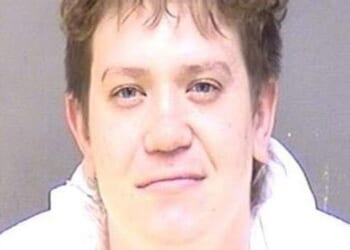
The news that Steph Richards, a transwoman (ie, a biological male) has just been appointed as parliamentary engagement officer for the charity Endometriosis South Coast has caused me to revisit a very dark time in my life.
Alongside one in ten British women, I suffered from this miserable disease for over a decade in my 30s and 40s. It took seven years for me to get a diagnosis, and lost me half my work because every month I would be writhing on the floor in agony.
Steph Richards is not a doctor, or even medically qualified – but rather a biological male who identifies as a woman. In 2024, Richards was obliged to step down as the charity’s chief executive owing to women’s rights campaigners objecting to her position, but now she is back.
Endometriosis is a disease that only women are afflicted by. It is caused when pieces of the womb lining, normally shed when a woman menstruates, break off and travel to other parts of the body, often in the pelvis or even abdomen. Here, these pieces still behave as if they were in the uterus, and bleed. Only there is nowhere for the blood to go.
The result is almost unimaginable. It feels as if your insides are being ripped out, piece by piece, and pain builds and builds inside you for several days until somehow the blood is reabsorbed into the body. Often, the errant pieces attach themselves to other internal organs, damaging them.
When I began experiencing intense pain, I had read an interview with my fellow novelist Hilary Mantel about her own experience of endometriosis. It sounded uncannily like my own, and I asked my (male) GP whether I could possibly be suffering from it too. ‘Impossible!’ he asserted. ‘You’ve had two children, which is the cure.’
Yes, unlike Hilary Mantel, who wrote movingly in Giving Up The Ghost about her infertility caused by the disease, I had been extraordinarily lucky. I had been able to conceive and give birth to my longed-for daughter and son.
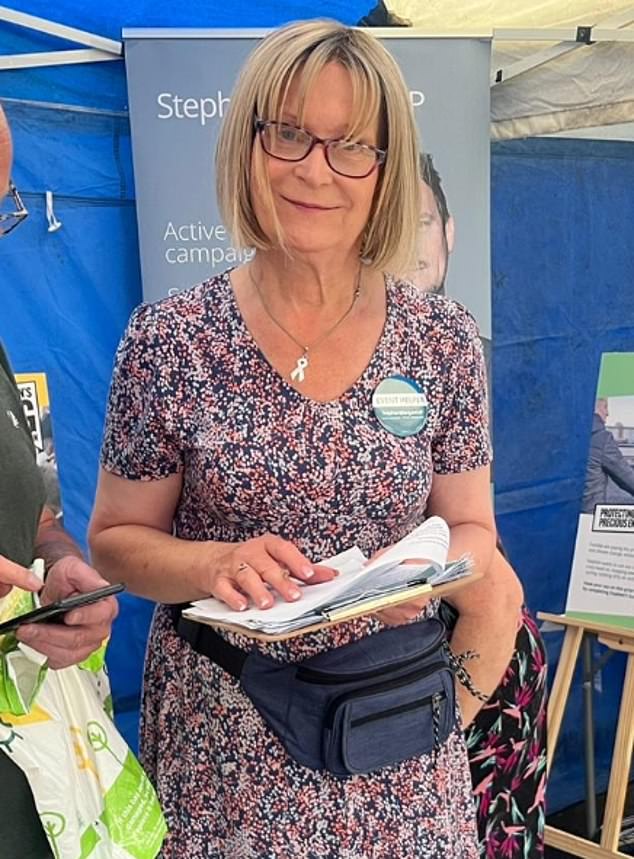
Steph Richards, a transwoman (ie, a biological male) has just been appointed as parliamentary engagement officer for the charity Endometriosis South Coast
But my GP, whose training takes the default human body to be male, not female, was wrong. You can have children and endometriosis.
I went to see my GP, or rather a series of them, many times over the seven years before I got a diagnosis. All were men, and their responses varied from ‘You’re the mother of young children, it’s only natural to feel tired’ to being told that I was ‘a middle-class, middle-aged neurotic’.
One, called out as an emergency by my despairing husband, suggested that I might be allergic to the Floris bath oils I used (taking hot baths gave temporary relief). The pain was so dreadful that it broke through the highest prescribed dose of painkillers that are permissible outside hospital.
I also bled so copiously every month that I would collect my children from primary school in my car, sitting on a plastic bag because the blood came through two super large tampons and sanitary pads.
I fainted from the pain and felt such nausea that I often had to sit on the floor during the day. My work as a novelist and critic had to continue, but my publisher almost despaired that I would ever deliver a new novel. My young son would often trot up and give me a tampon as a present, because I could not hide the bleeding.
Unable to exercise, I began to put on weight, which my GPs also blamed me for. I became like a woman in a Victorian novel always lying on the sofa, working on my lap, and no fun to be with for at least half of every month.
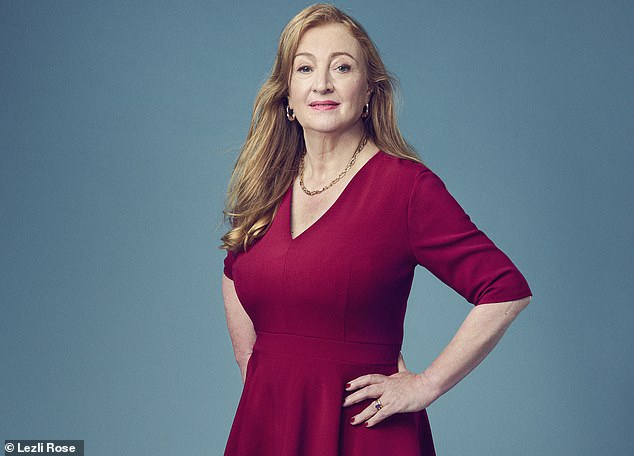
Being female is not about growing your hair, wearing dresses, taking oestrogen to grow ‘breasts’ or putting on lipstick, writes Amanda Craig. It is about the messy, often debilitating yet miraculous stuff that enables half of the human race, my half, to conceive and carry a baby
Naturally, I begged for tests. I had a blood test for anaemia, but no abdominal scan, though I did have a vaginal one which revealed nothing. Endometriosis is, in fact, quite tricky to spot because the pieces of womb lining can be small. Nevertheless, the fact that my symptoms came a few days after my period should have been a giant clue.
I am immensely proud of the NHS, but the pain and debility were so awful that my husband insisted I see a private doctor in Harley Street, called Ann Coxon. She ordered a full-spectrum blood scan, and a proper scan of my abdomen. ‘I’ve got good news and bad news,’ she told me.
‘You have not one but two diseases, but the good news is they can both be cured.’ I had, like Hilary Mantel, a malfunctioning thyroid – thyroid cancer, in fact – and probable endometriosis. It could only be proved if I underwent surgery.
So began a two-year medical odyssey, first to remove the thyroid cancer and receive radiotherapy, and then to have keyhole surgery for endometriosis at King Edward VII’s Hospital.
I can still remember, even as I came round from a general anaesthetic, realising that for the first time in years I was no longer in pain. It had been a constant background noise in my life even when it did not rise to excruciating agony. I was stunned by the relief, and burst into tears.
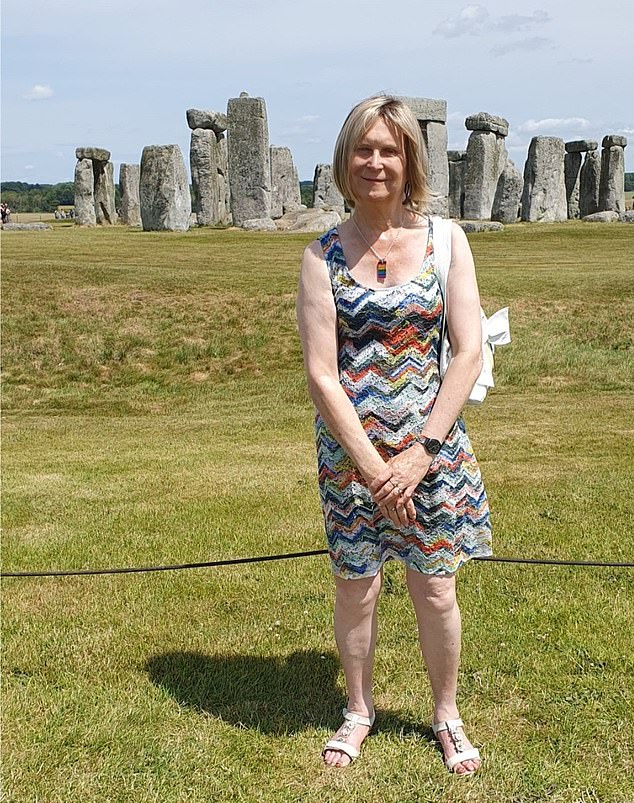
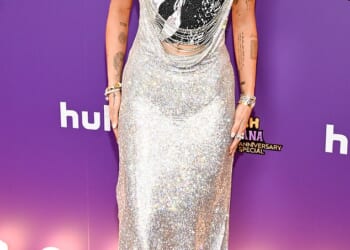
Steph Richards (pictured) has no medical training, and even were her advocacy coming from a good place, it is as inappropriate for a biological man to talk about this unique condition
My surgeon was a man – and I have no objection whatsoever to being operated on by a member of the opposite sex, even if all the GPs who had failed and gaslit me were men too. All that matters when you are ill is excellence.
My surgeon, Mr Magos, was the very best and I learned later had attended her late Majesty, Queen Elizabeth. His kindness, sympathy and expertise saved not just my health but my sanity. The endometrial tissue had attached itself to one of my ovaries, which had to be removed too – plunging me into premature menopause.
In the past, I would have had to have a hysterectomy, but the cure was having the Mirena coil inserted into my uterus.
This, though uncomfortable for the first month, soon becomes completely painless. It keeps the womb lining thin by releasing progesterone and stops periods (it is more commonly used as a form of contraception).
The really good thing was that I was also prescribed oestrogen-only HRT. My menopausal symptoms stopped, and within months I was glowing with good health.
I was able to look after my children and finish my fifth novel, Hearts And Minds, which was my first to be long-listed for the Women’s Prize.
All this is private stuff. I only speak about it because I see the urgent need for women, and men, to be better informed about what having a woman’s body actually entails.
Being female is not about growing your hair, wearing dresses, taking oestrogen to grow ‘breasts’ or putting on lipstick. It is about the messy, often debilitating yet miraculous stuff that enables half of the human race, my half, to conceive and carry a baby.
Women pay an enormous price for this potential, whether we wish to or not: we are smaller, weaker, and if no less intelligent are routinely patronised and bullied by many men who fail to respect or understand what we are and do.
This seems to include too many self-professed transwomen. Steph Richards has no medical training, and even were her advocacy coming from a good place, it is as inappropriate for a biological man to talk about this unique condition as it would be for a white person to talk for black people, or an able-bodied one to represent the disabled. Only women have lived the experience of this pain, just as only women know what it is like to give birth.
For Richards to believe she can speak for us is deeply insulting, and indeed indicative of the confident complacency we associate with biological males.
- Amanda Craig’s tenth novel, High And Low, is published on May 7 by Abacus.