
ARTEMIS 2 is set to blast off from Kennedy Space Center on a 10-day mission around the moon.
Here we take a look at the financial figures involved in sending humans as far from the earth as we have ever been.
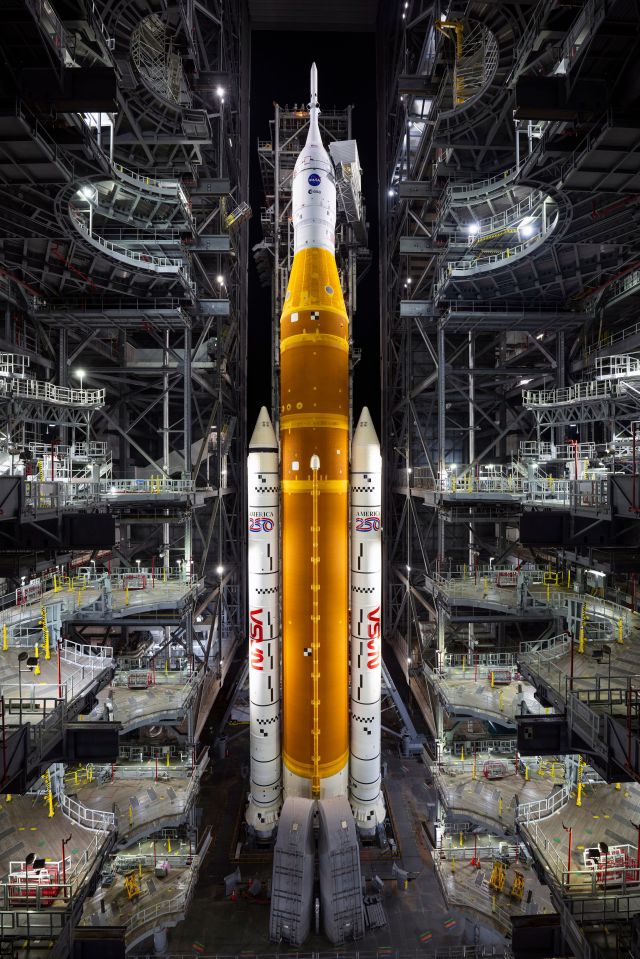

When is Artemis 2 launching?
Nasa is aiming for a launch time of 11.24pm BST on Wednesday, April 1, 2026, which is 6.24pm local time (EDT).
A two-hour window is available, meaning the Space Launch System (SLS) could lift off at any time until 1.24am BST on Thursday morning (8.24pm EDT on Wednesday).
Backup dates are available between April 2 and April 6 if the launch is cancelled for any reason.
According to Nasa, the weather forecast for April 1 shows an 80 per cent chance of favourable conditions.

The crew have spent the final days of the countdown in quarantine inside Kennedy Space Center, following a controlled sleep schedule and nutrition plan to stay in peak condition ahead of launch.
Liftoff will take place from Launch Complex 39B at Kennedy Space Center, Florida.
Nasa astronauts Reid Wiseman, Christina Koch and Victor Glover, and Canadian Space Agency astronaut Jeremy Hansen, will be the first people to launch towards the Moon since the Apollo 17 mission in December 1972.
Wiseman is mission commander, Glover is the pilot, and Koch and Hansen are mission specialists.
How much is Artemis 2 costing?
Nasa has not published a standalone price tag for Artemis 2 mission.
But the US Government Accountability Office estimated in 2021 that each Artemis launch costs more than $4billion (£3billion).
This figure that covers the SLS rocket, built by Boeing, and the Orion capsule, made by Lockheed Martin.
In 2021, the Inspector General estimated that Artemis campaign costs would reach $93billion (£70billion) between 2012 and 2025.
By the time Nasa reaches the Artemis 4 lunar landing, projected for 2028, total spending is expected to hit around $105billion (£79billion).
That is still far less than the estimated $290billion (£218billion) in today’s money spent on the Apollo programme up to its first Moon landing.
The vast majority of the funding comes from the American taxpayer.
Nasa’s budget is set by Congress each year, and it is US federal money that finances the development, testing and launch of each Artemis mission.
At present Nasa operates on less than half of one per cent of the entire US national budget — a far cry from the Apollo era, when it received more than four per cent.
How can I watch the Artemis 2 mission?
Fans can follow the launch NOW on The Sun’s YouTube livestream.
Nasa is also streaming the launch live on its YouTube channel – coverage of fuelling operations started at 12.30pm BST (7.30am EDT).
Full coverage on the free Nasa+ streaming service begins at 5.50pm BST (12.50pm EDT).
The European Space Agency is also carrying the launch live on ESA Web TV, with its broadcast kicking off at 10.24pm BST (5.24pm EDT) – an hour before liftoff.
Nasa’s Artemis Real-time Orbit Website (AROW) lets you track the Orion spacecraft’s journey around the Moon as it happens.
AROW is available online and via the Nasa mobile app.
Exterior cameras have been fitted on the Orion capsule, with the aim of sending back live footage of the mission.
Nasa will also post updates throughout the 10-day trip on its Artemis blog at nasa.gov.