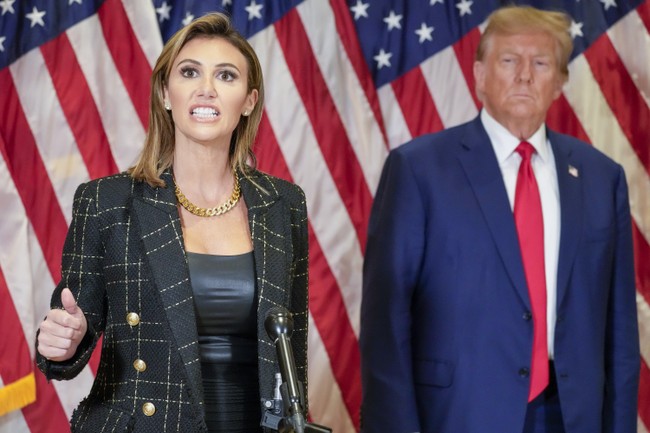
The White House’s plan to get around Section 546 is not going well at all. A week ago, a federal court threw out charges against James Comey and Letitia James because acting US Attorney Lindsey Halligan’s appointment violated federal statute. The Federal Vacancies Reform Act (FVRA) stipulates in Section 546 that Attorneys General can only appoint an interim US Attorney for 120 days. Any vacancy not filled by a Senate-confirmed appointee after 120 days must be appointed by a federal district court, not a subsequent interim appointment by the AG.
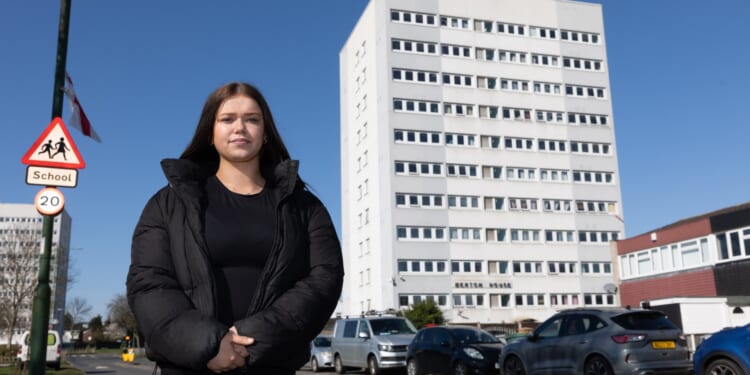
The White House just lost another case at the appellate level on the same basis. Alina Habba had served as the interim US Attorney in New Jersey since the end of March. A unanimous three-judge panel granted a motion this morning from a set of criminal defendants to disqualify Habba, on the same grounds as Halligan’s disqualification in another circuit:
A federal appeals court has disqualified President Donald Trump’s former personal attorney Alina Habba from serving as the U.S. attorney for New Jersey.
The 3rd U.S. Circuit Court of Appeals upheld a district court decision that found her appointment violated the Federal Vacancies Reform Act. …
“Habba is not the Acting U.S. Attorney for the District of New Jersey by virtue of her appointment as First Assistant U.S. Attorney because only the first assistant in place at the time the vacancy arises automatically assumes the functions and duties of the office under the FVRA,” the court wrote, referring to the Federal Vacancies Reform Act.
Complicating this is a factor not included in the Halligan case. Trump has nominated Habba for the permanent position as US Attorney. As the court points out, the FVRA specifically excludes a nominee for the job from serving as an interim US Attorney:
Even if the FVRA’s first assistant provision did allow a later-appointed first assistant automatically to ascend to the role of acting officer, Habba would still need to overcome the FVRA’s nomination bar. The FVRA provides that “a person may not serve as an acting officer for an office under this section, if . . . the President submits a nomination of such person to the Senate for appointment to such office.” 5 U.S.C. § 3345(b)(1).
The Government argues that the nomination bar does not apply to Habba because it is limited to pending nominees only. It contends that use of the present-tense “submits” in the statute “requires consideration of the status at the time of the covered action, not before.” Appellant’s Br. 26. Because “the covered action is Ms. Habba’s acting service,” the Government says, “the focus of the statute is on her nomination status at the time of her acting service, not when her nomination was pending in the past.” Id.
The problem for the Government is the lack of textual support for its position. Nothing in the statute indicates the bar lifts when a nomination is no longer pending.
The reason for this language is clear in the legislative history presented by the court. Congress wrote the FVRA as a response to an increasing tendency by presidents to avoid Senate confirmation hearings by simply appointing “temporary” officers, usually those whom presidents had nominated to those positions, and allowing them to serve indefinitely in that status. The bar on nominated “interim” appointees was intended to put an end to that practice and force presidents to get Senate confirmations. The clause in Section 546 that required successive “interim” appointees to be chosen by the federal court was also intended to curtail the abuse of the “interim” appointment power. In other words, there are rational reasons for the FVRA and the constructs in Section 546, and the DoJ violated them with both Halligan and Habba.
The administration may fight this on the basis of conflict between Article II authority and Article III jurisdiction. The White House may argue to the Supreme Court that Section 546 unconstitutionally grants Article II power to the courts in the appointment of prosecutors who will then appear before those same judges, not to mention who will exercise executive rather than judicial power. That might be a fight worth having, but it will be a distraction from the failure of this administration and the Republican-controlled Senate to get these key appointments submitted and confirmed in a timely manner. Section 546 only matters when presidents don’t get their appointments completed in time to avoid the lengthy use of temporaries.
The one bright spot from this order is that the court is not invalidating the indictments presented by Habba. The order restricts itself to the issue of Habba’s disqualification as interim US Attorney. The Department of Justice can appeal this, and probably will, but the best option at hand would be to get Habba confirmed properly and therefore moot the entire issue.
Join our VIP Membership program! Choose VIP to support Hot Air and access our premium content, VIP Gold to extend your access to all Townhall Media platforms and participate in this show, or VIP Platinum to get access to even more content and discounts on merchandise. Use the promo code FIGHT to join or to upgrade your existing membership level today, and get 60% off!