For Angelique Laliotis, the moment that would quietly divide her life into a ‘before’ and ‘after’ came in the most ordinary, almost forgettable way.
The then-24-year-old was standing alone in her bedroom in November 2023, putting on a bra after a shower, when her hand brushed across her chest and paused on something that didn’t feel right.
‘I had no other symptoms but I just had a bad feeling about it at the time. It was huge – the size of an egg,’ she told the Daily Mail.
The young woman didn’t experience a visible change or sharp pains that demanded attention, but the subtle shift under her skin soon unravelled into a diagnosis that felt as shocking as it was devastating.
What followed was the kind of news no one expects in their early twenties, let alone someone who had been vigilant about their health and had, just months earlier, been given the all clear.
A diagnosis that didn’t make sense
Angelique was not unfamiliar with breast lumps, which, in many ways, made what happened next even harder to process.
She had first experienced them at 19 and, over the years, had undergone multiple biopsies, each time receiving reassurance that they were benign and nothing to fear.
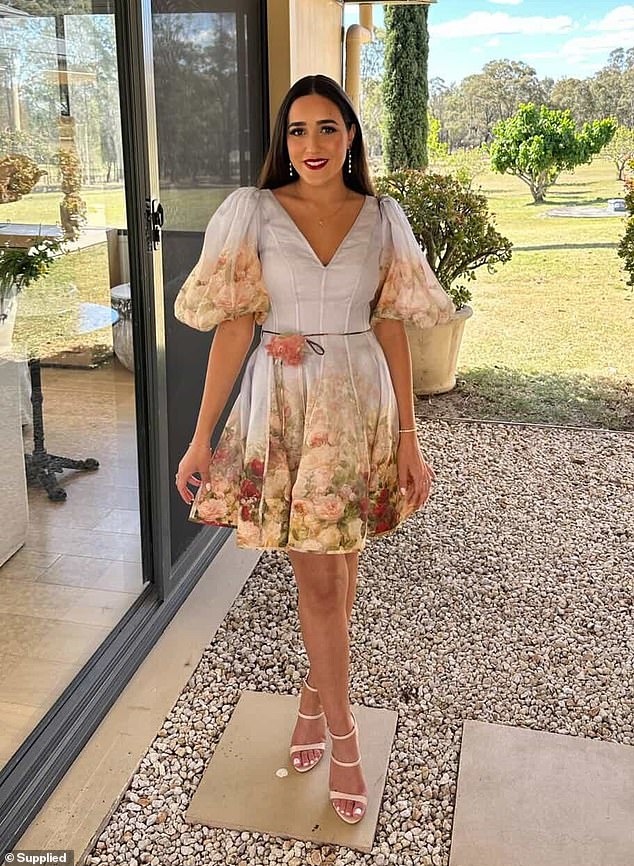
For Angelique Laliotis, the moment that would quietly divide her life into a ‘before’ and ‘after’ came in the most ordinary, almost forgettable way
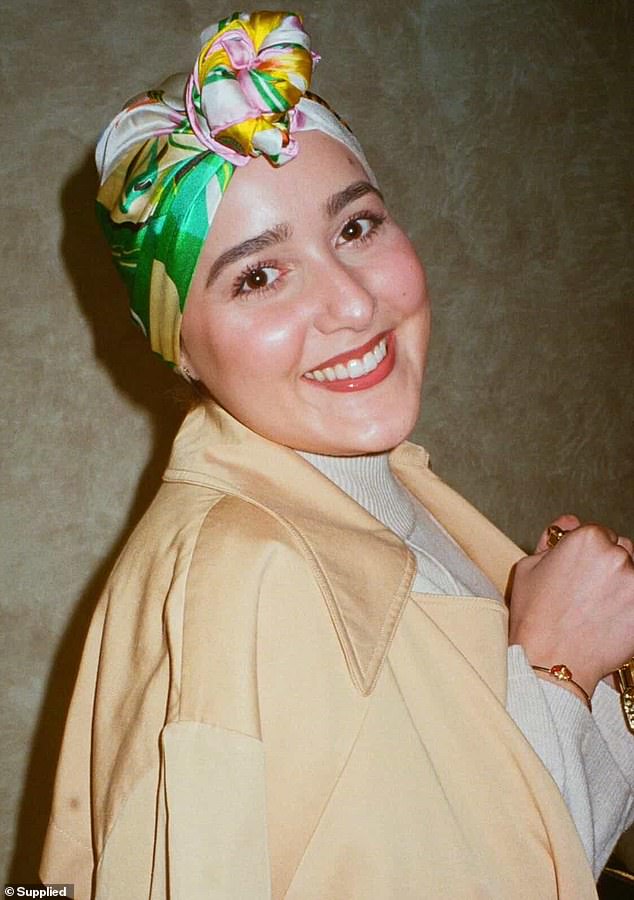
The then-24-year-old was standing alone in her bedroom, putting on a bra after a shower, when her hand brushed across her chest and paused on something that didn’t feel right
In January 2023 – less than a year before her diagnosis – she had attended a routine check and was told everything was completely fine.
So when she suddenly felt a lump ‘the size of an egg’ in November, the scale of it alone was enough to shock her.
‘I have a history of breast lumps, but none of them had been cancerous before,’ she explained.
Acting quickly, she arranged a telehealth appointment with her GP and secured a referral for an ultrasound.
The diagnosis came swiftly and with devastating clarity.
Angelique had invasive ductal carcinoma, the most common form of breast cancer, which begins in the milk ducts and invades surrounding breast tissue.
Her illness was classified as grade 3, meaning the cancer cells were fast-growing, aggressive, and more likely to spread.
By the time it was detected, it already had.
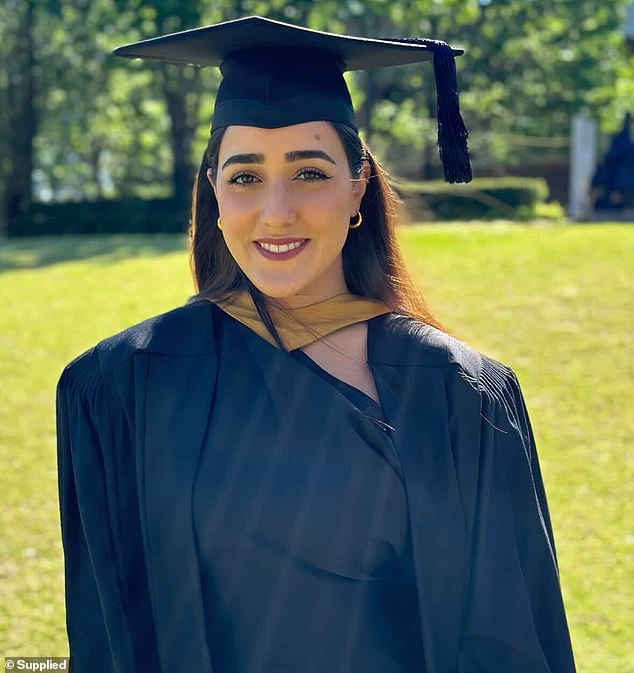
At 24, with no family history of cancer and no genetic mutation to explain it, the diagnosis felt frightening and deeply confusing
‘I found out it had spread to my lymph nodes,’ she said.
At 24, with no family history of cancer and no genetic mutation to explain it, the diagnosis felt frightening and deeply confusing.
Fertility, fear, and impossible choices
Almost immediately, Angelique was thrust into a series of decisions that would shape her treatment and future.
Because her cancer required urgent chemotherapy, she was given less than 24 hours to decide whether she wanted to undergo IVF to preserve her fertility.
The young woman revealed it felt ‘surreal’ at the time because she’d barely begun to process her diagnosis.
‘It was really overwhelming, because I had just been diagnosed, and then I had to decide what I wanted to do to preserve my fertility,’ she said.
‘I was so young.’
She chose to go ahead, completing one round of IVF and undergoing an egg retrieval surgery before treatment began.
Angelique’s cancer was hormone-positive, meaning it was fuelled by oestrogen, and as part of her treatment she was placed into chemical menopause to shut down hormone production and reduce the risk of the cancer progressing.
‘Being in menopause at 24, 25 years old… that in itself has side effects,’ she said.
‘I had bone pain, fatigue, I felt really nauseous all the time.’
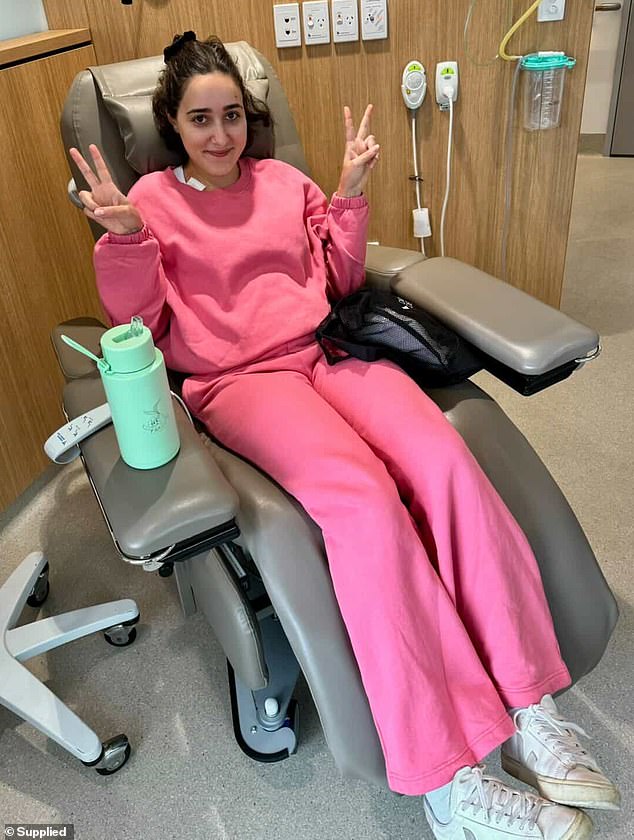
Because her cancer required urgent chemotherapy, Angelique was given less than 24 hours to decide whether she wanted to undergo IVF to preserve her fertility
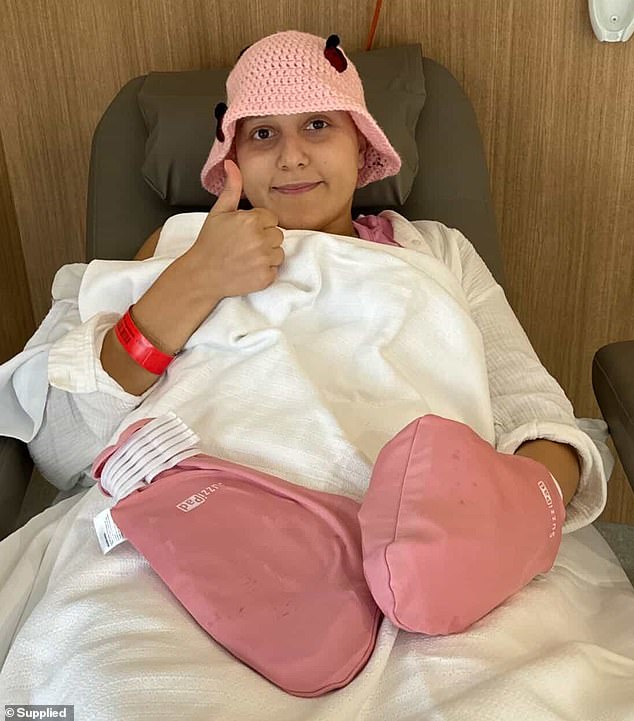
Angelique’s cancer was hormone-positive, meaning it was fuelled by oestrogen, and as part of her treatment she was placed into chemical menopause to shut down hormone production and reduce the risk of the cancer progressing
A body that no longer felt like her own
Angelique underwent 16 rounds of chemotherapy, alongside oral chemotherapy medication, followed by three weeks of radiotherapy and surgery to remove the tumour.
The treatment was relentless, and the cumulative toll on her body was profound.
‘The chemo made me very sick and I lost all my hair. I was quite unwell for the duration of that,’ she said.
The chemical menopause compounded everything, intensifying the fatigue, the nausea, the sense that her body had become something ‘unfamiliar’ – something she was constantly trying to manage, endure, and understand.
Angelique was forced to step away from work almost immediately after her diagnosis, entering a long and uncertain treatment period that stretched from November 2023 through to September 2024, where days blurred together in cycles of appointments, sickness, and recovery.
She explained that there is a particular grief that comes with serious illness at a young age – for what is happening in the present, and for the version of yourself you thought you would be.
‘Emotionally, going through cancer completely changed my perspective on life and my relationships,’ she said.
‘It changed how I looked at myself, my self-esteem, my body image. It was just very difficult.’
Simple rituals that carried her through
In the midst of something so consuming, Angelique found small, grounding ways to move through each day, leaning into routines that offered comfort and distraction.
She walked when she could, read when her body allowed it, journaled her thoughts, and cooked – often gravitating towards simple foods like soup.
‘I think because I was feeling so nauseous and unwell, I had an aversion to food, so I found that cooking kind of helped me and relaxed me,’ she said.
What sustained her most, however, were the people around her.
Her partner, her family, her friends – all of them showed up in ways helped relieve Angelique of carrying her diagnosis alone.
‘My partner and my brother would try and make me laugh during chemo so I wouldn’t be thinking about what I was experiencing,’ she said.
‘My grandmothers would spend time with me, my friends would come and see me… there was a lot of love, and I am so grateful.’
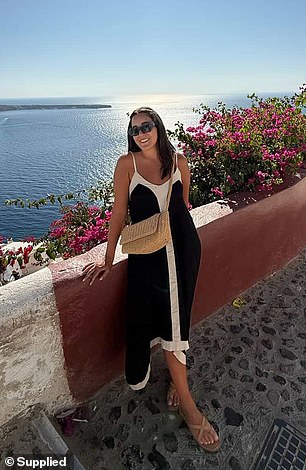
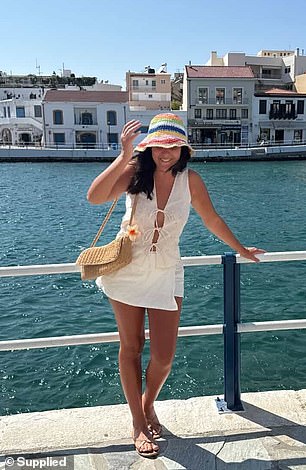
After finishing treatment, Angelique made a conscious effort to reclaim parts of her life that had been put on hold, travelling to the Great Barrier Reef and returning to Greece to reconnect with her heritage – experiences she describes as deeply healing
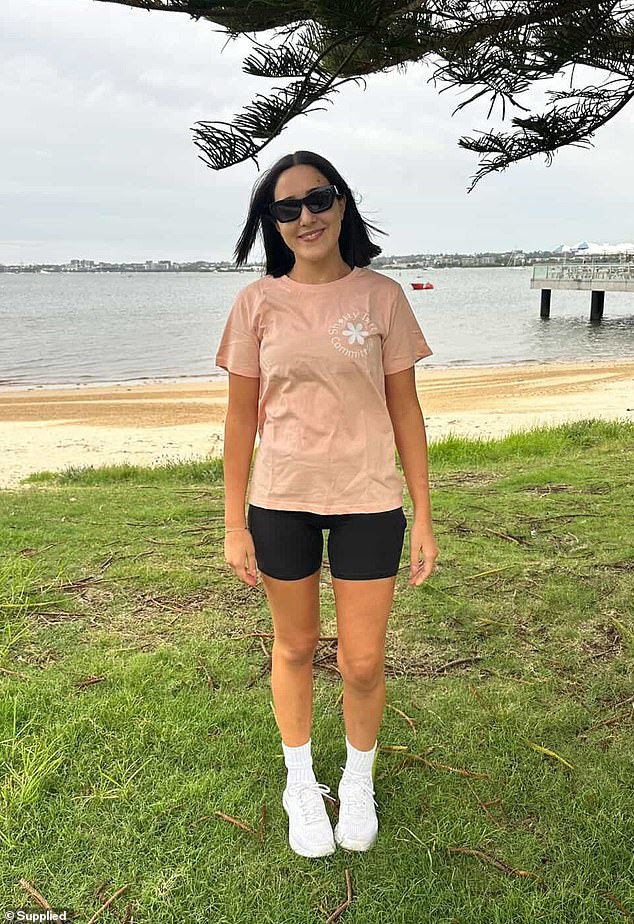
Now 27, Angelique is no longer in active treatment, but the impact of what she has been through continues to shape her life
Life after treatment – and learning to live again
Now 27, Angelique is no longer in active treatment, but the impact of what she has been through continues to shape her life.
She remains on medication to keep her in menopause, receives monthly injections, and undergoes six-monthly bone infusions to counteract the long-term effects of treatment, with ongoing side effects including fatigue, body aches, and hot flushes.
There are also the quieter, more insidious aftershocks – such as the health anxiety that lingers with the constant question that sits just beneath the surface.
‘I can be in the happiest moment of my life, and it will still creep up,’ she said.
‘When I have any sort of aches or pains I think, oh my gosh, what is this? Is the cancer back?’
And yet, alongside that fear, there is also a deepened sense of gratitude – a recalibration of what matters.
‘The small things are the big things that I miss,’ she said.
‘Feeling well enough to go for a walk, or do a Pilates class, or go out for dinner with my partner… feeling like myself again.’
After finishing treatment, she made a conscious effort to reclaim parts of her life that had been put on hold, travelling to the Great Barrier Reef and returning to Greece to reconnect with her heritage – experiences she describes as deeply healing.
‘It felt reassuring that I can still do the things I wanted to do,’ she said.
Finding meaning – and offering hope
Angelique is still finding her feet, navigating what it means to live after something that has altered her sense of self.
‘I try to live my life with so much gratitude and appreciation,’ she said.
For others facing a similar diagnosis, her advice is simple.
‘Just keep swimming, just keep going. You’re not alone… and you’re so much stronger than you think.
‘And remember: check your breasts!’
Throughout her journey, organisations such as Cancer Chicks and the McGrath Foundation have been important sources of support and advocacy, helping young women like Angelique feel less alone in an experience that can otherwise feel isolating.