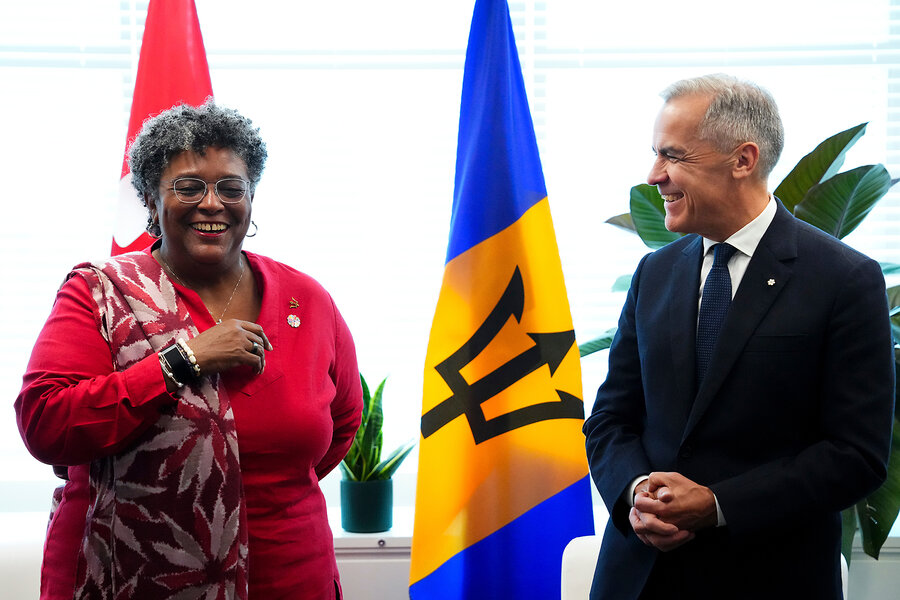
A call for “middle powers” to act together amid big-power politics – an idea voiced at the World Economic Forum in Davos, Switzerland, earlier this month – is still reverberating globally. Yet for many small nations, the imperative – and opportunity – for cooperation has been gaining momentum for years.
In most cases, the initial impulse is economic growth. This week, for instance, 11 Southeast Asian nations are discussing a unified visa system for visitors. “Seamless access,” the Philippines’ tourism chief said, will help the region “benefit from each other’s tourism flows.” But getting to this point has taken decades of trust-building, through strengthening diplomatic and trade links.
Elsewhere, initiatives in the Caribbean and West Africa have sought to raise living standards and foster enterprise by reducing barriers to regional movement of goods and people. These blocs are also establishing a shared security, often bolstered by cultural or kinship ties. This, in turn, has enabled coordinated responses to emergencies – such as the severe 2017 hurricane season or the thwarting of an attempted coup in a member country.
Three months ago, four Caribbean nations opted to bring their total population of 1 million people closer: In October, Barbados, Belize, Dominica, and St. Vincent and the Grenadines instituted fully free movement for citizens to enter, live, work, and receive government services within all four countries.
In a global climate of tighter borders and immigration clampdowns, the Carnegie Endowment for International Peace describes the Caribbean move as a “contrasting vision” of regulating human mobility – approaching it as a driver of development and prosperity, rather than as a drain on resources.
This model of integration, however, is rooted in more than economic factors. As one regional official told The Guardian, it underscores deep bonds. “We are virtually the same people. We have no historical animosities … and we are very similar culturally,” he said.
And in a region that has already experienced many extreme weather events, to quote the speech by Canadian Prime Minister Mark Carney at Davos, joint action “is not naive multilateralism. … It’s building coalitions that work, issue by issue, with partners who share enough common ground to act together.”
In an address to the citizens of Barbados, Prime Minister Mia Mottley emphasized the “dignity of small states” in creating alliances that work for them. Of the decision to ease border restrictions, she said, “It is measured. It is managed. It is ours.
“My friends,” Ms. Mottley added, “in a world where many are building walls, the Caribbean must build bridges. … We must not allow fear and insecurity to define us.”