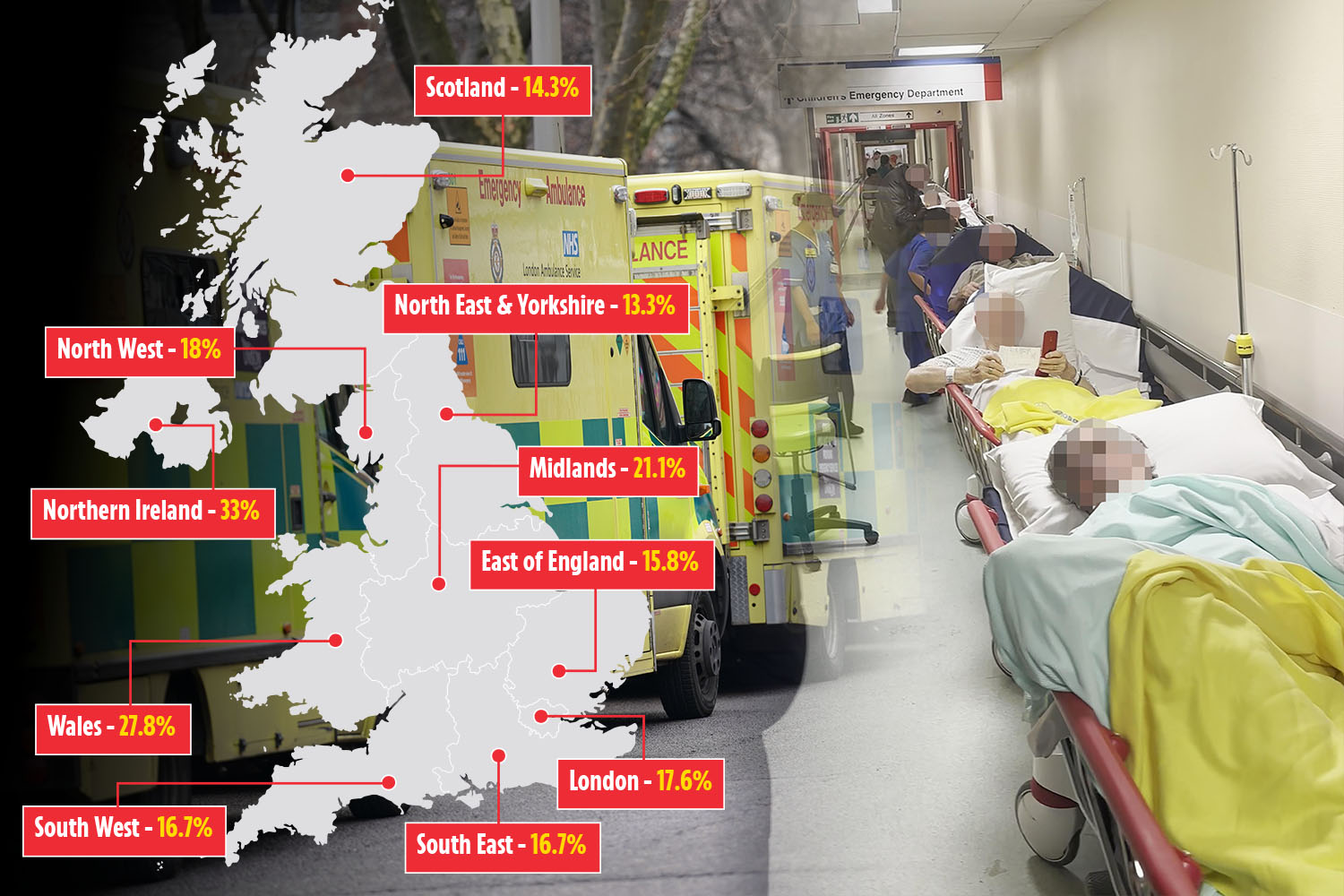
NHS A&E patients now have a one in five chance of being treated in a corridor or waiting room, a “shameful” study reveals.
Data from 165 emergency departments across the UK show the areas and time of the week where your risk of “corridor care” is highest.
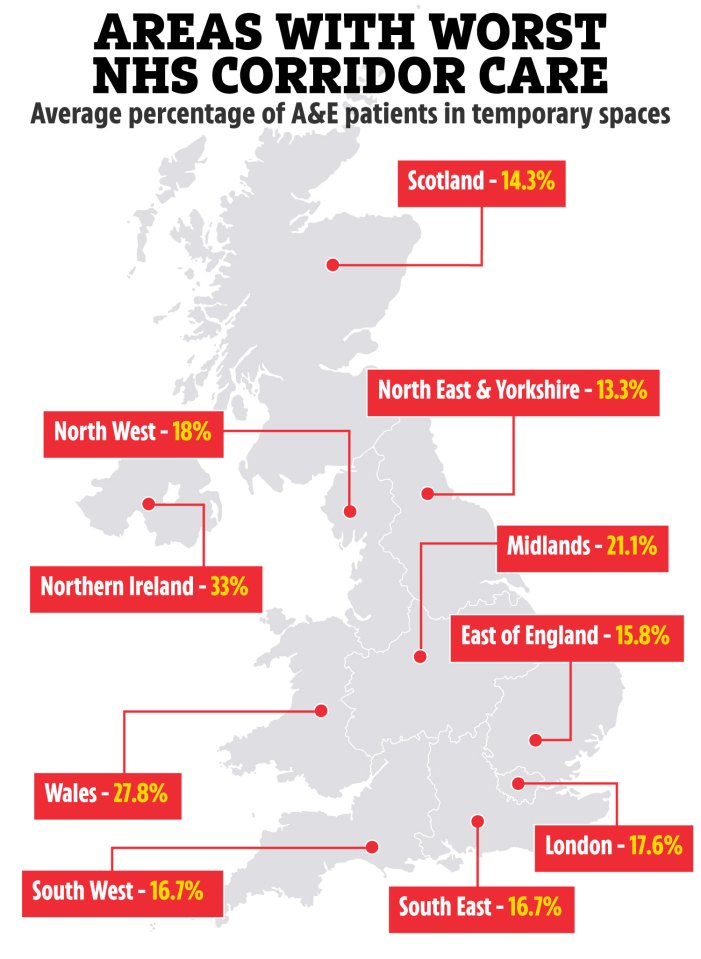
Across Britain an estimated 18 per cent of people are kept in an “escalation area” at any given time.
Nurses are forced to play “trolley Tetris” and cram seriously ill patients into hallways, offices, empty wards and even store rooms, doctors said.
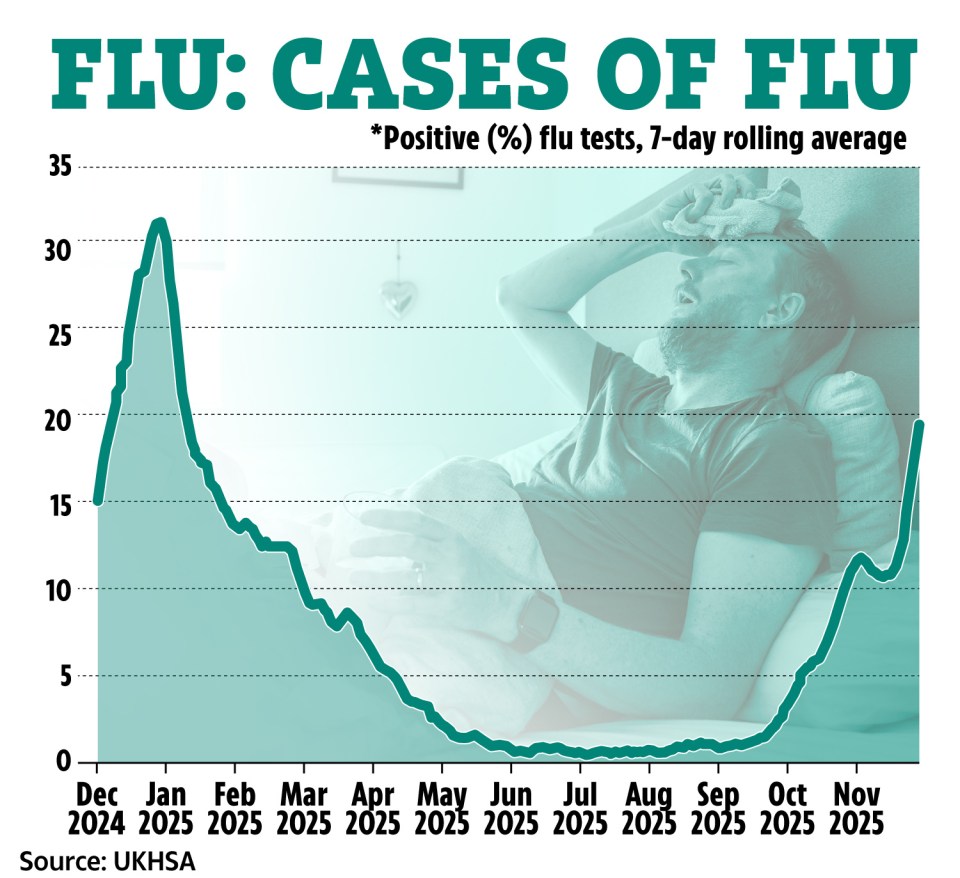
It comes as hospitals this week battle a tidal wave of flu with patient numbers at risk of hitting a record high.
Hospitals have declared critical incidents and schools closed to impose Covid-style “firebreaks” as hundreds fall sick in what experts warn could be the ‘worst outbreak in a decade‘.


Health bosses are encouraging people to wear a mask if they are ill because a “nasty strain” of the virus is going round.
Daniel Elkeles, chief of NHS Providers on behalf of hospital chiefs, said: “We were all very good about infection control during Covid and we really need to get back to that now.”
The new study by the Trainee Emergency Research Network found that, in March, up to 90 per cent of hospitals admitted to keeping A&E patients on gurneys or chairs in non-medical areas.
Data in the Emergency Medicine Journal showed the problem was worst in the Midlands, Northern Ireland and Wales, and least severe in the South West and North East.
Patients were most likely to be held in a corridor at 7am on a Thursday.
Dr Ian Higginson, president of the Royal College of Emergency Medicine, said: “This reinforces that the shameful practice of corridor care is endemic in emergency departments in the UK.
“We are very concerned about the harm associated with long waits and how it puts patients’ lives at risk.
“There is one excess death for every 72 patients who wait between eight and 12 hours before admission.
“This should not be happening in a wealthy country.”
NHS figures show more than 450,000 patients have waited longer than 12 hours for a bed so far this year.
Dr Higginson added: “It is also worrying that these findings were from March and not in the peak of winter, which shows that corridor care is an issue all year round.
“We fear this winter we will see gridlock.”
Last week, an average of 1,700 patients were in hospital with flu each day – more than 50 per cent higher than the same time last year.
Everything you need to know about flu
Flu will often get better on its own, but it can make some people seriously ill.
It’s important to get the flu vaccine if you’re advised to.
Flu symptoms come on very quickly and can include:
- a sudden high temperature
- an aching body
- feeling tired or exhausted
- a dry cough
- a sore throat
- a headache
- difficulty sleeping
- loss of appetite
- diarrhoea or tummy pain
- feeling sick and being sick
The symptoms are similar for children, but they can also get pain in their ear and appear less active.
There are things you can do to treat flu yourself:
- rest and sleep
- keep warm
- take paracetamol or ibuprofen to lower your temperature and treat aches and pains
- give paracetamol or ibuprofen to your child if they’re distressed or uncomfortable – check the packaging or leaflet to make sure the medicine is suitable for your child, or speak to a pharmacist or GP if you’re not sure
- drink plenty of water to avoid dehydration (your pee should be light yellow or clear)
But ask for an urgent GP appointment or get help from NHS 111 if you or your child have symptoms of flu and:
- you’re worried about your baby’s or child’s symptoms
- you’re 65 or over
- you’re pregnant
- you have a long-term medical condition – for example, diabetes or a condition that affects your heart, lungs, kidneys, brain or nerves
- you have a weakened immune system – for example, because of chemotherapy or HIV
- your symptoms do not improve after seven days
Call 999 or go to A&E if:
- get sudden chest pain
- have difficulty breathing
- start coughing up a lot of blood
How to protect yourself and your family
The flu vaccine helps protect against flu, which can be a serious or life-threatening illness.
It’s offered on the NHS every year in autumn or early winter to people at higher risk of getting seriously ill from flu.
You can get the free NHS flu vaccine if you:
- are aged 65 or over (including those who will be 65 by 31 March 2026)
- have certain long-term health conditions
- are pregnant
- live in a care home
- are the main carer for an older or disabled person, or receive a carer’s allowance
- live with someone who has a weakened immune system
If you’re eligible for an NHS flu vaccine, you can:
Source: NHS