Yesterday’s Spring Statement was a sudoku puzzle of false claims, unfathomable numbers and political bromides.
Chancellor Rachel Reeves stood up before a packed House of Commons to claim credit for all manner of things, from a fall in inflation to an illusory reduction in the cost of living.
Yet the 30-minute speech – as misleading as it was carefully constructed – was dead on arrival.
Despite Ms Reeves’ efforts to lift the pall of gloom she has herself done so much to generate, the bitter truth is that even the latest Treasury forecasts are hopelessly out of date thanks to the conflagration in the Middle East.
As David Miles, of the Treasury’s Office for Budget Responsibility (OBR), acknowledged last night, the Government’s inflation forecast has already been ‘blown off course’.
In the four days since the US and Israel launched its bombardment of Tehran, the costs of oil, natural gas, shipping and insurance have started heading for the stratosphere.
For Britain, it gets worse: We run a free and open economy, which is a great advantage during good times, but it also means we are more vulnerable to shocks than any other in the Group of Seven richest nations.
Many industries are already suffering from the tariff mayhem imposed by Donald Trump last year. Now businesses and consumers will need to confront another new reality: The surging cost of living caused by Labour’s unrelenting tax hikes will get worse as energy prices rocket.
It’s likely we’ll see the first impact at the petrol pumps, but it won’t be long before the cost of gas and electricity climbs sharply, too.
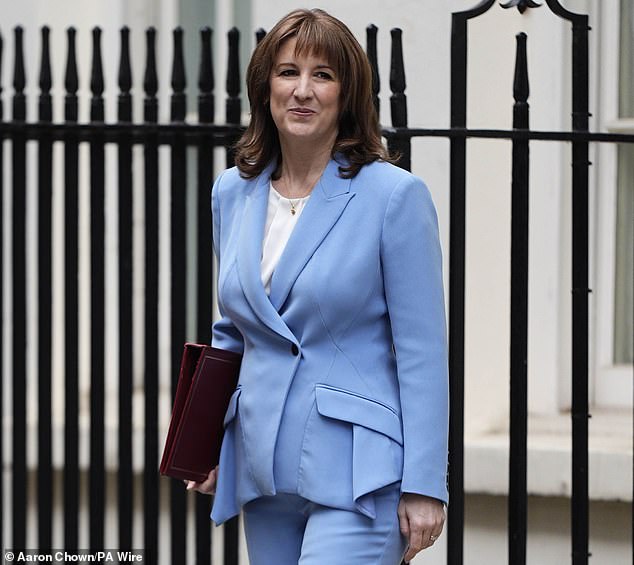
Chancellor of the Exchequer Rachel Reeves leaving 11 Downing Street for the House of Commons to deliver her Spring Statement to MPs
It might seem ironic that the only economic measure showing any discernible improvement in Ms Reeves’ forecasts had been inflation – the very indicator already spinning out of control by the time she stood up at the despatch box.
She is learning the hard way – as the Tories did before her – that external events have a nasty habit of destroying the best intentions. It is telling the Chancellor persists, wrongly, in blaming our flatlining economy on Liz Truss’s short and ill-fated tenure in Downing Street and the disruption to the bond markets (where the Government borrows) which followed.
The more salient facts about our economy relate to a series of international events that no British government could have done much about. In the course of their 14 years in power, successive coalition and Tory governments found themselves mired in the Great Financial Crisis of 2008/09, the Covid-19 pandemic and the baleful impact of Russia’s war with Ukraine (now into its fifth year).
There is inevitable concern that history will now repeat itself, that renewed conflict in the Gulf will swamp all Treasury attempts to control the economy, and that Ms Reeves’ near-2 per cent inflation forecast will never be achieved.
Much depends on how long the assault on Iran continues, of course. Yet the damage to energy infrastructure is already severe with Saudi Arabia’s giant Kharg Island refinery at a standstill following attacks on Western-friendly nations. Qatar has been forced to stop processing liquified natural gas.
And now the mullahs have effectively closed the crucial Strait of Hormuz, through which 20 per cent of the world’s energy passes. With damaged ships already blocking the sea lanes, Iran is threatening to destroy any further tankers attempting to squeeze through.
The Chancellor mentioned barely any of this, choosing, instead, to lecture on her supposedly successful stewardship of our economy.
It was left to the OBR to warn that the ‘geopolitical situation and global trade policy remain highly volatile’ with conflict in the Middle East having ‘very significant impacts’ on global output and energy markets.
Putting it more directly, the OBR believes the conflict will be ‘unambiguously bad for GDP’ – or national output.
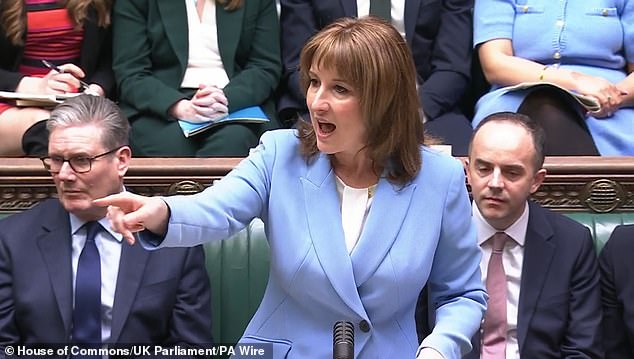
‘At no point did the Chancellor offer any optimism about the prospects for Britain’s great tech, financial, creative and pharmaceutical industries,’ writes Alex Brummer
And the International Monetary Fund, which monitors the world economy, has warned that ‘disruptions to trade and economic activity and surges in energy prices’ have obliged it to re-work all its forecasts.
It is not just the critical inflation rate which is vulnerable to the Middle East – what slim prospects of economic growth we had are now at risk, too.
The OBR had already lowered its forecast from 1.4 per cent growth (made only in November) down to 1.1 per cent for 2026, before suggesting 1.6 per cent come next year.
Combined with the uncertainty caused by the conflict, and any hopes of bringing down the unemployment rate, set to average at a troubling 5.1 per cent of the workforce this year, are negligible.
Unemployment among 16 to 24 year olds reached a startling 16.1 per cent – the highest among Europe’s advanced countries – in the three months to December 2025.
It is striking that at no point in the Chancellor’s short address to the Commons did she offer any optimism about the prospects for Britain’s great tech, financial, creative and pharmaceutical industries – sectors offering the potential for sustained economic growth.
The conflict also shows us yet again how poorly prepared we are for war, and how hard it will be to make any serious increase in defence spending.
The Iran crisis is the Government’s greatest economic test. But Ms Reeves and Labour show no sign of even recognising the gravity of the task at hand.