One puzzle historians have to grapple with is the causality of the Second World War and the timing of British involvement. Britain had far stronger commitments to Denmark in 1864, or Belgium in 1914, than it had with Poland in 1939. Czechoslovakia was a liberal democratic power, much closely aligned with Britain, than a reactionary Catholic Poland with increasing ethnic enmity with both Germany and Russia. Yet it wasn’t the collapse of Prague that prompted Britain to join the war, but the attack on Poland. Realist theories of course explain this paradox. After Poland, there was only one balancer state left in the continent, France. Defending France was therefore paramount to British interests. Similar logic predicated in America’s involvement, as the collapse of the British empire would have meant Nazi Germany controlling Canada, an unthinkable proposition for Washington (which was, by the way, prompted to take control of Greenland even before an official entry to the war).
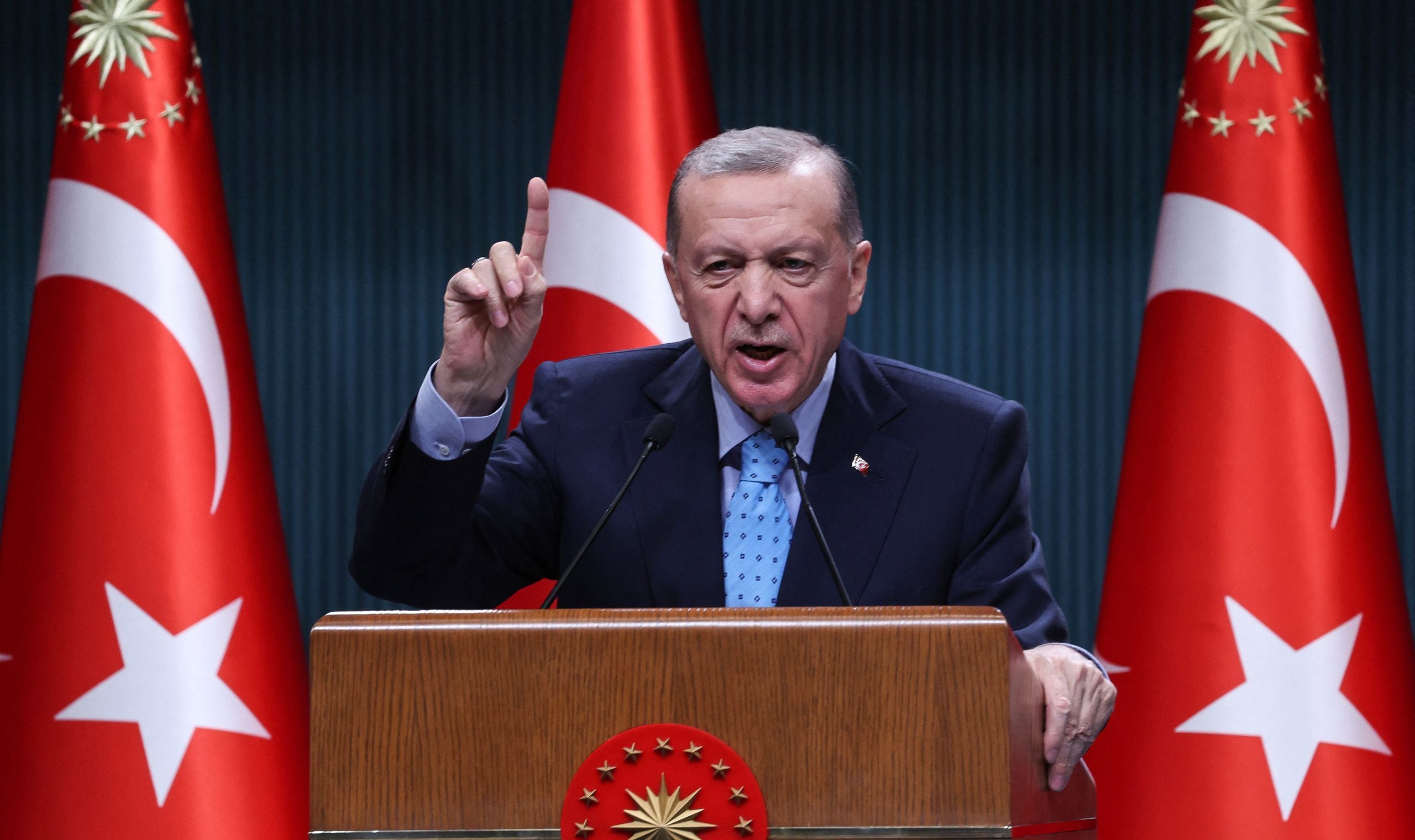
One would assume that the grand strategists in Ankara are well versed with the same logic of balance of power, and are reading the tea leaves. Turkey is the next big threat for Israel, as the former Israeli prime minister Naftali Bennett said recently in a conference, arguing that Israel should not “turn a blind eye” and must act simultaneously against threats from both Tehran and Ankara.
“Turkey is no longer a partner on the periphery. It is positioning itself as a central power, one that views the weakening of Iran not as a shared strategic gain but as an opportunity to expand its own influence,” the former Defense Minister Yoav Gallant wrote in his blog. “Ankara now provides critical backing to Syria’s transitional government and is positioning itself as the country’s primary external power broker. Its forces control territory in northern Syria and its influence extends into the Damascus area, just tens of kilometers from Israel’s border.”
Certain think-tankers are already prepping the ground with tweets in Turkish asking whether Ankara in 2036 will be like Tehran in 2026. At the time of writing Greek warships were heading to Cyprus after Cyprus was targeted with Iranian drones. Given the recent military alignment among the Greeks, Israelis, and Greek Cypriots, this naval buildup will be noted by Turkey.
The probability of further escalation between the United States and Iran remains significant, and it is obviously Iran’s most logical play to spread the war and drag this conflict out. It will thereby enjoy a rally around the flag effect at home, push oil prices up abroad, and directly poke the antiwar appetite in Europe and the U.S. Historically, confrontations between the two states have involved carefully calibrated signaling, with Tehran responding to American pressure in ways designed to preserve deterrence while avoiding uncontrolled escalation. But the current confrontation appears more destabilizing because it is widely interpreted by Iranian elites as a campaign aimed at regime decapitation following strikes that reportedly killed the country’s supreme leader, Ali Khamenei. When a regime perceives a threat as existential rather than coercive, incentives for restraint decline sharply, making maximal retaliation and prolonged conflict more likely.
Operationally, the United States retains sufficient air and naval capabilities to sustain a large punitive campaign, even if it lacks the political will or force posture for a major ground invasion. Early stages of the campaign, reported as striking more than thousands of Iranian targets, have relied primarily on air power, naval assets, and long-range strike systems intended to degrade missile, naval, and command infrastructure.
But punitive air campaigns face structural limitations. Without clearly defined war aims or termination criteria, they risk becoming open-ended bombardments that damage capabilities without fundamentally changing the strategic balance. The conflict has already produced the first confirmed American casualties, with six Americans killed and more seriously wounded during retaliatory Iranian attacks on regional bases. (The last thing Vice President J.D. Vance needs to defend as his legacy in 2028.) At the same time, the broader strategic risks may stem less from direct confrontation than from the consequences of weakening the Iranian state itself. A severely degraded or collapsing Iran could generate fragmentation dynamics comparable to those seen after the collapse of Libya in 2011, potentially unleashing proxy conflicts and ethnic or sectarian violence across neighboring states such as Lebanon, Iraq, and Pakistan. The paradox of the current strategy, therefore, is that even a militarily successful campaign could create a more unstable regional order than the one it seeks to transform.
Subscribe Today
Get daily emails in your inbox
Yet Iran is a small power bound by structural deficiencies. Iranian allies are Shiite, which means they don’t have the demographic advantage in the Middle East on their side. Iranian weakness is therefore not a cause of equilibrium, but of hegemonic competition between Israel and Turkey. Currently, around half a million Turkish troops are based in and around Iran and Northern Syria, an armored thrust away from Israel should Syria and Iraq once again collapse into civil war.
The war on Iran is an American war of choice. There were no immediate threats. The administration has given four different reasons, from historic terrorism, to regime change, to Iranian freedom, to nuclear weapons and ballistic missile tech. The real reason is perhaps the same as always. “In the briefing on Tuesday for the Gang of Eight, which consists of the leaders of the House, the Senate and each chamber’s intelligence committees, Secretary of State Marco Rubio indicated to lawmakers that the mission’s timing and goals were shaped by the fact that Israel was going to attack with or without the United States, according to a person familiar with the administration’s outreach to lawmakers,” the Washington Post reported.
Given the steady drift of the Israeli–Turkish rivalry, it is logical to therefore speculate not when but how we should soon see a coordinated effort in narrative manufacturing about how Turkish secularism is in jeopardy, how Recep Tayyip Erdogan is the gravest threat in the Middle East since Suleiman the Magnificent, and how “Western Civilization” informs us that Turkey is the real enemy. Given the situation in Syria and Cyprus, the real war will start over one catastrophic miscalculation. Ankara now finds itself in the same predicament that London was in, around 80 or so years back. The collapse of Iranian power is therefore not the end, but the beginning of a hegemonic spiral.