The latest cars are now equipped with a catalogue of gadgets and features.
From safety system to space-age tech and AI assistants, motors are becoming so advanced that drivers might be overwhelmed by what they’ll find in a 2026 motor.
But while many of the features are designed to make today’s vehicles greener, collision resistant and increasingly convenient, they can be flawed or totally redundant, thus making them incredibly irritating, unnecessarily expensive and potentially dangerous.
Among these is hidden ‘pop out’ door handles – a vehicle design element that’s been popularised by Elon Musk’s Tesla brand since the arrival of the Model S saloon in 2012.
While the concealed handles improve the svelte look of a car and make it more aerodynamic, authorities in China have announced a ban on them from next year.
This is off the back of evidence that they can be defective after crashes and make it incredibly difficult for emergency services to free passengers from stricken motors when quick access can be a matter of life and death.
With China’s door handle rules in mind, we’ve rounded up eight other modern vehicle features that are becoming commonplace today but coming under scrutiny from road safety experts and motorists for causing more problems than they fix.
But there’s one brand new gadget arriving in 2026 that we are very happy to see and think could make a huge difference in reducing road fatalities. We’ll get to that last…
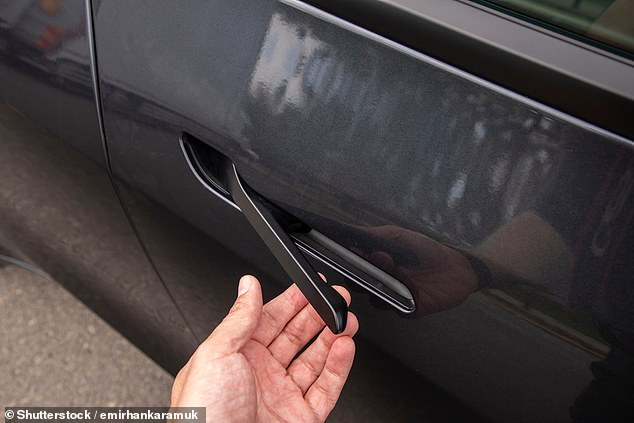
China this week announced a ban on new cars using concealed door handles, like those popularised by Tesla
Tesla-style hidden door handles banned
China has become the first country in the world to ban hidden door handles on safety grounds.
These concealed electronic door handles sit flush against the side of the door when the vehicle is locked or being driven.
Popularised by the Tesla, which uses a press-to-release hidden handle for its Model X, Model 3 and Model Y cars, other brands have used similar designs too.
Namely Jaguar Land Rover, Renault and a host of Chinese manufacturers have electrically-powered handles that pop out.
This is because they not only improve the aesthetic of vehicles but marginally reduce their drag and therefore improve efficiency.
But China has now demanded that all cars sold in the country have a mechanical release feature for both interior and exterior door handles.
There also has to be enough space for a hand to operate its mechanical release from any angle.
In a statement released Monday 2 February, the Ministry of Industry and Information Technology cited ‘the inconvenience with operating the exterior door handles and their inability to open after an accident’.
The new rules come into effect 1 January 2027.
Other countries are looking at introducing similar safety legislation after a number of tragic accidents saw people unable to be rescued from cars due to problems unlocking door handles.
Tesla’s door handles are already under investigation in the US by safety regulators. Authorities in Europe are considering their own rules.
Our verdict: We’re more than happy to lose concealed door handles in the name of safety. But what else should be considered for the axe?
Enormous infotainment screens
It’s a rarity in 2026 to step inside a new car that doesn’t have a tablet-sized infotainment screen mounted into the dashboard.
These are now the standard fitment across vehicles of all sizes and prices, with motorists forced to prod their way around touchscreens to access applications, music and a host of features that were previously controlled using conventional hard buttons.
While designers love them because they de-clutter the dashboard to present a minimalist interior feel, and industry bean-counters prefer this setup because it cuts costs by removing switches and wiring, there have been mounting concerns about the dangers associated to these displays – especially enormous cabin-wide screens.
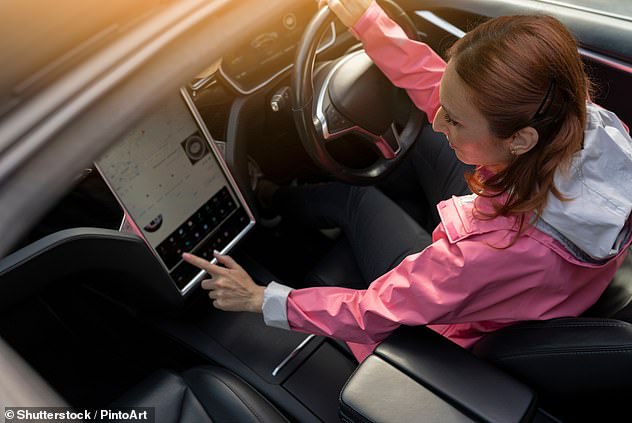
With touchscreens becoming increasingly distracting to operate on the move, more drivers say they feel safer using voice commands, various reports have found
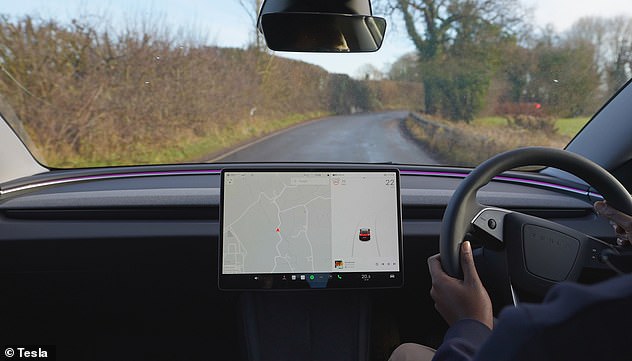
The Tesla Model 3 doesn’t have an instrument cluster behind the steering wheel. It means the driver needs to peer over to the large tablet-style screen to see the speed they’re travelling
For years, road safety experts have been warning they are dangerously distracting for motorists to use on the move.
The electric Tesla Model 3, for instance, doesn’t have a traditional instrument cluster behind the steering wheel to tell them their speed, remaining battery range and satellite navigation turn instructions. Neither does it have a head-up display that beams this information onto the windscreen so a driver can take-in the info without glancing away from the road.
Instead, owners must instead turn their head to look at the 15.4-inch landscape display in the middle of the cabin.
This pales in comparison to Mercedes’ biggest screen – called the Hyperscreen – which is 55.5 inches wide and spans the entire dashboard of its high-end electric models.
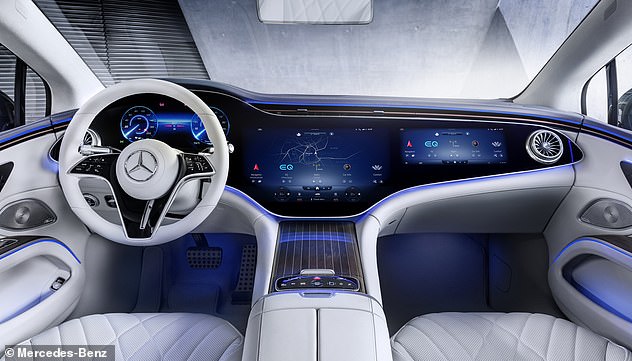
Car makers are in an arms race to develop the most technologically-advanced infotainment screens. But these are also becoming a huge distraction. Pictured is the Mercedes-Benz MBUX ‘Hyperscreen’
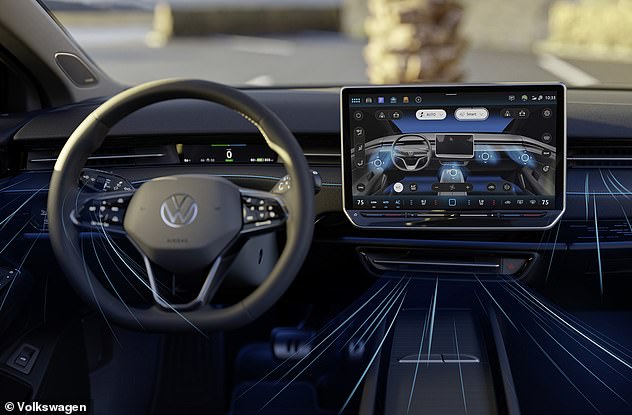
Volkswagen’s electric ID.7 doesn’t have conventional air vents. Instead, how the air is distributed around the cabin is controlled by an elaborate setting in the touchscreen
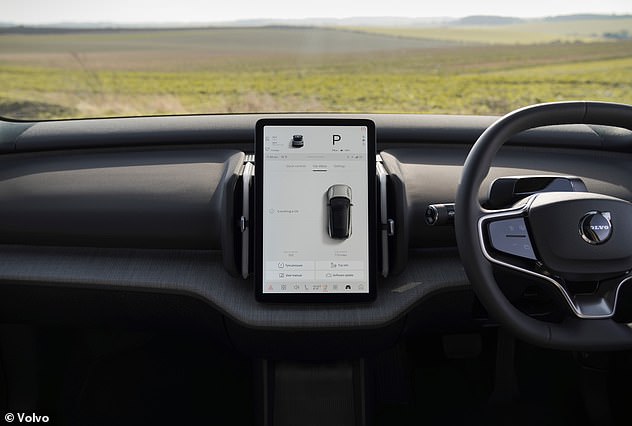
Even Volvo, a brand that’s been a byword for vehicle safety for decades, has been accused of shifting too many controls to its touchscreens. The EX30 EV requires the driver to press through a sub-menu to adjust the electric mirrors and the rear window de-mister
Volkswagen’s ID.7 electric saloon does away with conventional vents to blow hot and cold air towards passengers and instead the driver has to tap the screen to adjust the intensity and direction the flow of air is distributed.
Even Volvo, a brand that’s been a byword for vehicle safety for decades, is at it. Its EX30 EV requires the driver to press through a sub-menu on the car’s touchscreen just to adjust the electric mirrors and the rear window de-mister.
A recent study by Auto Express found it can take up to 22 seconds to complete simple tasks using a touchscreen when on the move – time where a driver isn’t entirely concentrated on the road ahead.
Paul Barker, editor of Auto Express, concluded after the research: ‘This raises a key question: if smartphones are dangerous distractions, aren’t touchscreens even more so?’
A 2020 investigation by TRL also found that reactions times were significantly impaired when using the infotainment systems, more so than alcohol and cannabis use.
It too identified ‘significant deviation in lane position’ seen in drivers when operating the infotainment system as they were unable to concentrate fully on the road ahead.
It comes as manufacturers from the beginning of this year are threatened with having safety ratings for their new vehicles downgraded if there is an over-reliance on drivers to use infotainment touchscreens.
The European vehicle safety body Euro NCAP demands that simple operations – including indicating directions, triggering hazard lights, sounding the horn, operating windscreen wipers and activating the eCall SOS function (which automatically calls the emergency services in the event of a serious collision) – should all be controlled by single buttons or stalks and not hidden in touchscreen submenus.
A car without these basic controls will not be able to score an industry-desired five-star Euro NCAP rating.
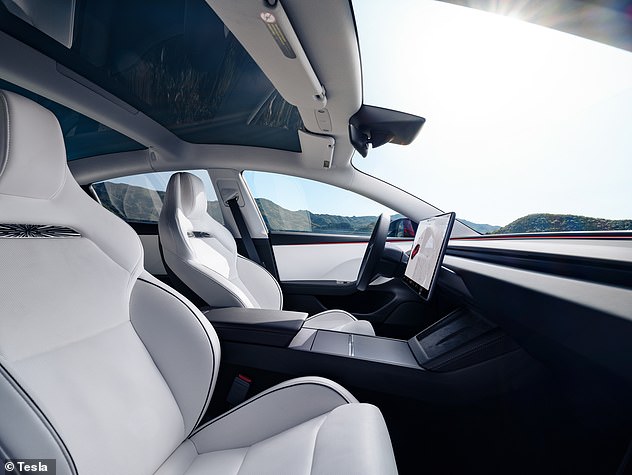
Tesla likes to hide the hazard light button in the name of design with it locate din the centre screen and overhead tucked away by the rearview mirror
The crash test group’s decision was made after it saw a variety of car makers removing the hazard warning light button – traditionally a red triangle that’s easy to access on the dashboard so drivers can quickly alert other road users around them – and instead placing its activation with an infotainment system.
Naming and shaming, Tesla is among the car makers to do so.
It put the Model 3 hazard light into its touchscreen with a rather hidden back-up button overhead by the rear view mirror. It might look sleek but it’s so tucked away that many people don’t even realise it’s there.
Our verdict: Touchscreen are great as long as they are combined with basic buttons for the most obvious tasks drivers need to complete when on the move.
Camera side mirrors
Side mirrors have been on cars for over a century. But now the automotive industry has decided it wants to fix a problem that’s never needed solving.
Some manufacturers – especially those specialising in luxury models – are now replacing conventional wing mirrors with cameras.
Instead of a glass panel, the side mirrors are high-definition cameras linked to screens inside the car, commonly located above the door handles.
The electric Audi Sportback Q8 e-tron was one of the first cars to use such a feature.
However, others have followed suit since; the Honda e supermini, Hyundai Ioniq 5 family crossover and Lotus’ hyper-SUV Eletre – which King Charles has recently added to his Royal fleet – have all deployed this next-generation gadget.
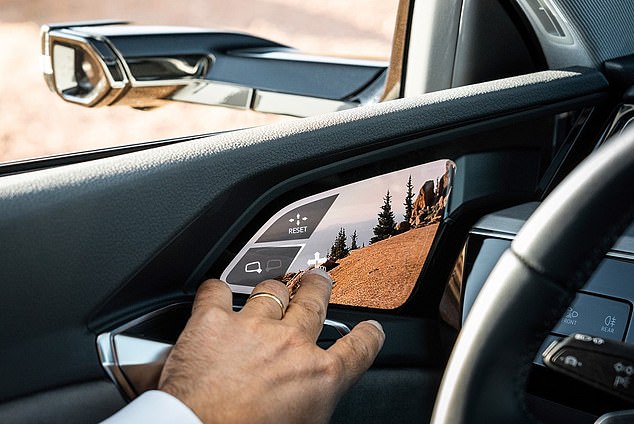
Regular old side mirrors are being replaced with cameras. But they are
Like flush door handles, camera side mirrors are used to make car design look cleaner and minimalist while also improving aerodynamics to bolster EV efficiency and battery range.
Manufacturers have also argued that the wider angles provided by cameras reduce blind spots and therefore improve road safety.
However, test driving multiple cars with this feature leaves us feeling cameras are far more distracting than they are safe.
Remembering to look at a camera positioned in the door is not something anyone does naturally – and it can result in a motorists not checking them nearly as much they would normal wing mirrors.
They too offer a reduced sense of depth compared to traditional mirrors and – on particularly bright days – can fall foul of glare. The small lens when dirty can also seriously restrict the image being displayed.
Poor image quality, the risk of system failure resulting in drivers having no view of what’s around them, and issues for drivers with limited eye-sight are other concerns that have been raised.
And so has the cost of repairing them. If clipped or knocked off by passing motorists, replacing a digital wing mirror can cost thousands – certainly a lot more than a new glass side mirror.
Our verdict: We say keep traditional side mirrors. They’ve worked just fine for the last 100-plus years, right?
Deleted rear windows
We’ve been using rear view mirrors to see what’s behind our cars on the move since 1914 – so for a grand total of 120 years.
They were first introduced by female racer extraordinaire Dorothy Levitt in 1909 but in 2024 we saw the arrival of the first car to abandon the feature having deleted the rear glass window.
The £50,000 Polestar 4 became the first new model sold in the UK to have no rear window and use a camera-based system linked to a virtual rear view mirror instead.
The Nissan Ariya EV also has a virtual rear view mirror, though users can switch between the conventional and ‘intelligent rearview’ mirror mode at the press of the button and still look out a glass panel at the back.
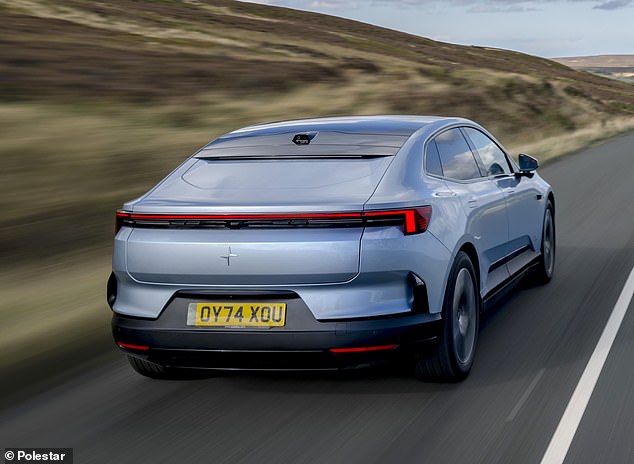
The Polestar 4 is the first mass-market car sold in Britain without a glass rear window. To see out the back, owners are reliant on a new camera-based rear view mirror system
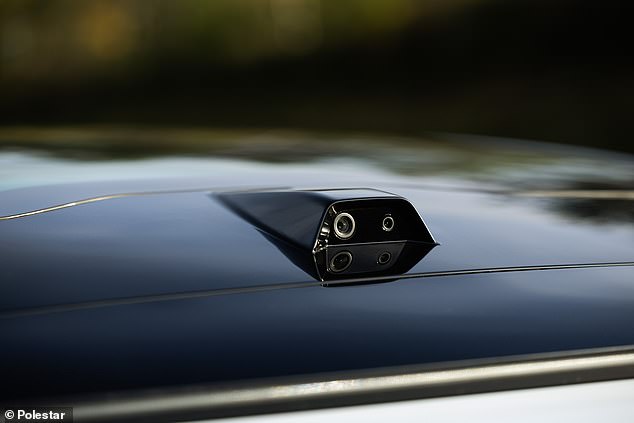
The rearview camera sits at the back of the car and is linked to a digital rearview camera located in the traditional spot on the windscreen. While we aren’t against rearview cameras, we’re not convinced that deleting the glass back window is the way to go
In the Polestar 4, a digital rear view mirror is all you have. And this will also be the case in Jaguar’s new £120,000 electric GT.
It means you can’t swing your arm over the passenger seat to look back when reversing into a parking space, instead relying on a digital display to tell you how close you are to other vehicles, walls, kerbs, pedestrians etc.
Polestar says that traditionally the rear interior gets in the way of what you see through the rear view mirror, claiming this digital rear view mirror provides better sight.
Our verdict: We’re probably in a minority, but we agree in this case because so many rear windows are so small on modern cars today that sometimes a digital rear view mirror can actually be better.
However, we’re not entirely convinced by the deletion of the rear glass window, which is a failsafe when conducting reversing manoeuvres.
Advanced Driver Assistance System warnings
Advanced Driver Assistance Systems – or ADAS – are likely the most marmite feature of this list.
ADAS systems are split across safety, driver assistance, convenience and automation and many of the features are mandated for new models by the EU and recently – under the Government’s Road Safety Strategy announced last month – the UK too.
Features include automatic emergency braking, lane departure warning, adaptive cruise control, blind spot monitoring and traffic sign recognition.
But while these systems are designed to mitigate crashes and make motorists feel more guarded, what drivers have been left with is a suite of intrusive features that persistently beep, bong and tell them off for the most minor infringements behind the wheel.
Now, there are some that we can get along with.
Blind spot monitoring systems, for instance, really do prevent accidents by warning you before you pull out into a lane with a car in it you can’t see.
But there are others that are driving us – and you, according to the comments each time we write about it – around the bend.
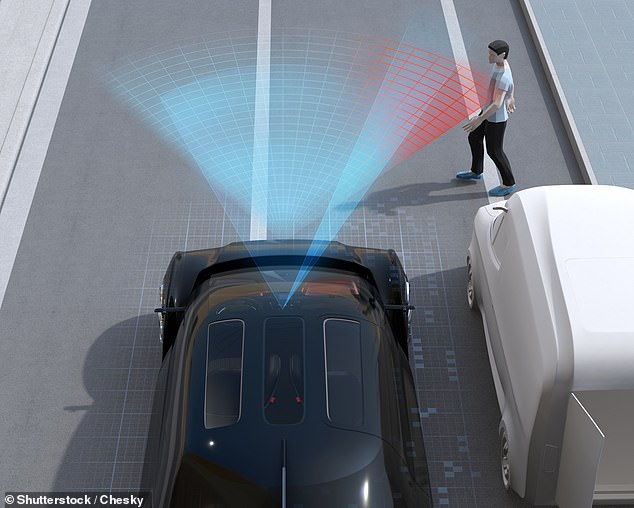
Advanced Driver Assistance Systems (ADAS) mean you can end up with a suite of systems that beep, bong and tell you off about pretty much everything you do behind the wheel
Some manufacturers’ lane assist systems – where the vehicle automatically detects the drivers veering out of their lane and corrects the steering to prevent a crash – have been found to have major flaws.
Motorists regularly complain that some brands’ systems are too overpowering and overly sensitive, making drivers nervous behind the wheel.
The MG4 EV’s system in particular hit headlines after hundreds of customers reported that their cars were unnecessarily steering them into a dangerous predicaments. Though MG has since rectified the issued with a software update.
But the one really grinding our gears is ‘Intelligent Speed Assistance’ – or ISA – which is a speed limiter system fitted to all new models since July 2024.
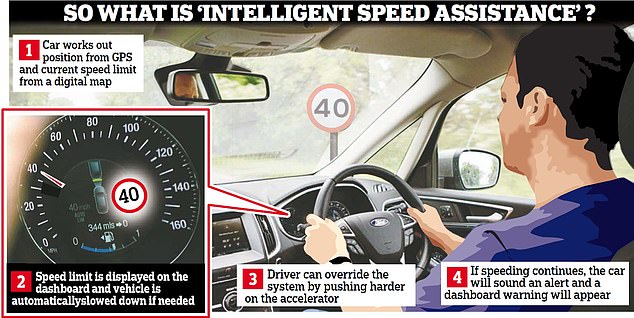
Introduced as part of the EU’s bid to cut road deaths, the automatic speed limiter system uses a combination of GPS and sensors to determine the speed limit a car is travelling in.
And if the vehicle is found to be exceeding the limit – even by 1mph – ISA will warn them to slow down with a sequence of repeated bongs or vibrations of the steering wheel that can quickly become infuriating.
These systems even have the capacity to cut engine power if a driver ignores the warnings.
These features can’t be turned off entirely; instead, drivers need to deactivate them at the start of every journey because car makers are mandated to have them on as a default setting.
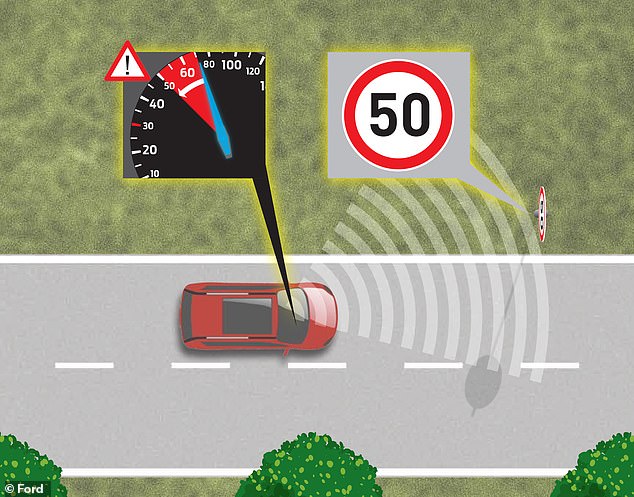
Intelligent Speed Assistance is only mandated for new models sold in the EU from 7 July. However, This is Money exclusively revealed at the time that it was being fitted to almost all UK cars
![Under the EU GSR2 regulation (Regulation [EU] 2019/2144 to give its full name) ISA must be active every time the car's engine starts - but there also must be the option for drivers to turn it off for each journey](https://www.americanpolibeat.com/wp-content/uploads/2026/02/1770281183_147_After-China-bans-Tesla-style-hidden-door-handles-here-are-eight.jpeg)
Under the EU GSR2 regulation (Regulation [EU] 2019/2144 to give its full name) ISA must be active every time the car’s engine starts – but there also must be the option for drivers to turn it off for each journey
While Thatcham Research – a vehicle safety and security body in the UK that’s funded by the car insurance sector – reports that 82 per cent of drivers feel safer with ADAS technology – and 55 per cent say it has actively prevented collisions – other report show motorists absolutely detest them.
Last year, drivers told watchdog Which? that they are turning off ADAS systems because they find them ‘dangerous, distracting and useless’.
More than half (54 per cent) of the 1,500 motorists polled in the national survey said they switch off at least one ADAS feature at the start of every drive.
Which? found that ISA is the one motorists hate most, with nearly half (46 per cent) of the panel who had it installed in their cars deactivating it.
Our verdict: While we are all for safety features to mitigate crashes and keep us better protected, manufacturers need to think hard about how they warn drivers without consistently pestering – and distracting them – with annoying bongs on the move.
AI voice assistants
Artificial intelligence is taking over the world, it feels.
The UK AI market was worth more than £72billion in 2024, according to the the UK Government. The US International Trade Administration projects that the UK AI market is expected to grow to £1trillion by 2035.
And one area where AI is surging is automotive: from manufacturing to vehicle safety to infotainment.
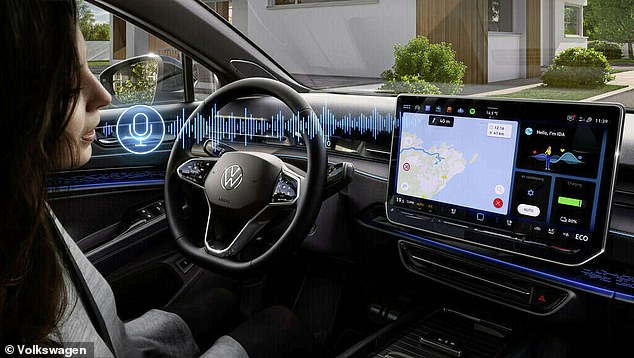
AI integration into car infotainment systems is supposed to give you a personal assistant but sometimes the assistant is just terrible
AI integration into car infotainment systems is the bugbear we’re focusing on here.
Many manufacturers have plugged their voice assistants into ChatGPT but some of the better systems are actually the manufacturer’s own.
The point is that you should be able to have a ‘conversation’ with your onboard personal assistant but sometimes you’d rather just rip your hair out.
Think broken, weird robotic voices and terrible jokes or just frankly wrong advice – like asking to adjust the steering wheel and being told the controls are in entirely the wrong place.
Our verdict: AI (environmental problems aside) is useful when it works but a real hindrance when it doesn’t. We’d rather use our own brains.
Touch sensitive buttons
Haptic or touch sensitive buttons provide vibrating feedback to simulate the feel of physical switches on touch-sensitive screens or surfaces.
Typically, they are used on the center console touchscreens, climate controls, and steering wheel controls for volume or menu navigation.
Haptic buttons are supposed to be a shift away from screens and back to physical buttons.
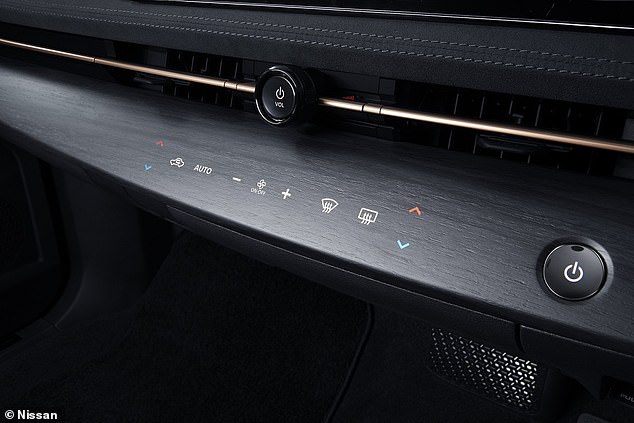
Haptic or touch sensitive buttons provide vibrating feedback to simulate the feel of physical switches on touch-sensitive screens or surfaces but they are often over sensitive or unresponsive
And while we appreciate the gesture, and the possibility of a return to a reality without a million screens, haptic buttons aren’t exactly frustration free.
They are either over sensitive or unresponsive, and we don’t even particularly like the sensation they provide as ‘feedback’.
But it’s also how easy it is to press the wrong button or input the wrong control that can be frustrating or sometimes even dangerous.
Volkswagen was recently heavily criticised for the haptic controls used in the latest Golf Mk8 and other cars, such as the ID.3.
For the Golf’s mid-life facelift in 2024, VW moved away from the touch-sensitive buttons on feedback from customers.
Our verdict: Just give us normal buttons – and more of them.
Yoke steering wheels
Forget about going woke in 2026; brands like Peugeot, Mercedes-Benz and Toyota are going yoke…
A yoke steering wheel is a non-circular steering control, often resembling a joystick or aircraft control wheel, with a U or T-shaped design.
For those of a certain vintage, it should remind you of the steering wheel in the popular 1980s series Knight Rider featuring David Hasselhoff as Michael Knight with his talking car, KITT, which had a similarly minimal steering unit.
F1 steering wheels are also a similar shape.
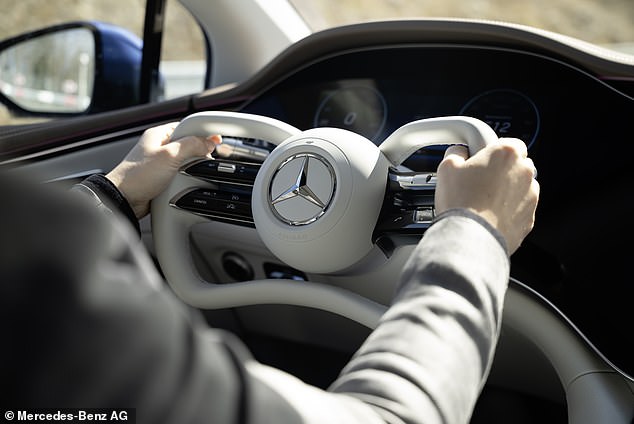
German car giant Mercedes has announced its upcoming electric car will come with this ‘yoke’ steering wheel, which is linked to an electronic steer-by-wire system
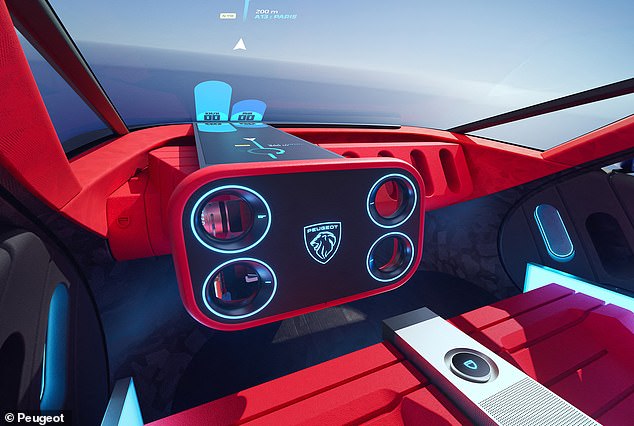
Peugeot’s Hypersquare is a rectangular, futuristic, and customisable steering wheel. It looks a bit like a video game controller, and plays into that sci-fi look and feel
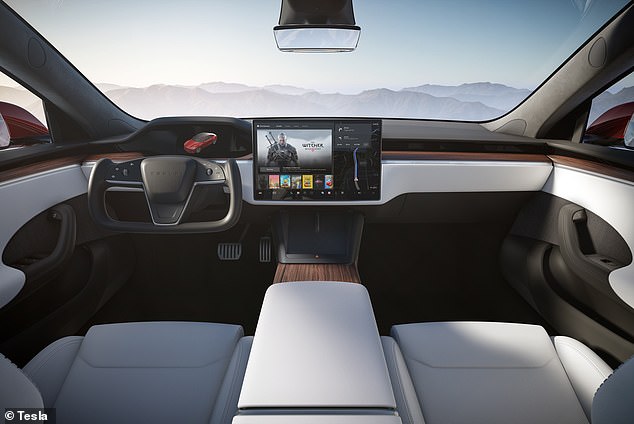
Tesla in 2021 controversially started selling Model S and Model X EVs with its yoke steering controls. However, because it is linked to a mechanical steering system, it’s very difficult to carry out slow-speed manoeuvres – such as three-point turns – due to a the lack of wheel rim
The aforementioned car giants have experimented – or will soon do so – with half-size steering wheels designed to make owners feel like they’re at the controls of a spaceship rather than a family car.
Tesla – infamously – was the first to made a yoke available for Model S and Model X customers from 2021. However, the move was hugely criticised for a combination of practical usability issues (including it being impossible to perform a three-point turn) and limited customer demand.
Mercedes and Peugeot – the latter using a rectangular ‘Hypersquare’ design – believe their systems won’t succumb to the same fate as its US rival, though.
That’s because engineers have combined their chopped-down wheels with new electronic ‘steer-by-wire’ setups that adjust the amount of steering input needed depending on the car’s speed.
However, concerns have previously been raised with steer-by-wire systems, especially if there are electrical gremlins that trigger it to stop operating as it should – potentially leaving drivers out of control.
Mercedes says it has combated this with its own fail safes.
Its steer-by-wire setup ‘relies on a redundant system architecture in addition to high-precision sensors and high-performance control units,’ it explained.
‘This means that there are basically two signal paths and thus twice the number of actuators required, as well as a redundant on-board data and power supply. This always ensures steering ability.
‘Even in the most unlikely event of a complete failure, lateral guidance is still possible thanks to rear-axle steering and targeted wheel-specific braking interventions via ESP [Electronic Stability Program].’
Mercedes-Benz will make its controversial cut-down version available for its heavily updated EQS EV limo, which is due to arrive this year. Peugeot promises to debut its Hypersquare in a production car soon also.
Our verdict: A prime case of fixing something that isn’t broken.
LED headlights
LED car headlights have higher energy efficiency and increased brightness, as well as a longer lifespan than halogen lights.
They too are 80 per cent more efficient than traditional halogen bulb.
But while you might see better because of them, drivers in recent years have repeatedly complained they are being dazzled by them coming in the opposite direction.
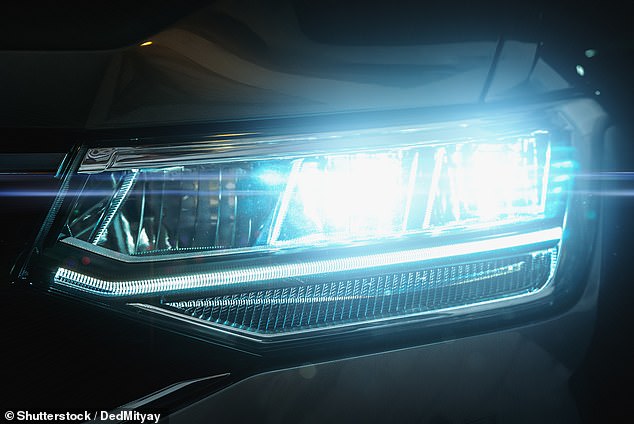
AA they’re being blinded by the headlights of oncoming vehicles even though LEDs are designed to be brighter at night and help you see further
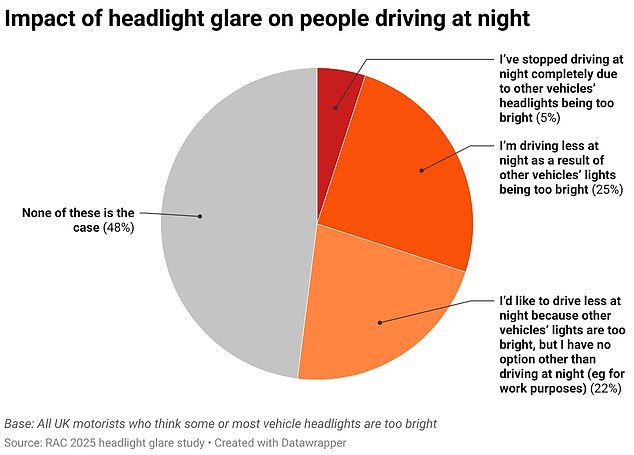
22% of people told the RAC that they’d like to drive less at night because of headlight glare but have no option
Dazzling LED lights are such a problem that the Government has confirmed it is looking into ‘potential countermeasures’ to deal with the ongoing issue of bright headlights following a probe into the matter due to ‘public concern’.
It comes after the RAC found that a fifth of people actively reduced their driving at night over fears they’ll be temporarily blinded by an oncoming car’s lights, making them feel uneasy and unsafe at the wheel.
National Collisions data found dazzling headlights contributed to 216 road incidents in 2023, up from 211 the year before.
Our verdict: As three-quarters of drivers told the AA they’re being blinded by the headlights of oncoming vehicles, and 52 per cent have been dazzled by headlights from cars behind them, we think it’s time a solution to LED headlights is found.
THE NEW FEATURE WE CAN GET BEHIND…
Volvo’s new ‘super seatbelt’
In 2026, Volvo intends to reinvent one of the oldest and most effective safety features that dates back 65 years – the seatbelt.
The Swedish car brand unveiled its new ‘super seatbelt‘ in June 2025 – an evolution of the three-point seatbelt it invented and has been used in cars since 1959.
It is first available in the new EX60 SUV – the brand’s new family car that boasts the longest full-charge range of any electric vehicle at 503 miles.
The new ‘multi-adaptive safety belt’ improves protection levels by using sensors that analyse the height, weight, body shape and seating position of an individual.

Volvo has reinvented the seatbelt with a new ‘multi-adaptive safety belt’ that can measure an occupant’s body
This information – along with other sensors that measure the scale of the impact when there is a collision – in a split second calculates the optimum pressure and where load is spread across the body to provide the highest level of protection.
Volvo says the new seatbelt tech could help ‘save million more lives’ by providing bespoke protection for every occupant.
This then is safety tech we can get very much get onboard with.