Christians should articulate a better way for faith to influence political thought
One of the most charming details about the film Into Great Silence relates to how it came to be made. It is a fly-on-the-wall documentary film, nearly three hours long, observing the life of enclosed Carthusian monks in a remote monastery in the Chartreuse Mountains. On first having the idea, the director wrote to the monastery to ask the superior for permission to enter and make a film documenting the community’s life of prayer. He did get a positive reply, but it didn’t come until sixteen years later — presumably having left the monks ample time to pray and reflect on how best to respond.
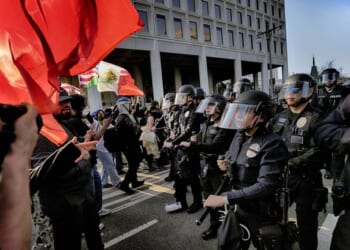
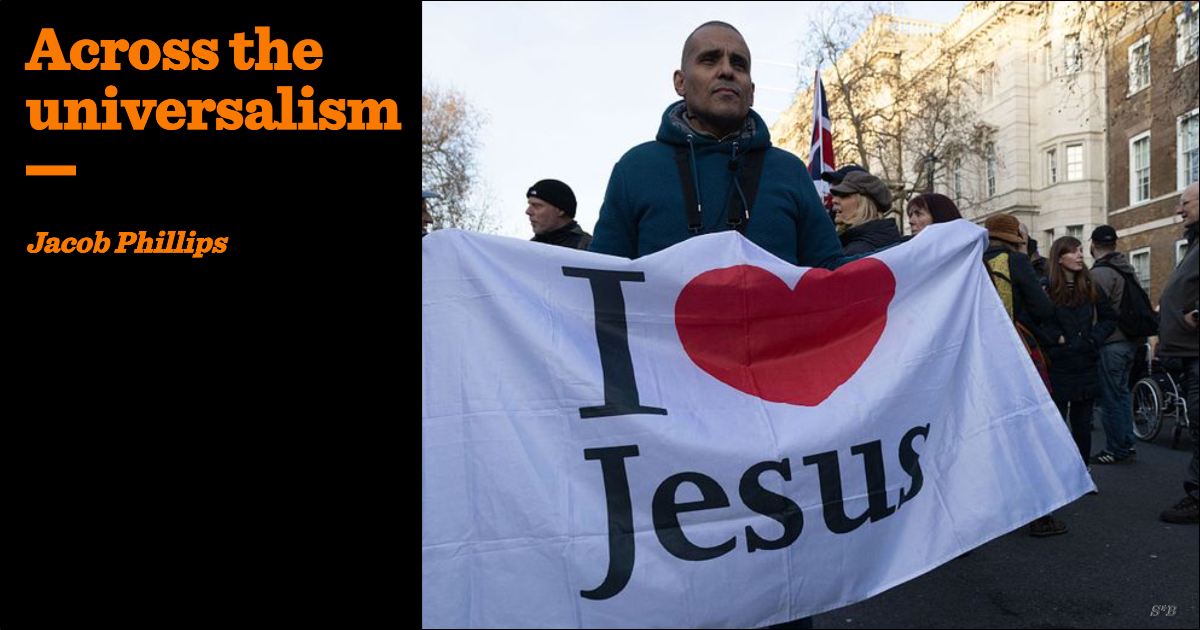
It’s a truism to say the church “thinks in centuries”, but it is often true. Perhaps it’s because I’m Catholic, and therefore used to this slow-moving paradigm, that I was so struck by the sheer rapidity with which various Christian spokespersons have taken to the media in recent weeks to condemn Tommy Robinson’s carol concert which took place outside Downing Street over the weekend. It seems churches can be highly agile and dynamic after all — “hallelujah!”, you might be thinking.
Just to be clear, I’m no fan of Tommy Robinson. Neither am I a fan of tiresome culture wars whataboutery. But there are some points that deserve to be made about all the discourse over that carol service, nonetheless.
Such clerics might talk a lot about Liberation Theology, but what they preach is closer to a sort of LibDem Theology
Yes, it is tiresome but true that many clerics have stood by doing next-to-nothing as the institutional church becomes little more than a cluster of political ideologies, only for them spring into action like Ian Paisley on crystal meth at the whiff of anything right wing. Such clerics might talk a lot about Liberation Theology, but what they preach is closer to a sort of LibDem Theology. A horrible thought, indeed. If you’re going to sell your soul in an ideological takeover, at least go for something a little spicier than managerial Rainbow Lanyardism.
This issue goes deeper than this, though. It goes right into the argumentation being used. A counter demonstration to Robinson’s gathering (“counter carol service”?) repeated the “Jesus was a refugee” trope so loved among people who tweet about how St George was a second-generation Eritrean who invented fish and chips.
Discussions of this trope often centre on whether Jesus, Mary, and Joseph did indeed qualify as having refugee status by fleeing into Egypt to escape King Herod. The deeper issue, however, arises from the fact that any such analysis entails believing that the biblical story is true, and literally true at that.
It is precisely the purveyors of the LibDem gospel who have always championed non-literal Biblical interpretation; for whom “biblical inerrancy” is a dreadful shibboleth of unenlightened believers. One can see why this is the case — the teaching on marriage is a little cumbersome for their worldview, not to mention the passages on gender roles or sexuality.
Moreover, if a Biblical story with no direct non-Biblical evidence for its historicity were taken seriously by this crowd, even then they tend always to champion de-contextualising and re-contextualising Scriptural passages in any case. Again, you can see why. Jesus called men as Apostles, but they say society needs women bishops because we live in a different, non-patriarchal context. Jesus described marriage as indissoluble, but they say we need divorce because we live in a more enlightened time, and so on.
LibDem theology thus takes all manner of relatively straightforward biblical verses, many of which have been held with little equivocation for centuries, and subjects them to elaborate, acrobatic arguments. These arguments render the verses’ meaning not only broader than seems warranted, but sometimes even twists it into the precise opposite of what was intended. But never, ever, with the Flight into Egypt — for this could only mean that the Holy Family arrived at Dover in a small boat before enjoying a few years of free wifi in a hotel in Epping.
Another issue arises from the comments about Christianity as a faith of “universalism”, a word meaning different things in different contexts. What it should mean, I suggest, is an article of reason that there is such a thing as universal human nature, and one of faith, that all those who participate in human nature bear a unique dignity as images of God.
There is absolutely nothing in these articles that negates a highly cautious and prudent approach to immigration policy, a concern for cohesive and meaningfully enjoined communities, nor the celebration of a nation’s distinct cultural patrimony, nor indeed a desire for that patrimony to be discovered anew by future generations.
One of the (many) problems with Tommy Robinson is that he isn’t actually presenting these concerns. Perhaps those taking to the media to howl about him should be showing what Christianity might bring to such debates, not just extinguishing any meaningful discussion of the issues with a deafeningly Manichean logic.
For some of us, it’s hard to forget, after all, that it was precisely a faithfulness toward Christian universalism that drove the initial concerns about the Gospel’s descent into LibDemmery — things like critical race theorist Kimberlé Crenshaw arguing that human nature isn’t universal but actually racialised, or the idea that the pseudo-metaphysics of “gender identity” can transcend the basic human rights even of children.
Maybe it would be better if the churches went back to thinking in centuries — at least then those moments when it speaks out wouldn’t so quickly be lost in the endless back-and-forth that increasingly drowns out everything else.