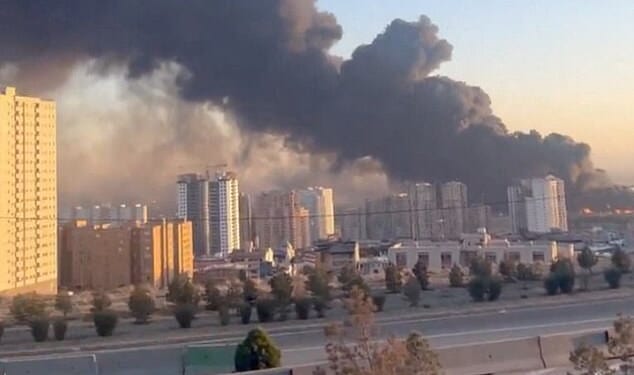
In thundering attacks on Iran’s government that started Saturday, Israel and the United States appear to have shredded what remains of the liberal, rules-based world order. The head of the United Nations – the pinnacle of that order – called the attacks a threat to international security. Yet as much as that charge might be true, President Donald Trump nonetheless has left open a door to an essential value that has sustained that order for decades.
He told the Iranian people in a video that they themselves, not American soldiers with boots on the ground in Iran, must ultimately choose to be free from the regime – one that has denied basic rights, killed dissenters by the thousands, and sown terror abroad.
Liberty, in other words, is first a mental commitment.
“The hour of your freedom is at hand,” Mr. Trump told them. “So let’s see how you respond.” In January, he even asked protesters to “take over … institutions.”
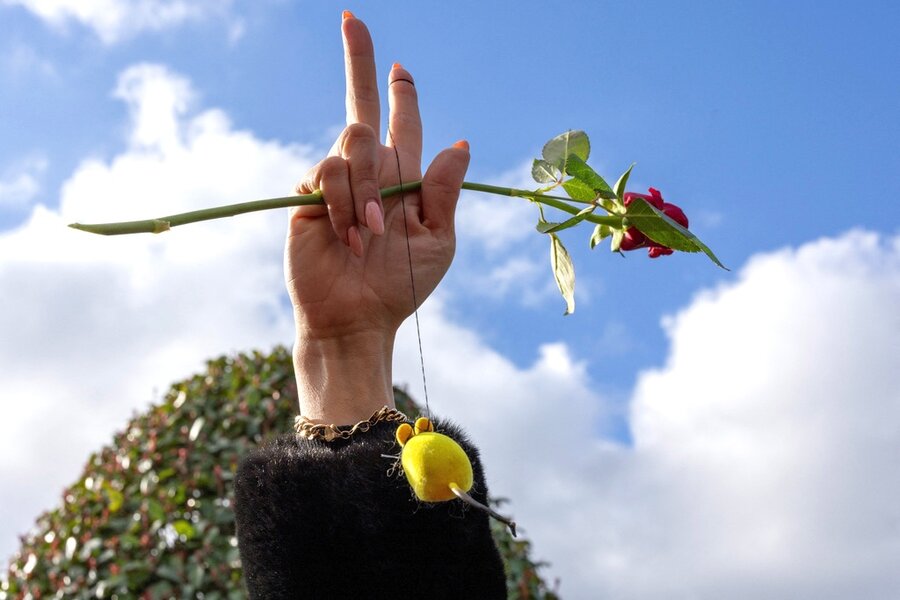
So how have Iranians reacted so far? While the war is far from over, the killing of supreme leader Ayatollah Ali Khamenei on Saturday sent people in many cities onto their balconies and into the streets with “a rare mix of jubilation, fear and expectation,” according to the news site Iran International. The New York Times reported people setting off fireworks and honking car horns, yelling “freedom, freedom” with exuberance.
The moment was captured by the European Union’s foreign policy chief, Kaja Kallas, in a post on the social platform X on Sunday: “What comes next is uncertain. But there is now an open path to a different Iran, one that its people may have greater freedom to shape.”
With no single leader or stable organization to mount more protests, however, pro-democracy Iranians might be waiting to see how much the regime’s security forces are degraded by the attacks. They also might be hoping for mass defection in those forces – something Mr. Trump encouraged in his video.
In January, Iranians showed just how much they would sacrifice to achieve the self-determination that is the cornerstone of democracy as well as world order. During two days of protests, the regime killed more than 7,000 people.
Mr. Trump has often ripped up the old rules that have governed the global commons. Yet the international order did not protect the Iranians in their hour of need. He told Iranians to take over their government “when we are finished” with the attacks.
“A lot of assumptions will be tested in the next few weeks, but much will depend upon how the Iranian population reacts – that’s the key question,” Professor Ali Ansari of the University of St. Andrews told The Times of London. Whether a new order is emerging or the old one is simply fading, some fundamental values like freedom still remain in global affairs.